
What is the S550MC steel for car parts normalizing process
Comprehensive guide on S550MC high-strength steel, its metallurgical properties, the impact of normalizing processes on car parts, and its role in automotive lightweighting.
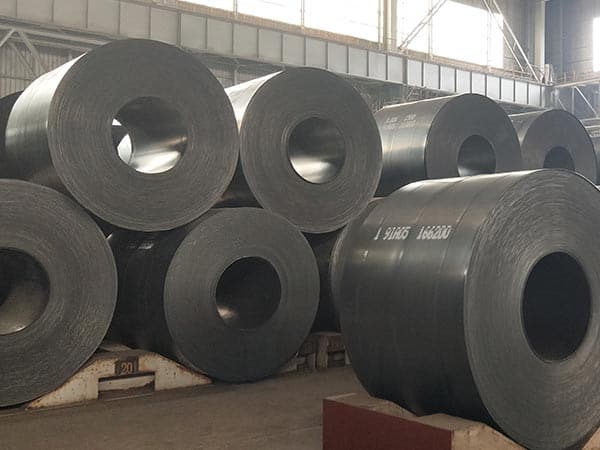
The Fundamentals of S550MC High-Strength Low-Alloy Steel
S550MC is a high-strength low-alloy (HSLA) steel grade specifically engineered for the demanding requirements of the automotive industry. Classified under the EN 10149-2 standard, the 'S' denotes structural steel, '550' represents the minimum yield strength in megapascals (MPa), and 'MC' indicates that the material is thermomechanically rolled. This steel is a cornerstone of modern vehicle manufacturing, where the balance between weight reduction and structural integrity is paramount.
Unlike traditional carbon steels, S550MC achieves its superior mechanical properties through a combination of precise chemical composition and controlled rolling processes. The addition of micro-alloying elements such as niobium (Nb), vanadium (V), and titanium (Ti) allows for grain refinement and precipitation hardening. These elements work in tandem during the production phase to create a fine-grained microstructure that offers exceptional strength without sacrificing ductility or weldability.
Understanding the Normalizing Process in the Context of S550MC
A common question among automotive engineers is whether S550MC steel should undergo a normalizing process after forming or welding. To answer this, we must first understand what normalizing entails. Normalizing involves heating the steel to a temperature above its upper critical point (Ac3), holding it there to allow for complete austenitization, and then cooling it in still air. The goal is typically to refine the grain structure and relieve internal stresses.
However, S550MC is a thermomechanically rolled (TMCP) steel. Its strength is derived from the specific grain structure created during the rolling process at controlled temperatures. If S550MC is subjected to a standard normalizing heat treatment, the carefully engineered fine-grained structure may coarsen. This grain growth can lead to a significant reduction in yield strength and tensile strength, potentially dropping the material below its 550 MPa specification. Therefore, in most automotive applications, S550MC is used in its as-delivered state. If heat treatment is necessary for stress relief after complex welding, it must be performed at temperatures below the transformation range to preserve the mechanical integrity of the alloy.
Chemical Composition and Its Influence on Performance
The performance of S550MC in car parts is a direct result of its chemical makeup. The low carbon content is a deliberate design choice to enhance weldability and cold forming capabilities. Below is a detailed breakdown of the typical chemical composition for S550MC:
| Element | Maximum Content (%) | Role in the Alloy |
|---|---|---|
| Carbon (C) | 0.12 | Ensures weldability and prevents brittleness. |
| Manganese (Mn) | 1.80 | Increases strength and improves hardenability. |
| Silicon (Si) | 0.50 | Acts as a deoxidizer and strengthens the ferrite. |
| Phosphorus (P) | 0.025 | Kept low to maintain toughness. |
| Sulfur (S) | 0.015 | Kept low to improve surface quality and ductility. |
| Aluminium (Al) | 0.015 (min) | Grain size control and deoxidation. |
| Nb + V + Ti | 0.22 | Micro-alloying for grain refinement and strength. |
The synergy of these elements ensures that the steel remains highly formable despite its high strength. The low sulfur and phosphorus levels are particularly important for preventing cracking during intense cold-forming operations, such as deep drawing or tight-radius bending of chassis components.
Mechanical Properties and Structural Reliability
The primary reason for selecting S550MC for car parts is its high strength-to-weight ratio. By using a thinner gauge of S550MC compared to standard S235 or S355 steels, manufacturers can reduce the overall weight of the vehicle without compromising safety. This is critical for meeting modern fuel efficiency and emissions standards.
Key mechanical properties of S550MC include:
- Yield Strength (ReH): Minimum 550 MPa.
- Tensile Strength (Rm): 600 to 760 MPa.
- Elongation (A80mm): Minimum 12% to 14% depending on thickness.
- Impact Strength: Excellent performance at low temperatures, ensuring safety in cold climates.
These properties make S550MC ideal for components that must absorb energy during a collision. The material's ability to deform plastically while maintaining high resistance to tearing is a vital characteristic for crumple zones and safety cages.
Advanced Processing: Welding and Cold Forming
In the production of automotive parts like longitudinal beams, cross members, and brackets, the steel must undergo rigorous processing. S550MC excels in these areas due to its low carbon equivalent (CEV).
Welding Performance: S550MC can be welded using all standard methods, including MIG/MAG, TIG, and laser welding. Because of its low alloy content, it does not require preheating in most thickness ranges. However, it is crucial to control the heat input. Excessive heat can create a heat-affected zone (HAZ) where the grain refinement is lost, leading to localized softening. High-energy density processes like laser welding are often preferred for S550MC to minimize the width of the HAZ.
Cold Forming: Despite its high yield strength, S550MC offers impressive cold-forming characteristics. It can be bent to tight radii, provided the bending axis is perpendicular to the rolling direction. This allows for the creation of complex geometries in chassis components that would be impossible with less ductile high-strength steels. Engineers must account for 'springback'—the tendency of the metal to return to its original shape after the forming force is removed—which is more pronounced in S550MC than in lower-strength grades.
Environmental Adaptability and Corrosion Resistance
Automotive components are exposed to harsh environments, including road salt, moisture, and extreme temperature fluctuations. While S550MC is not a stainless steel, its fine-grained structure provides a consistent surface for protective coatings. Most S550MC parts are either galvanized or E-coated (electrophoretic deposition) to ensure long-term corrosion resistance.
The material's stability across a wide temperature range is another advantage. In sub-zero temperatures, many steels become brittle, increasing the risk of catastrophic failure. S550MC maintains sufficient toughness at temperatures as low as -20°C or even -40°C (depending on specific sub-grades), making it suitable for vehicles sold in arctic or high-altitude regions.
Application Expansion: Beyond the Chassis
While the chassis is the most common home for S550MC, its utility is expanding into other sectors of vehicle design. We now see this grade used in:
- Seat Frames: Reducing the weight of interior components while ensuring seat belt anchors remain secure during impact.
- Truck Trailers: Using S550MC in the main rails of trailers allows for higher payloads by reducing the dead weight of the trailer itself.
- Crane Arms and Lifting Equipment: Leveraging the high yield strength for mobile machinery where weight is a critical factor for stability and mobility.
- Wheels and Rims: Providing the strength needed for heavy-duty wheels while allowing for thinner, lighter designs.
Optimizing Manufacturing Efficiency with S550MC
Adopting S550MC is not just a material choice; it is a strategic manufacturing decision. The ability to use thinner materials leads to several downstream benefits. First, raw material costs can be offset by the reduction in the total weight of steel required. Second, thinner sheets are easier to cut using high-speed fiber lasers, increasing throughput in the fabrication shop. Third, the reduction in weight translates to lower shipping costs for both the raw coils and the finished components.
To maximize these benefits, manufacturers must ensure they are sourcing S550MC from mills that adhere to strict tolerances for thickness and flatness. Consistency in the material's mechanical properties across different batches is essential for automated robotic welding and forming lines, where variations can lead to production downtime or part rejection.
Technical Considerations for Engineering Design
When designing parts with S550MC, engineers should move away from 'thick and heavy' mindsets. The focus should be on geometric stiffening. By using the high strength of S550MC in combination with strategic ribs, folds, and embossed patterns, it is possible to create components that are significantly stiffer and stronger than their heavier counterparts made from mild steel. This approach is the essence of modern automotive lightweighting, driving the industry toward a more sustainable and efficient future.
Leave a message