
What is the B650L steel complete specifications process flow
A comprehensive guide to B650L steel, covering its chemical composition, mechanical properties, detailed manufacturing process flow, and industrial applications.
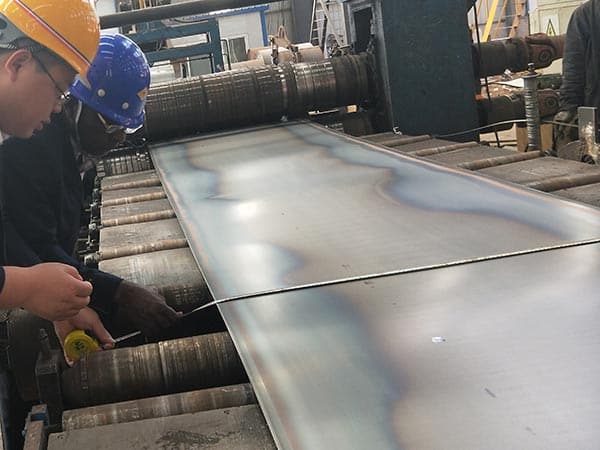
The Core Identity of B650L Steel: High-Strength Engineering Excellence
B650L steel represents a pinnacle in the evolution of High-Strength Low-Alloy (HSLA) materials, specifically engineered for structural applications where weight reduction and high load-bearing capacity are paramount. The nomenclature itself reveals its purpose: 'B' often refers to the manufacturer's standard (frequently associated with Baosteel), '650' denotes the minimum yield strength in Megapascals (MPa), and 'L' signifies its primary application in longitudinal beams and structural frames. Unlike conventional carbon steels, B650L is a sophisticated alloy that balances extreme strength with the ductility required for complex forming processes.
Modern engineering demands materials that can withstand harsh dynamic loads while maintaining a lean profile. B650L meets these requirements by utilizing micro-alloying techniques. By adding precise amounts of elements like Niobium (Nb), Vanadium (V), and Titanium (Ti), metallurgists can refine the grain structure of the steel. This grain refinement is the secret behind its superior yield strength and toughness. It is not merely about making the steel harder; it is about making it more resilient to fatigue and impact, especially in the demanding environments of heavy-duty transportation and large-scale infrastructure.
Chemical Composition: The Metallurgical Blueprint
The performance of B650L is rooted in its chemical makeup. Each element is carefully balanced to ensure that the steel remains weldable and formable despite its high strength. The carbon content is kept relatively low to prevent brittleness and enhance weldability, which is a critical factor for automotive assembly lines.
| Element | Mass Fraction (%) | Primary Function |
|---|---|---|
| Carbon (C) | ≤ 0.12 | Provides strength while maintaining weldability and toughness. |
| Silicon (Si) | ≤ 0.50 | Deoxidizer and solid solution strengthener. |
| Manganese (Mn) | ≤ 2.00 | Increases hardenability and promotes grain refinement. |
| Phosphorus (P) | ≤ 0.025 | Kept low to prevent cold shortness and brittleness. |
| Sulfur (S) | ≤ 0.015 | Minimized to improve ductility and impact resistance. |
| Nb + Ti + V | ≤ 0.22 | Micro-alloying elements for grain refinement and precipitation hardening. |
| Aluminum (Al) | ≥ 0.015 | Used for deoxidation and controlling grain growth. |
The inclusion of Niobium and Titanium is particularly noteworthy. These elements form stable carbides and nitrides during the cooling process, which pin grain boundaries and prevent them from growing during subsequent heat treatments. This result is a fine-grained ferrite-pearlite or even a bainitic microstructure, which provides the high yield point characteristic of the 650 MPa class.
Mechanical Properties and Structural Integrity
When evaluating B650L for industrial use, the mechanical properties serve as the primary benchmark. Engineers rely on the predictable behavior of this steel under stress to design safer and more efficient components. The high yield-to-tensile ratio of B650L allows for significant weight savings, as thinner sections can replace thicker, lower-grade steels without compromising safety margins.
| Property | Value (Typical) | Engineering Significance |
|---|---|---|
| Yield Strength (ReL) | ≥ 650 MPa | The point at which permanent deformation begins. |
| Tensile Strength (Rm) | 700 - 850 MPa | The maximum stress the material can withstand before breaking. |
| Elongation (A80mm) | ≥ 12% | Indicates the material's ability to stretch before failure. |
| Cold Bending (180°) | d = 3a (typical) | Demonstrates the capacity for cold forming without cracking. |
Beyond these standard metrics, B650L exhibits excellent fatigue resistance. In the context of vehicle frames, which are subject to constant vibration and cyclic loading, this fatigue life is essential. The material's ability to absorb energy during an impact also makes it a preferred choice for crash-relevant components in heavy trucks and buses.
The Complete Manufacturing Process Flow
The production of B650L steel is a high-tech journey that transforms raw iron ore into high-precision coils. Each step is monitored with advanced sensors to ensure the final product meets the stringent requirements of the 650L specification.
- Ironmaking and Steelmaking: The process begins in the blast furnace to produce molten iron, followed by the Basic Oxygen Furnace (BOF) or Electric Arc Furnace (EAF). During secondary refining in the Ladle Furnace (LF) and RH vacuum degasser, the precise chemical composition is achieved, and impurities like oxygen and hydrogen are removed.
- Continuous Casting: The molten steel is cast into slabs. Precise control of the cooling rate during casting is vital to prevent internal segregation of alloying elements.
- Reheating and Hot Rolling: Slabs are reheated to approximately 1200°C. The hot rolling process involves multiple passes through roughing and finishing mills. For B650L, Thermo-Mechanical Controlled Processing (TMCP) is often used. This involves controlling the deformation and temperature during rolling to achieve a very fine grain size directly from the mill.
- Laminar Cooling: After the final rolling pass, the steel strip is cooled rapidly using water sprays. The cooling rate determines the final phase transformation, ensuring the desired balance of strength and ductility.
- Pickling and Cold Rolling: The hot-rolled coil is passed through an acid bath (pickling) to remove surface scale. It is then cold-rolled to the final thickness. Cold rolling increases the strength further through work hardening and ensures tight dimensional tolerances.
- Annealing: To restore some ductility and achieve the final mechanical properties, the coils undergo continuous annealing or batch annealing. This step is critical for ensuring the B650L can be formed into complex shapes by the end-user.
- Finishing and Inspection: The steel is leveled, slit to width, and subjected to rigorous testing, including tensile tests, bend tests, and surface quality inspections.
Advanced Fabrication: Welding and Forming B650L
One of the primary advantages of B650L is its excellent weldability. Because the carbon equivalent (Ceq) is kept low, the steel is less prone to cold cracking in the heat-affected zone (HAZ). Common welding methods such as Gas Metal Arc Welding (GMAW) and Laser Welding are highly effective. However, it is important to manage the heat input; excessive heat can lead to grain growth in the HAZ, which might locally reduce the yield strength.
In terms of forming, B650L is designed for cold pressing and bending. While it is significantly stronger than mild steel, it retains enough elongation to allow for the creation of U-channels, C-channels, and other structural profiles. Fabricators must account for 'springback' during the bending process, which is more pronounced in high-strength steels. Utilizing precision CNC folding machines and accounting for the material's higher elastic limit ensures accurate component geometry.
Strategic Industrial Applications
The shift toward lightweighting in the transport industry has made B650L an indispensable material. By utilizing B650L, manufacturers can reduce the thickness of structural members by 20% to 30% compared to traditional Q345 or St52 steels. This weight reduction directly translates to higher fuel efficiency and increased payload capacity for commercial vehicles.
Beyond the automotive sector, B650L is finding increasing use in the construction of specialized machinery. Crane booms, concrete pump arms, and agricultural equipment benefit from the high strength-to-weight ratio. In these applications, the material's ability to handle high stress while remaining relatively light allows for longer reach and higher lifting capacities. Furthermore, the atmospheric corrosion resistance of HSLA steels like B650L provides an added layer of durability in outdoor environments, extending the service life of the equipment.
Environmental Impact and Sustainability
The use of B650L contributes significantly to environmental sustainability goals. The logic is simple: stronger steel means less steel is required to perform the same task. This reduction in material consumption leads to lower energy use during the manufacturing phase and reduced carbon emissions throughout the lifecycle of the vehicle or machine. Additionally, B650L is 100% recyclable. At the end of its service life, it can be melted down and repurposed into new high-performance steel products, supporting a circular economy within the metals industry.
The integration of B650L into modern design workflows is not just a technical choice; it is a strategic decision to enhance performance, safety, and efficiency. As manufacturing technologies continue to advance, the role of high-strength structural steels like B650L will only become more central to the global industrial landscape.
Leave a message