
What is the B700L steel for construction machinery parts hardness?
Explore the hardness, mechanical properties, and application advantages of B700L high-strength steel for construction machinery parts in this comprehensive guide.
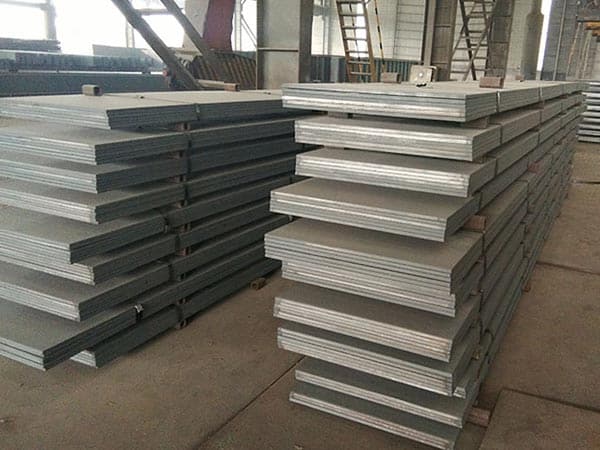
Understanding the Hardness Characteristics of B700L Steel
When discussing B700L steel, it is essential to recognize its position as a high-strength, low-alloy (HSLA) structural steel specifically engineered for the demanding environments of construction machinery and heavy-duty automotive frames. While the '700' in its name primarily denotes its minimum yield strength of 700 MPa, the hardness of B700L steel is a critical derivative property that determines its wear resistance and durability during fabrication and service life.
Typically, B700L steel does not have a strictly mandated hardness range in standard delivery specifications like the Brinell (HBW) or Rockwell (HRC) scales, as its primary performance metrics are yield and tensile strength. However, based on its metallurgical structure and tensile strength (which ranges from 750 to 950 MPa), the Brinell hardness (HBW) of B700L typically falls between 210 and 270. This level of hardness provides an optimal balance between structural integrity and the ability to undergo cold forming without cracking.
The hardness of B700L is achieved through a precise micro-alloying process. Unlike traditional carbon steels that rely on high carbon content for hardness—which often compromises weldability—B700L utilizes elements like Niobium (Nb), Vanadium (V), and Titanium (Ti) to refine grain size. This grain refinement increases hardness and strength simultaneously while maintaining excellent toughness.
Chemical Composition and Its Impact on Material Hardness
The hardness and mechanical stability of B700L are rooted in its chemical makeup. By keeping the carbon equivalent (Ceq) low, manufacturers ensure that the steel remains weldable while achieving high-performance benchmarks. The following table outlines the typical chemical composition limits for B700L steel:
| Element | Carbon (C) | Silicon (Si) | Manganese (Mn) | Phosphorus (P) | Sulfur (S) | Nb+V+Ti |
|---|---|---|---|---|---|---|
| Content (%) | ≤ 0.12 | ≤ 0.50 | ≤ 2.00 | ≤ 0.025 | ≤ 0.015 | ≤ 0.22 |
The low carbon content (under 0.12%) is a strategic choice. It prevents the formation of brittle martensite during rapid cooling, ensuring that the surface hardness remains consistent throughout the plate thickness. Manganese acts as a solid solution strengthener, while the micro-alloying trio (Nb, V, Ti) forms stable carbides and nitrides that pin grain boundaries, preventing grain growth during the hot rolling process. This results in a fine-grained ferritic-bainitic microstructure, which is the secret behind B700L's superior hardness-to-weight ratio.
Mechanical Properties Beyond Hardness
While hardness is a key indicator of wear resistance, the structural reliability of construction machinery parts depends on a suite of mechanical properties. B700L is designed to withstand extreme static and dynamic loads. The relationship between its hardness and tensile properties is a vital consideration for design engineers.
- Yield Strength (ReH): Minimum 700 MPa. This is the threshold where the material begins to deform plastically.
- Tensile Strength (Rm): 750–950 MPa. This indicates the maximum stress the steel can withstand before necking.
- Elongation (A50mm): Typically ≥ 13%. Despite its high hardness, B700L retains enough ductility to be formed into complex shapes.
- Impact Energy: Often tested at -20°C or -40°C to ensure the material does not become brittle in cold climates.
The hardness of B700L ensures that components like crane booms and pump truck arms do not suffer from surface indentation or premature wear at pivot points. However, the high yield strength is what allows for "lightweighting"—using thinner plates to achieve the same structural capacity as thicker, lower-grade steels, thereby increasing the payload and fuel efficiency of the machinery.
Processing Performance: Welding and Cold Forming
One of the most significant advantages of B700L is its processing versatility. In the construction machinery industry, parts are rarely simple flat plates; they are bent, welded, and machined. The controlled hardness of B700L makes it exceptionally well-suited for these operations.
Cold Bending: Despite its 700 MPa yield strength, B700L exhibits excellent cold-forming properties. Because the hardness is uniform and the microstructure is fine-grained, the steel can be bent to tight radii without surface cracking. This is crucial for manufacturing U-shaped beams and complex chassis components. Typically, a bending radius of 2.0t to 3.0t (where t is thickness) is achievable depending on the orientation of the grain.
Weldability: Traditional high-hardness steels often require extensive preheating to prevent cold cracking in the heat-affected zone (HAZ). B700L, with its low carbon equivalent, offers superior weldability. Standard welding techniques such as MAG, TIG, and submerged arc welding can be used. The hardness in the HAZ remains stable, preventing the formation of "soft spots" that could lead to structural failure under fatigue loading.
Environmental Adaptability and Fatigue Resistance
Construction machinery operates in some of the harshest environments on Earth, from salt-misted coastal regions to sub-zero arctic mining sites. The environmental adaptability of B700L is a direct result of its clean steel chemistry and controlled rolling process. The fine grain structure provides a natural barrier against crack propagation, which is the primary cause of fatigue failure.
In high-cycle fatigue applications, such as the vibrating screens of crushers or the telescopic sections of cranes, B700L performs remarkably well. Its surface hardness helps resist the initiation of micro-cracks, while its internal toughness ensures that any cracks that do form do not lead to catastrophic brittle fracture. Furthermore, the addition of specific alloying elements provides a moderate level of atmospheric corrosion resistance, extending the service life of the equipment even when the protective paint layer is compromised.
Expanding Applications in Construction Machinery
The unique hardness and strength profile of B700L has led to its widespread adoption across various heavy equipment sectors. Manufacturers are increasingly moving away from traditional Q355 or Q460 grades toward B700L to stay competitive in terms of machine performance and weight reduction.
- Concrete Pump Trucks: The boom systems of pump trucks require extreme strength and low weight to reach higher altitudes. B700L provides the necessary rigidity and hardness to handle the high-pressure pulses of concrete delivery.
- Mobile Cranes: The telescopic boom sections benefit from B700L's high strength-to-weight ratio, allowing for longer reaches and higher lifting capacities without increasing the vehicle's overall weight.
- Heavy-Duty Dump Truck Bodies: The hardness of B700L helps resist the abrasive wear caused by loading and unloading rocks, gravel, and debris, although for extreme wear, it is often used in conjunction with specialized wear-resistant plates like NM400.
- Excavator Components: While the bucket might use AR (Abrasion Resistant) steel, the structural frame and arm often utilize B700L for its fatigue resistance and structural integrity.
By utilizing B700L, engineers can reduce the weight of structural components by up to 30% compared to conventional steels. This weight saving directly translates to lower carbon emissions during the machine's operation and lower material costs during production, despite the higher per-ton price of the alloyed steel.
Strategic Selection: Why Hardness Matters to the End User
For a fleet owner or a construction contractor, the hardness of B700L steel translates to reliability. A machine made with B700L is less likely to suffer from structural deformation under accidental overloads. The material's ability to maintain its properties across a wide temperature range means less downtime for repairs in winter months. When selecting parts, understanding that B700L offers a Brinell hardness of approximately 210-270 HBW allows maintenance teams to select the correct welding consumables and machining tools, ensuring that repairs are as strong as the original manufacture.
The evolution of B700L represents the pinnacle of modern thermomechanical controlled processing (TMCP). It is not just about how hard the steel is, but how that hardness interacts with ductility and weldability to create a material that can survive the rigors of modern infrastructure development. As construction machinery continues to grow in size and complexity, the role of high-strength steels like B700L will only become more central to the industry's progress.
Leave a message