
What industries are medium and heavy s500mc steel equivalent astm cutting used in
Comprehensive guide on S500MC steel, its ASTM equivalents, mechanical properties, and its critical role in heavy transport, construction, and precision cutting industries.
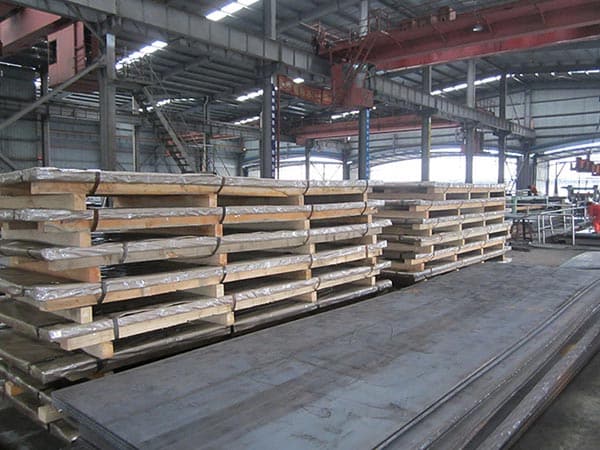
The Technical DNA of S500MC and Its Global Equivalents
S500MC is a high-yield-strength, cold-forming steel produced through thermomechanical rolling, governed by the European standard EN 10149-2. This material represents a significant leap in metallurgy, offering a minimum yield strength of 500 MPa. When engineers look for an ASTM equivalent, they typically turn to ASTM A656 Grade 70 or ASTM A1011 HSLAS Class 2, depending on the thickness and specific application requirements. These materials are designed to bridge the gap between traditional structural steels and high-performance alloys, providing a unique combination of strength, weldability, and formability.
The thermomechanical rolling process ensures a fine-grained microstructure. Unlike traditional normalized steels, S500MC achieves its properties through controlled deformation and cooling rates. This results in a material that is not only strong but also exceptionally consistent across its surface, which is a critical factor for precision cutting and automated fabrication processes. The "MC" suffix denotes its suitability for cold forming, making it a favorite for complex geometries that require high load-bearing capacities.
Comparative Analysis: S500MC vs. ASTM Standards
| Feature | S500MC (EN 10149-2) | ASTM A656 Grade 70 | ASTM A1011 HSLAS-F Gr 70 |
|---|---|---|---|
| Yield Strength (min) | 500 MPa | 485 MPa (70 ksi) | 485 MPa (70 ksi) |
| Tensile Strength | 550-700 MPa | 550 MPa min | 550 MPa min |
| Elongation (min) | 12-14% | 14-17% | 12-14% |
| Main Application | Cold forming, Heavy chassis | Heavy structural, Lifting | Automotive, Sheet metal |
While the chemical compositions vary slightly—specifically in the micro-alloying elements like Niobium (Nb), Vanadium (V), and Titanium (Ti)—the functional performance remains comparable. The ASTM A656 Grade 70 is often the go-to choice for medium and heavy plates in the North American market when the European S500MC specification is not readily available. Understanding these nuances is vital for global supply chains where material substitution must meet strict safety and performance benchmarks.
Precision Cutting and Fabrication Excellence
One of the standout features of medium and heavy S500MC steel is its behavior during cutting. Whether using fiber laser, plasma, or oxy-fuel methods, the material exhibits minimal thermal distortion. This is due to its low carbon equivalent (CEV), which enhances weldability and reduces the risk of cold cracking in the heat-affected zone (HAZ).
- Laser Cutting: The clean surface and fine grain structure of S500MC allow for high-speed laser cutting with exceptional edge quality. This reduces the need for secondary grinding or finishing operations.
- Plasma Cutting: For heavier thicknesses, high-definition plasma cutting provides a cost-effective solution while maintaining tight tolerances.
- Bending and Folding: Despite its high strength, S500MC can be bent to tight radii without cracking, provided the grain direction is considered during the layout phase.
Manufacturers prioritize S500MC because it allows for "down-gauging." By using a thinner plate of S500MC to replace a thicker plate of standard S355 steel, companies can reduce the overall weight of a component by up to 30% without sacrificing structural integrity. This weight reduction is the primary driver for its adoption across various heavy-duty industries.
Heavy Transport and Automotive Engineering
The transport sector is perhaps the largest consumer of S500MC and its ASTM equivalents. In an era where fuel efficiency and payload capacity are paramount, the ability to build lighter yet stronger chassis is a competitive advantage. Truck manufacturers use S500MC for longitudinal beams, cross-members, and trailer frames.
Heavy-duty trailers, which must withstand immense dynamic loads and environmental stress, rely on the fatigue resistance of S500MC. The steel's ability to absorb energy during impact also makes it an ideal choice for safety-critical components in commercial vehicles. Because the material is easily cut into complex shapes, engineers can design optimized weight-bearing structures that were previously impossible with lower-grade steels.
Construction and Lifting Equipment
In the world of cranes, excavators, and earthmoving machinery, the strength-to-weight ratio is the most critical metric. S500MC is used extensively in the fabrication of telescopic booms, outriggers, and bucket attachments. These components require high yield strength to prevent permanent deformation under heavy loads, but they also need to be light enough to ensure the stability of the entire machine.
The environmental adaptability of S500MC is another factor. Construction sites often expose equipment to extreme temperatures and corrosive elements. The thermomechanical processing provides a degree of toughness that ensures the steel remains ductile even in cold climates, preventing brittle fractures. This reliability is why it is frequently specified for infrastructure projects, including bridge components and heavy-duty scaffolding systems.
Agricultural Machinery and Specialized Implements
Modern agriculture demands equipment that can cover more ground in less time. This leads to larger, heavier implements like multi-row harvesters and high-capacity seeders. To keep these machines manageable for tractors, S500MC is utilized in the main frames and load-bearing arms.
The abrasion resistance of S500MC, while not as high as dedicated wear-resistant steels like Hardox, is still superior to standard mild steel. This makes it suitable for parts of the machinery that encounter soil and crop friction but still require structural flexibility. The ease of cutting and welding allows agricultural equipment manufacturers to rapidly prototype and iterate designs, keeping pace with technological advancements in precision farming.
Energy, Offshore, and Industrial Storage
Beyond mobile machinery, S500MC finds its place in the energy sector. Wind turbine internal structures, solar tracking frames, and heavy-duty storage racking systems benefit from its high load capacity. In offshore environments, where every kilogram of weight on a platform costs thousands in logistics and structural support, the use of high-strength S500MC plates is a standard practice for non-pressure-vessel components.
Industrial storage solutions, particularly high-bay racking systems that reach heights of 30 meters or more, utilize S500MC for the uprights and beams. These structures must support thousands of tons of inventory while maintaining perfect vertical alignment. The consistency of S500MC ensures that each batch of steel behaves identically during the roll-forming or cutting process, ensuring the safety and longevity of the warehouse infrastructure.
Material Selection and Optimization Strategies
Choosing between S500MC and an ASTM equivalent requires a deep understanding of the final application's stress profile. While S500MC offers excellent cold forming, it is essential to ensure that the cutting parameters are optimized to avoid edge hardening. Modern CNC cutting machines can be programmed with specific profiles for S500MC to ensure that the heat input is minimized, preserving the grain structure that gives the steel its strength.
Furthermore, the sustainability aspect cannot be ignored. Using high-strength steel reduces the volume of raw material required, which in turn lowers the carbon footprint of the manufacturing process. As global industries move toward "Green Steel" initiatives, the efficiency provided by materials like S500MC becomes a cornerstone of sustainable engineering practices. By integrating advanced cutting technologies with high-performance alloys, manufacturers are redefining the limits of what heavy-duty machinery can achieve.
Leave a message