
What are the advantages of high strength s550mc automotive steel sheet
Discover the comprehensive advantages of S550MC high-strength automotive steel. This guide explores its mechanical properties, welding performance, cold-forming capabilities, and role in modern vehicle lightweighting.
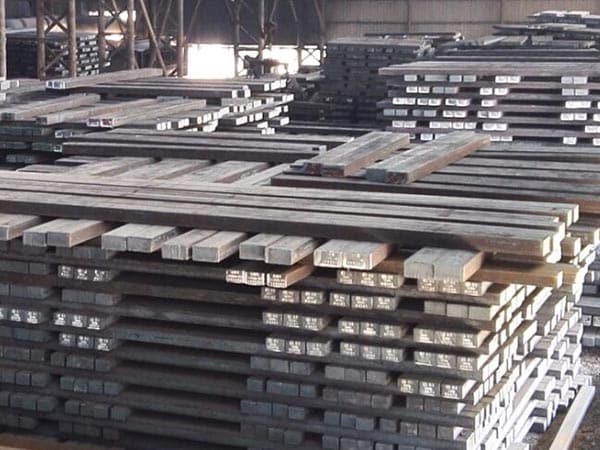
The Technical Superiority of S550MC High Strength Steel
S550MC is a high-yield-strength steel specifically engineered for cold forming, categorized under the EN 10149-2 standard. The designation "S" signifies its structural purpose, "550" represents the minimum yield strength of 550 MPa, and "MC" indicates its thermomechanically rolled (M) and cold-forming (C) characteristics. This steel grade is a cornerstone of modern automotive engineering, where the demand for reducing vehicle mass while increasing safety and load-bearing capacity is higher than ever. By utilizing advanced thermomechanical control processes (TMCP), S550MC achieves a fine-grained microstructure that offers a unique combination of high strength, excellent toughness, and superior weldability.
Advanced Metallurgical Composition and TMCP Processing
The performance of S550MC is rooted in its precise chemical composition and the specialized rolling process it undergoes. Unlike traditional structural steels that rely on high carbon content for strength, S550MC maintains a very low carbon content (typically ≤ 0.12%). Strength is instead achieved through micro-alloying with elements such as Niobium (Nb), Vanadium (V), and Titanium (Ti). These elements facilitate grain refinement and precipitation hardening during the thermomechanical rolling process.
Thermomechanical rolling involves controlled deformation at specific temperature ranges, followed by rapid cooling. This process prevents grain growth, resulting in a much finer ferrite-pearlite structure compared to normalized steels. This fine grain size is the primary reason why S550MC can offer high yield strength without sacrificing ductility or low-temperature impact toughness. The absence of heavy alloying elements also ensures that the steel remains cost-effective and highly recyclable, aligning with global sustainability goals.
Mechanical Properties and Structural Integrity
The most prominent advantage of S550MC is its exceptional strength-to-weight ratio. With a minimum yield strength of 550 MPa and a tensile strength ranging between 600 and 760 MPa, it allows engineers to design thinner components that can carry the same loads as thicker, heavier sections made from lower-grade steels like S355MC or Q345. This reduction in thickness directly translates to a decrease in vehicle curb weight, which is critical for both internal combustion engine (ICE) efficiency and extending the range of electric vehicles (EVs).
| Mechanical Property | Value (Typical for Thickness ≤ 16mm) |
|---|---|
| Yield Strength (ReH) | Min 550 MPa |
| Tensile Strength (Rm) | 600 - 760 MPa |
| Elongation (A80mm) | Min 12% (Thickness < 3mm) |
| Elongation (A5) | Min 14% (Thickness ≥ 3mm) |
| Bending Radius (180°) | 1.0t to 1.5t (depending on orientation) |
Beyond static strength, S550MC exhibits excellent fatigue resistance. In automotive applications such as chassis frames and suspension components, the material is subjected to cyclic loading. The fine-grained structure of S550MC retards crack initiation and propagation, ensuring long-term durability under harsh operating conditions.
Superior Cold Forming and Fabricability
Despite its high strength, S550MC is designed for complex cold-forming operations. This is a significant advantage over traditional high-carbon steels, which become brittle as strength increases. S550MC can be bent, flanged, and cold-pressed into intricate shapes required for modern automotive architecture. Its high elongation values ensure that the material does not crack during severe deformation.
However, users must account for "springback"—the tendency of the metal to return to its original shape after the forming load is removed. Because S550MC has a higher yield point, the springback is more pronounced than in softer steels. Advanced CAD/CAM tools and compensated die designs are typically used to manage this. The material's consistent mechanical properties across different batches ensure that forming processes remain stable and predictable in high-volume production environments.
Exceptional Weldability for Complex Assemblies
Weldability is a critical factor in automotive manufacturing, where components are often joined using automated robotic systems. S550MC features a very low Carbon Equivalent (CEV), which minimizes the risk of cold cracking in the Heat Affected Zone (HAZ). It can be welded using all standard methods, including MIG/MAG, TIG, laser welding, and resistance spot welding.
- Low CEV: Reduces the need for pre-heating, even when welding thicker sections.
- Stable Arc: The clean surface and consistent chemistry support stable arc characteristics in automated welding.
- HAZ Toughness: The micro-alloyed structure helps maintain toughness in the weld area, preventing localized embrittlement.
Because the strength of S550MC is derived from TMCP rather than heat treatment, care should be taken to avoid excessive heat input during welding, which could lead to localized softening. Following optimized welding parameters ensures that the joint remains as strong as the base metal.
Industry Applications and Lightweighting Impact
The primary driver for the adoption of S550MC is the pursuit of lightweighting. In the heavy truck and trailer industry, switching from S355 to S550MC can result in a weight saving of 20% to 30% for structural members. This weight reduction allows for a higher payload, directly increasing the operational efficiency and profitability of transport fleets.
Key application areas include:
- Chassis Frames: Longitudinal and cross members of trucks and trailers benefit from the high load-bearing capacity.
- Crane Booms: The high strength allows for longer reach and higher lift capacities in mobile cranes.
- Automotive Safety Components: Bumper beams, door reinforcements, and pillar reinforcements utilize S550MC to absorb energy during impacts.
- Agricultural Equipment: Plows, trailers, and harvester frames require the durability and strength that S550MC provides.
Environmental Adaptability and Sustainability
S550MC is highly resilient to various environmental stressors. While it is not a stainless steel, its fine-grained surface provides a good base for modern anti-corrosion coatings such as hot-dip galvanizing, KTL (e-coating), and zinc-rich primers. The material's performance remains stable across a wide temperature range, making it suitable for vehicles operating in both arctic and tropical climates.
From a lifecycle perspective, S550MC contributes significantly to CO2 reduction. Lighter vehicles consume less fuel and emit fewer greenhouse gases. Furthermore, because S550MC is a low-alloy steel, it is 100% recyclable. It can be returned to the electric arc furnace (EAF) at the end of the vehicle's life to be transformed into new high-quality steel, supporting a circular economy.
Economic Considerations and Cost-Benefit Analysis
While the price per ton of S550MC may be higher than standard mild steels, the total cost of ownership is often lower. The ability to use thinner gauges means that less steel is required by weight to produce the same component. This reduces material costs, shipping costs, and even welding consumable costs (due to smaller weld fillets). When combined with the fuel savings and increased payload capacity for the end-user, S550MC proves to be an economically superior choice for high-performance engineering.
Manufacturers looking to transition to S550MC should evaluate their current tooling and processing capabilities. The higher strength requires more powerful presses and more robust cutting tools (such as fiber lasers or high-definition plasma). However, the long-term competitive advantages of offering lighter, stronger, and more efficient products far outweigh the initial investment in process optimization.
Leave a message