
What is the difference between 1018 and s550mc high strength steel auto plate as per en 10149 steel?
A deep dive into the metallurgical and mechanical differences between 1018 mild steel and S550MC high-strength low-alloy steel for automotive and structural engineering.
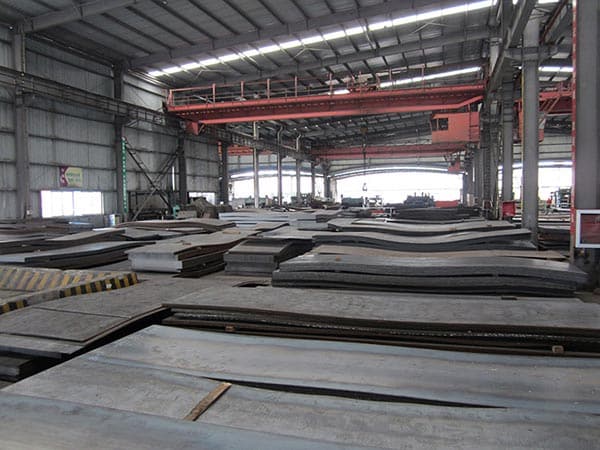
Metallurgical Foundations: AISI 1018 vs. EN 10149 S550MC
When selecting materials for structural or automotive components, the choice often falls between traditional carbon steels like AISI 1018 and modern high-strength low-alloy (HSLA) steels like S550MC. While both are iron-based alloys, their design philosophies are worlds apart. AISI 1018 is a classic low-carbon mild steel, prized for its simplicity and ease of machining. In contrast, S550MC is a thermomechanically rolled steel governed by the EN 10149-2 standard, specifically engineered to provide high yield strength while maintaining excellent cold-forming properties.
The fundamental difference lies in their grain structure. 1018 steel relies on a basic ferrite-pearlite structure. S550MC, however, undergoes a controlled rolling process at specific temperatures, followed by rapid cooling. This process, known as thermomechanical treatment, creates a fine-grained microstructure often reinforced with micro-alloying elements like Niobium (Nb), Titanium (Ti), or Vanadium (V). These elements allow S550MC to achieve significantly higher strength without the brittleness typically associated with high carbon content.
Chemical Composition Analysis
The chemical makeup dictates how these steels behave during welding, forming, and long-term service. AISI 1018 is characterized by its moderate manganese content and low carbon, which ensures good weldability but limits its peak strength. S550MC maintains a low carbon equivalent to ensure weldability but introduces micro-alloys to push the physical limits of the metal.
| Element (%) | AISI 1018 (Typical) | S550MC (EN 10149-2) |
|---|---|---|
| Carbon (C) | 0.15 - 0.20 | 0.12 Max |
| Manganese (Mn) | 0.60 - 0.90 | 1.80 Max |
| Silicon (Si) | 0.10 - 0.30 | 0.50 Max |
| Phosphorus (P) | 0.040 Max | 0.025 Max |
| Micro-alloys (Nb, Ti, V) | None | 0.22 Max (Combined) |
As shown, S550MC actually contains less carbon than 1018. This is a critical distinction; the strength of S550MC comes from grain refinement and precipitation hardening rather than carbon-induced hardness. This allows S550MC to be much stronger while remaining more ductile and easier to weld than higher-carbon alternatives.
Mechanical Performance and Yield Strength
The most striking difference appears when comparing mechanical properties. AISI 1018 is often used in applications where high stress is not the primary concern. Its yield strength typically hovers around 370 MPa in a cold-drawn state. S550MC, as the name implies, guarantees a minimum yield strength of 550 MPa. This 50% increase in strength allows engineers to use thinner plates to support the same loads, a process known as lightweighting.
- Yield Strength: 1018 (~370 MPa) vs. S550MC (Min 550 MPa).
- Tensile Strength: 1018 (~440 MPa) vs. S550MC (600-760 MPa).
- Elongation: S550MC provides superior elongation relative to its strength, typically around 12-14% depending on thickness, ensuring it can be bent without cracking.
- Impact Toughness: S550MC is often tested for Charpy V-notch impact energy at low temperatures, making it safer for automotive frames in cold climates.
Cold Forming and Fabrication Capabilities
For automotive manufacturers, the ability to shape a steel plate into complex geometries like chassis rails, cross members, or bumper brackets is paramount. AISI 1018 is highly ductile and easy to form, but it lacks the "springback" predictability of S550MC. Because S550MC is designed under EN 10149, it is specifically optimized for cold-pressing and cold-folding.
When bending S550MC, the fine-grained structure prevents the formation of "orange peel" or micro-cracks on the outer radius of the bend. This makes it a superior choice for automated production lines where consistency is vital. While 1018 is easier to machine (turning, milling), S550MC is superior for structural shaping and high-speed stamping operations.
Welding and Heat-Affected Zone (HAZ) Considerations
Welding is a standard requirement in automotive assembly. AISI 1018 is widely considered one of the easiest steels to weld due to its low carbon and lack of alloying elements. However, S550MC is also designed with a low Carbon Equivalent (CEV), meaning it does not require pre-heating or post-weld heat treatment in most standard thicknesses.
The primary concern with S550MC during welding is the potential softening of the Heat-Affected Zone (HAZ). Because the strength of S550MC is derived from thermomechanical processing, excessive heat input can lead to grain growth in the HAZ, slightly reducing the local strength. Engineers must manage heat input more carefully with S550MC than with 1018 to maintain the integrity of the high-strength properties across the entire weldment.
Strategic Advantages in Automotive Engineering
The shift from 1018 to S550MC in the automotive industry is driven by the demand for fuel efficiency and safety. By utilizing S550MC, designers can reduce the gauge (thickness) of steel plates without sacrificing the structural integrity of the vehicle. This leads to a lighter vehicle, lower CO2 emissions, and better handling.
Common Applications for S550MC:
- Truck chassis frames and longitudinal beams.
- Cold-pressed structural parts for trailers.
- Crane arms and lifting equipment components.
- Automotive safety cages and reinforcement pillars.
Common Applications for 1018:
- Shafts, pins, and rods where high strength is secondary to machinability.
- Simple brackets and mounting plates.
- Components requiring carburizing or case hardening.
Environmental Adaptability and Fatigue Life
High-strength steels like S550MC offer better fatigue resistance than 1018. In dynamic environments—such as a truck traveling over uneven terrain—the constant vibration and stress cycles can lead to fatigue failure. The refined grain structure of S550MC inhibits crack initiation and propagation more effectively than the coarser structure of 1018. Furthermore, S550MC's performance at sub-zero temperatures (down to -20°C or -40°C depending on the specific grade variation) ensures that structural components do not become brittle in winter conditions, a critical safety factor for global automotive platforms.
Economic Considerations: Cost vs. Performance
On a per-ton basis, S550MC is generally more expensive than AISI 1018 due to the sophisticated thermomechanical rolling process and the addition of micro-alloying elements. However, the total cost of ownership often favors S550MC. Because S550MC allows for thinner sections, less steel is required by weight to build the same component. This reduces shipping costs, decreases welding consumables, and ultimately creates a more competitive end product in an industry where every kilogram counts.
When choosing between these two, the decision hinges on whether the application is "strength-driven" or "process-driven." If the part requires extensive machining or case hardening, 1018 remains a solid choice. If the goal is a lightweight, high-strength structural component capable of withstanding rigorous mechanical stress, S550MC per EN 10149 is the undisputed winner.
Leave a message