
EU demand for en 10149-2 automotive steel sheet s355mc pdf will increase this year
A comprehensive analysis of why EU demand for EN 10149-2 S355MC automotive steel sheet is increasing, focusing on mechanical properties, processing, and market trends.
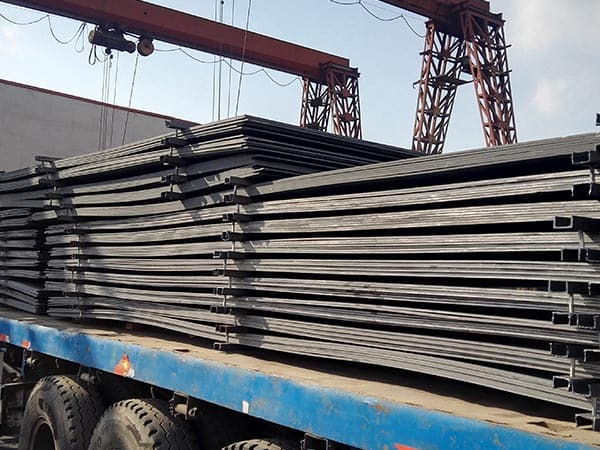
The Strategic Importance of S355MC in the European Automotive Supply Chain
The European automotive industry is currently navigating a period of intense technological transition. As manufacturers strive to meet stringent Euro 7 emission standards and accelerate the shift toward electric vehicles (EVs), the selection of structural materials has become a critical engineering decision. EN 10149-2 S355MC has emerged as a cornerstone material in this landscape. This thermomechanically rolled, high-yield-strength steel is specifically designed for cold forming, offering a unique balance of weight reduction and structural integrity. The projected increase in demand across the EU this year is driven by the need for cost-effective, lightweight solutions that do not compromise safety or manufacturability.
Decoding the EN 10149-2 Standard: Material Science Perspectives
The EN 10149-2 standard governs hot-rolled flat products made of high-yield-strength steels for cold forming. The 'MC' designation is particularly significant: 'M' indicates the thermomechanical rolling process, and 'C' signifies its suitability for cold forming. Unlike traditional normalization processes, thermomechanical rolling involves precise temperature control and specific deformation sequences during the rolling mill phase. This process results in an extremely fine-grained microstructure, which is the primary source of the steel's high strength and excellent low-temperature toughness. For automotive engineers, this means S355MC provides a more consistent performance profile compared to standard structural steels like s355jr.
Chemical Composition and Micro-Alloying Synergy
The superior properties of S355MC are a direct result of its sophisticated chemical composition. By keeping the carbon content low and utilizing micro-alloying elements, steelmakers can achieve high strength without the brittleness associated with higher carbon levels. Elements such as Niobium (Nb), Vanadium (V), and Titanium (Ti) are added in minute quantities to facilitate grain refinement and precipitation hardening. This chemical strategy ensures that the steel remains highly weldable and ductile, even at high yield points.
| Element | Maximum Content (%) |
|---|---|
| Carbon (C) | 0.12 |
| Manganese (Mn) | 1.50 |
| Silicon (Si) | 0.50 |
| Phosphorus (P) | 0.025 |
| Sulphur (S) | 0.020 |
| Aluminum (Al) | 0.015 |
| Niobium (Nb) | 0.09 |
| Vanadium (V) | 0.20 |
| Titanium (Ti) | 0.15 |
Mechanical Performance: Beyond the Yield Point
While the '355' in S355MC refers to its minimum yield strength of 355 MPa, the material's performance extends far beyond this single metric. In the automotive sector, energy absorption during a collision is paramount. S355MC exhibits excellent elongation properties, typically ranging from 19% to 23% depending on the thickness, which allows structural components to deform plastically and absorb kinetic energy. This makes it an ideal choice for longitudinal beams, cross members, and chassis frames. Furthermore, its high tensile strength (430-550 MPa) ensures that the vehicle's structural cage remains intact under extreme stress.
Exceptional Cold Forming and Bending Capabilities
One of the primary reasons for the rising demand for S355MC is its exceptional formability. Automotive components often involve complex geometries that require tight bending radii. S355MC is engineered to withstand severe cold deformation without cracking. For thicknesses under 3mm, the recommended minimum bending radius is as low as 0.5 times the thickness (0.5t), which provides designers with immense flexibility. This capability reduces the need for hot forming, thereby lowering energy consumption and production costs in European manufacturing plants. The fine-grained structure prevents 'orange peel' effects on the surface during deep drawing, ensuring a high-quality finish for visible structural parts.
Advanced Welding Techniques for S355MC Structural Components
Welding is the most common joining method in automotive assembly lines. The low carbon equivalent (CEV) of S355MC makes it highly resistant to cold cracking in the heat-affected zone (HAZ). Whether using Metal Active Gas (MAG) welding, laser welding, or resistance spot welding, S355MC maintains its mechanical integrity. In the context of the EU's push for automated manufacturing, the consistency of S355MC's chemical composition is vital. It allows for stable welding parameters across large production batches, reducing the rate of defects and the need for costly non-destructive testing (NDT).
The Role of S355MC in Vehicle Weight Reduction and Emission Control
Weight reduction remains the most effective way to improve fuel efficiency in internal combustion engines and extend the range of battery electric vehicles. By substituting thicker sections of conventional S235 steel with thinner, high-strength S355MC, engineers can achieve weight savings of up to 25% in specific components. This 'down-gauging' strategy is a major driver of the EU's increased demand. As the European Commission tightens CO2 targets, the automotive supply chain is under pressure to adopt materials that contribute to a lower lifecycle carbon footprint. S355MC fits this requirement perfectly, as it is fully recyclable and requires less material per vehicle.
Laser Cutting and Edge Quality in Automated Manufacturing
Modern European factories rely heavily on high-speed fiber laser cutting. S355MC is particularly well-suited for this process. Its controlled silicon and phosphorus content ensures a stable melt pool during laser cutting, resulting in clean, dross-free edges. This is crucial for subsequent welding steps, as clean edges eliminate the need for secondary grinding or edge preparation. The flatness of EN 10149-2 sheets, maintained through advanced leveling processes at the mill, further enhances the precision of automated picking and placing systems used in Tier 1 supplier facilities.
Market Forecast: Why EU Demand is Projecting Upward
Several economic and regulatory factors are converging to boost the demand for S355MC in Europe this year. Firstly, the recovery of the commercial vehicle sector—including trucks and trailers—is driving large-volume orders for chassis-grade steel. Secondly, the implementation of the Carbon Border Adjustment Mechanism (CBAM) is encouraging EU buyers to source high-quality, efficiently produced steel from local mills that adhere to strict environmental standards. S355MC, produced via the Electric Arc Furnace (EAF) or optimized Blast Furnace routes in Europe, represents a lower-risk procurement choice in terms of both supply chain stability and carbon accounting.
Comparison with Traditional Structural Steels
It is important to distinguish S355MC from traditional S355JR (EN 10025-2). While both share a similar yield strength, S355JR is a general-purpose structural steel not optimized for the complex forming processes required in automotive manufacturing. S355MC offers superior surface quality, tighter thickness tolerances, and much better cold-forming properties. In the high-stakes environment of automotive safety, the predictability of S355MC under dynamic loading makes it the preferred choice over its more generic counterparts. The shift from S355JR to S355MC in many industrial applications beyond automotive, such as agricultural machinery and lifting equipment, is also contributing to the overall demand surge.
Environmental Adaptation and Corrosion Resistance
Automotive components are often exposed to harsh environmental conditions, including road salt and moisture. While S355MC is not a stainless grade, its uniform microstructure provides a consistent substrate for modern coating systems. Whether subjected to Cataphoretic Painting (KTL), galvanizing, or powder coating, S355MC ensures excellent adhesion and long-term corrosion protection. This environmental adaptability is essential for maintaining the resale value and safety of vehicles over a 15-year service life, a key consideration for European consumers and fleet operators.
Strategic Sourcing and PDF Specifications
For procurement departments and design engineers, having access to the detailed technical specifications of EN 10149-2 S355MC in PDF format is essential for compliance and quality assurance. These documents provide the necessary data for Finite Element Analysis (FEA) and crash simulation software. As the EU market becomes more data-driven, the integration of material certificates (3.1 or 3.2) into digital twin models is becoming standard practice. The increasing demand for S355MC is therefore accompanied by a demand for digital transparency and technical documentation that proves the material's origin and performance characteristics.
Future Industry Implications
The trajectory of S355MC in the European market reflects a broader trend toward high-performance, sustainable materials. As the industry moves toward even higher grades like S500MC and S700MC for specialized applications, S355MC remains the 'workhorse' grade that offers the best compromise between performance and cost-efficiency. Its versatility ensures that it will remain a staple of European engineering for the foreseeable future, supporting the next generation of safer, lighter, and more efficient vehicles.
Leave a message