
What is the s355mc what does mc stand for 2020 price
A deep dive into S355MC steel grade, explaining the 'MC' designation, chemical composition, mechanical performance, and historical price context for engineering and manufacturing.
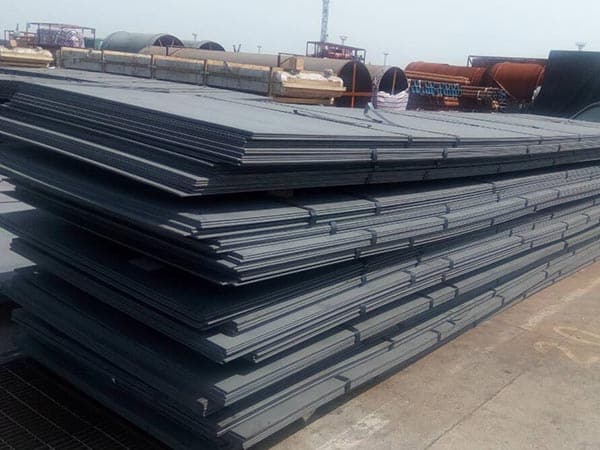
The Technical Essence of S355MC Steel
S355MC is a high-yield strength, hot-rolled steel specifically designed for cold forming. It belongs to the EN 10149-2 standard, which covers hot-rolled flat products made of high yield strength steels for cold forming. This grade is widely recognized for its exceptional balance of strength, ductility, and weldability, making it a staple in modern engineering projects that require weight reduction without compromising structural integrity.
Engineers often turn to S355MC when they need a material that can handle significant stress while remaining easy to manipulate during the fabrication process. Unlike traditional structural steels, S355MC is produced through a specialized rolling process that refines its grain structure, resulting in superior performance characteristics.
Decoding the Name: What Does MC Stand For?
Understanding the alphanumeric code is vital for procurement and engineering design. The name S355MC is not arbitrary; each character represents a specific property defined by European standards:
- S: Stands for 'Structural Steel', indicating its primary use in load-bearing applications.
- 355: Represents the minimum yield strength of 355 MPa (megapascals) for thicknesses up to 16mm.
- M: Indicates the delivery condition is 'Thermomechanically Rolled'. This process involves controlled rolling and cooling to achieve high strength and fine grain size.
- C: Signifies that the steel is suitable for 'Cold Forming'. This means the material can be bent, flanged, or folded without cracking.
The combination of 'M' (Thermomechanical) and 'C' (Cold Forming) distinguishes this steel from standard structural grades like s355jr. The thermomechanical treatment allows for a lower carbon equivalent, which drastically improves weldability and toughness compared to normalized steels of the same strength level.
Chemical Composition and Material Integrity
The performance of S355MC is rooted in its precise chemical makeup. By utilizing micro-alloying elements such as Niobium (Nb), Vanadium (V), and Titanium (Ti), manufacturers can achieve high strength without the brittleness associated with high carbon content.
| Element | Maximum Content (%) |
|---|---|
| Carbon (C) | 0.12 |
| Manganese (Mn) | 1.50 | 0.50 |
| Phosphorus (P) | 0.025 |
| Sulphur (S) | 0.020 |
| Aluminum (Al) | 0.015 (min) |
| Nb + V + Ti | 0.22 (total) |
The low carbon content (max 0.12%) is a critical factor. It ensures that the steel remains highly weldable and resistant to cold cracking, even in demanding environments. The addition of micro-alloys facilitates grain refinement, which is the primary mechanism behind the high yield strength and excellent impact resistance.
Mechanical Properties and Performance Benchmarks
When evaluating S355MC, the mechanical properties are the most significant indicators of its suitability for a project. Its high yield-to-tensile ratio allows for thinner sections to be used, leading to significant weight savings in finished products.
| Property | Value Range |
|---|---|
| Yield Strength (Reh) | Min 355 MPa |
| Tensile Strength (Rm) | 430 - 550 MPa |
| Elongation (A80mm) | Min 19% (depending on thickness) |
| Bending Radius (180°) | 0.5t to 1.5t (depending on thickness) |
The excellent elongation properties demonstrate that S355MC can undergo significant deformation before failure. This is particularly important for complex geometries in automotive chassis or heavy machinery frames where deep drawing or tight bending is required.
Processing Advantages: Welding, Bending, and Cutting
Fabricators prefer S355MC because it streamlines the production cycle. Its weldability is exceptional; the low carbon equivalent (CEV) means that preheating is rarely required for standard thicknesses. This reduces energy costs and speeds up assembly lines.
In terms of bending, S355MC performs predictably. Because of its fine-grained structure, the springback effect is more consistent than in lower-grade steels, allowing for higher precision in CNC press brake operations. Furthermore, the clean surface and uniform microstructure make it an ideal candidate for high-speed laser cutting, resulting in smooth edges with minimal dross.
The 2020 Price Context and Market Dynamics
The mention of "2020 price" in the industry often refers to the extreme volatility experienced during that period. In early 2020, global steel prices for grades like S355MC were relatively stable, but the pandemic-induced supply chain disruptions led to unprecedented fluctuations. While 2020 saw a dip in demand initially, the subsequent recovery caused prices to surge toward the end of the year and into 2021.
Current pricing for S355MC is influenced by several factors: cost of raw materials (iron ore and coking coal), energy surcharges, and the availability of micro-alloying elements. While S355MC typically carries a premium over standard S235JR or S355JR due to the advanced thermomechanical rolling process, the total cost of ownership is often lower. By using S355MC, manufacturers can reduce the thickness of components, leading to lower material weight, reduced transport costs, and less welding filler metal consumption.
Expanding Applications Across Industries
The versatility of S355MC has led to its adoption in diverse sectors where strength-to-weight ratio is a priority. In the automotive industry, it is the go-to material for truck frames, chassis components, and cross members. By switching from traditional S355JR to S355MC, manufacturers can shed hundreds of kilograms from a heavy-duty vehicle, increasing payload capacity and fuel efficiency.
The agricultural sector utilizes S355MC for plows, trailers, and harvester components. These machines operate in harsh environments where impact resistance and fatigue life are crucial. The steel's ability to withstand cyclic loading makes it ideal for equipment that undergoes constant vibration and stress.
In construction and infrastructure, S355MC is used for cold-pressed profiles, racking systems, and crane arms. The high yield strength allows for taller and more stable storage racks in logistics centers, while the lightweight nature of the steel makes mobile cranes more maneuverable and efficient.
Environmental Adaptability and Sustainability
Modern manufacturing is increasingly focused on the carbon footprint. S355MC contributes to sustainability goals through material efficiency. Using less steel to achieve the same structural performance reduces the overall carbon emissions associated with steel production and transportation. Additionally, S355MC is fully recyclable, fitting perfectly into the circular economy model of the metal industry.
The fine-grained structure also provides a degree of improved atmospheric corrosion resistance compared to coarse-grained steels, although it is still a carbon steel and typically requires coating or galvanizing for long-term outdoor exposure. Its surface is particularly well-suited for high-quality powder coating and hot-dip galvanizing due to the controlled silicon content.
Critical Comparison: S355MC vs. S355JR
A common mistake in procurement is treating S355MC and S355JR as interchangeable. While they share a minimum yield strength of 355 MPa, they are very different materials. S355JR is a standard structural steel often used for hot-rolled sections and plates where cold forming is not a primary requirement. It has a coarser grain and higher carbon content.
S355MC, through its thermomechanical processing, offers much better cold formability and toughness. If a design requires tight bends or complex shapes, S355JR might crack, whereas S355MC will perform reliably. Furthermore, the tighter tolerances on thickness and flatness typically found in S355MC make it superior for automated manufacturing environments.
Strategic Procurement for S355MC
When sourcing S355MC, it is essential to verify the Mill Test Certificate (MTC) to ensure compliance with EN 10149-2. Buyers should look for consistency in the mechanical properties across batches, as this impacts the repeatability of bending and welding processes. Given the historical price volatility noted in 2020, establishing long-term partnerships with reputable stockholders or mills is a recommended strategy to mitigate price shocks and ensure steady supply for large-scale production runs.
Leave a message