
What is chemical composition and mechanical properties of s550mc high strength steel equivalent
Explore the comprehensive technical profile of S550MC high-strength steel. This guide details its chemical composition, mechanical properties, and global equivalents like Q550MC and ASTM A1011.
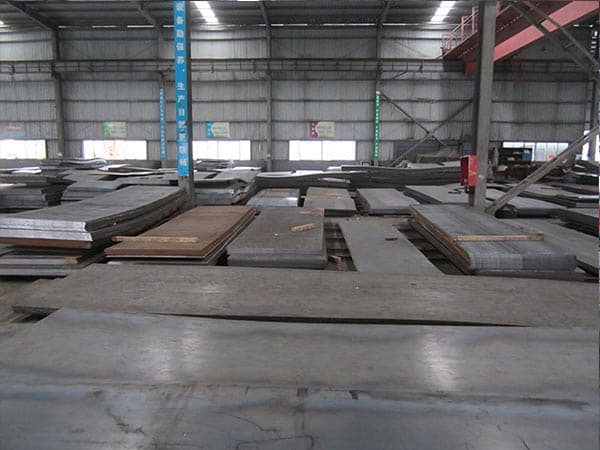
Understanding the Essence of S550MC High Strength Steel
nS550MC is a high-strength, low-alloy (HSLA) steel grade specifically designed for cold forming. Governed by the EN 10149-2 standard, this material is produced through a thermomechanical rolling process (TMCP). Unlike traditional hot-rolled steels, S550MC leverages a precise cooling and rolling schedule to achieve a fine-grained microstructure, which provides an exceptional balance of high yield strength and superior weldability. Engineering teams favor S550MC when the goal is to reduce structural weight without compromising safety or durability, making it a cornerstone in modern vehicle manufacturing and heavy machinery design.
nThe Chemical Composition: Precision Micro-alloying
nThe performance of S550MC is rooted in its chemical makeup. The strategy involves keeping the carbon content significantly low to enhance weldability and toughness, while adding micro-alloying elements like Niobium (Nb), Vanadium (V), and Titanium (Ti) to refine the grain structure. This grain refinement is what allows the steel to reach a minimum yield strength of 550 MPa without the brittleness associated with high-carbon steels.
n| Element | nMax Content (%) | n
|---|---|
| Carbon (C) | n0.12 | n
| Manganese (Mn) | n1.80 | n
| Silicon (Si) | n0.50 | n
| Phosphorus (P) | n0.025 | n
| Sulfur (S) | n0.015 | n
| Aluminium (Al) | n0.015 (min) | n
| Nb + V + Ti | n0.22 (total) | n
The low sulfur and phosphorus levels are critical for the material's cold-forming capabilities. By minimizing inclusions, the steel can undergo severe bending and stretching without cracking. The inclusion of Manganese provides solid solution strengthening, while the combined micro-alloys ensure that the material maintains its strength even after the heat cycles of welding.
nMechanical Properties: Strength Meets Ductility
nThe primary appeal of S550MC is its mechanical profile. It offers a significant leap in load-bearing capacity compared to standard structural steels like S235 or S355. The "550" in its name refers to its minimum yield strength in Megapascals (MPa). Understanding these properties is essential for structural calculations and safety factor assessments.
n- n
- Yield Strength (ReH): Minimum 550 MPa. n
- Tensile Strength (Rm): 600 to 760 MPa. n
- Elongation (A80mm): Minimum 12% to 14% depending on thickness. n
- Bending Radius: For thicknesses ≤ 3mm, a minimum bending radius of 1.0t is achievable. n
One of the most impressive aspects of S550MC is its ductility. Despite its high strength, it retains enough elongation to be processed into complex shapes. This is particularly useful for chassis components where both strength and energy absorption (crashworthiness) are vital. The material also exhibits excellent fatigue resistance, which is a prerequisite for components subjected to cyclic loading in transportation.
nNavigating Global Equivalents: S550MC vs. The World
nIn a globalized supply chain, finding the exact equivalent of S550MC is a common challenge for procurement and engineering departments. While EN 10149-2 is the most recognized standard in Europe, other regions have developed similar grades that match its performance profile. However, it is important to note that "equivalent" does not always mean "identical," as testing methods and tolerance levels can vary.
n| Standard | nEquivalent Grade | nNotes | n
|---|---|---|
| Chinese GB/T 1591 | nQ550MC | nVery close match in chemistry and yield strength. | n
| ASTM (USA) | nA1011 HSLAS-F Grade 80 | nApproximates the strength, though chemistry limits differ slightly. | n
| JIS (Japan) | nSPFH 590 | nCommonly used in the Japanese automotive sector. | n
| Proprietary (SSAB) | nStrenx 550MC / Domex 550 | nOften exceeds standard requirements for consistency. | n
When substituting S550MC with Q550MC or ASTM A1011, engineers must verify the impact energy requirements and the specific cold-forming limits required for the project. Proprietary brands like Strenx 550 are often preferred for high-precision laser cutting and automated bending due to their tighter thickness tolerances and superior flatness.
nProcessing Performance: Welding and Cold Forming
nThe manufacturing utility of S550MC is largely defined by how it behaves during fabrication. Because it is a TMCP steel, it does not require pre-heating for welding in most standard thicknesses. The low carbon equivalent (CEV) ensures that the heat-affected zone (HAZ) remains tough and resistant to cold cracking. Standard welding processes such as MIG/MAG, TIG, and submerged arc welding are all highly effective.
nIn terms of cold forming, S550MC is a star performer. It allows for tight bend radii, which is essential for creating compact, high-strength brackets and structural beams. However, fabricators should be aware of springback. Due to its high yield strength, S550MC will exhibit more springback than mild steel, requiring adjustments to tooling and bending angles to achieve the desired final geometry.
nIndustry Applications: Driving Innovation
nThe shift toward S550MC is driven by the need for efficiency. Across the commercial vehicle sector, it is used for truck longitudinal beams, cross members, and trailer frames. By using S550MC instead of S355, manufacturers can reduce the weight of a trailer frame by up to 20-30%, which translates directly into higher payloads and lower fuel consumption.
nBeyond transportation, S550MC is increasingly utilized in the production of telescopic cranes, agricultural equipment, and racking systems. In the renewable energy sector, it serves as a robust material for solar mounting structures that must withstand high wind loads while remaining lightweight for easy installation. The material's environmental adaptability, particularly its performance in low-temperature environments when specified with impact testing, makes it suitable for global deployment in diverse climates.
nOptimizing Selection for Your Project
nChoosing S550MC or its equivalent involves more than just looking at the yield strength. Factors such as surface finish, thickness tolerance, and the specific requirements of the end-use environment must be considered. For instance, if the component will be exposed to corrosive environments, S550MC can be successfully galvanized or painted, provided the surface is properly prepared. The fine-grained structure of the steel provides an excellent substrate for modern coating systems.
nAs the industry moves toward more sustainable practices, the role of high-strength steels like S550MC becomes even more critical. By using less material to achieve the same structural integrity, companies can reduce their overall carbon footprint. Whether you are sourcing S550MC, Q550MC, or a proprietary alternative, understanding the technical nuances of these materials ensures that your engineering solutions are both cost-effective and high-performing.
"}}
Leave a message