
What are the production technical requirements of s500 steel equivalent
Detailed analysis of the production technical requirements for S500 steel equivalents, including chemical composition, mechanical properties, TMCP/QT processes, and industrial application standards.
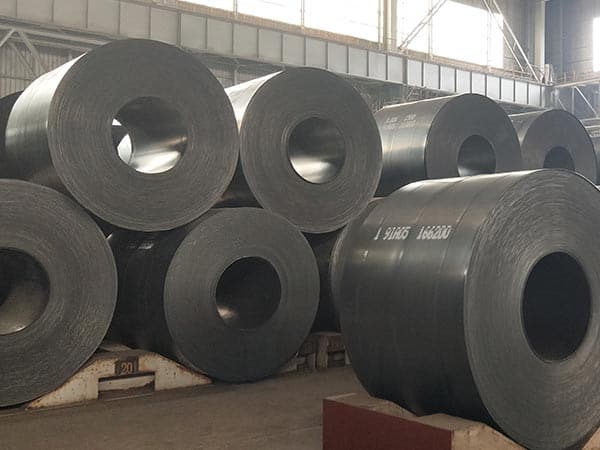
Defining S500 steel and Its Global Equivalents
S500 steel represents a category of high-strength low-alloy (HSLA) structural steels characterized by a minimum yield strength of 500 MPa. Depending on the delivery condition and specific application, S500 is often categorized into sub-grades like S500MC (thermomechanically rolled for cold forming) and S500QL (quenched and tempered for heavy structural use). Understanding the production technical requirements of S500 equivalents, such as the Chinese Q500, ASTM A514 (partial overlap), or Japanese WEL-TEN 500, requires a deep dive into metallurgy and precision manufacturing.
The primary objective in producing these equivalents is to achieve an optimal balance between high yield strength, excellent toughness, and superior weldability. This is not merely about reaching a strength threshold but ensuring the material performs reliably under dynamic loads and extreme environmental conditions.
Chemical Composition and Alloying Strategy
The foundation of any S500 equivalent lies in its chemical makeup. To maintain weldability while increasing strength, manufacturers must strictly control the Carbon Equivalent Value (CEV). A typical S500 equivalent production protocol involves:
- Low Carbon Content: Usually kept below 0.12% for S500MC and slightly higher for QL grades to ensure the steel remains ductile and easy to weld without preheating.
- Micro-alloying Elements: The addition of Niobium (Nb), Vanadium (V), and Titanium (Ti) is critical. These elements facilitate grain refinement and precipitation hardening during the cooling process.
- Manganese and Silicon: Manganese (Mn) is typically used in the range of 1.20% to 1.70% to enhance solid solution strengthening and hardenability.
- Purity Requirements: Phosphorus (P) and Sulfur (S) levels are minimized (often <0.020% or <0.010% for high-end applications) to prevent lamellar tearing and improve impact toughness at low temperatures.
Advanced Thermomechanical Processing (TMCP)
For S500MC and similar equivalents, the production process relies heavily on Thermomechanical Controlled Processing (TMCP). Unlike traditional hot rolling, TMCP involves precise temperature control and deformation rates during the rolling stages.
The process starts with reheating slabs to a specific temperature that allows micro-alloying elements to dissolve. During rolling, the temperature is carefully lowered into the non-recrystallization zone of austenite. This creates a highly deformed austenite structure which, upon cooling, transforms into an ultra-fine ferrite and pearlite (or bainite) microstructure. This grain refinement is the only mechanism that simultaneously increases both strength and toughness.
Quenching and Tempering (Q+T) Requirements
When S500 is produced as a heavy plate (S500QL), the Quenching and Tempering route is preferred. This involves heating the steel above the Ac3 temperature, followed by rapid water quenching to form martensite or bainite. Subsequent tempering at high temperatures (550°C to 700°C) relieves internal stresses and adjusts the hardness to the desired level.
The technical challenge here is ensuring uniformity across the entire thickness of the plate. Modern production lines use high-pressure laminar cooling systems to achieve consistent cooling rates, preventing soft spots or excessive distortion in the final product.
Mechanical Performance Standards
The following table outlines the typical mechanical requirements for S500 equivalents across different international standards:
| Property | S500MC (EN 10149-2) | Q500D (GB/T 1591) | S500QL (EN 10025-6) |
|---|---|---|---|
| Yield Strength (MPa) | ≥ 500 | ≥ 500 | ≥ 500 |
| Tensile Strength (MPa) | 550 - 700 | 610 - 770 | 590 - 770 |
| Elongation (%) | ≥ 12 | ≥ 17 | ≥ 14 |
| Impact Energy (J) | 40J at -20°C | 34J at -20°C | 30J at -40°C |
Weldability and Fabrication Technicalities
A major technical requirement for S500 equivalents is the ability to be integrated into complex structures via welding. Because the strength is derived from TMCP or Q+T processes, excessive heat input during welding can lead to the Heat Affected Zone (HAZ) softening. This occurs when the fine-grained microstructure is coarsened by the welding arc.
Production requirements specify that S500 equivalents must have a low Carbon Equivalent (CEV/CET). Typically, a CEV of less than 0.45 is targeted. This allows fabricators to weld the steel with minimal or no preheating, significantly reducing labor costs and the risk of hydrogen-induced cracking.
Cold Forming and Surface Quality
For S500MC equivalents used in the automotive and crane industries, cold formability is paramount. The production process must ensure that the steel has high isotropy, meaning its properties are consistent in both longitudinal and transverse directions. This is achieved through sulfide shape control, usually by adding Calcium (Ca) to treat the inclusions, making them spherical rather than elongated during rolling.
Surface quality requirements are also stringent. Plates must be free from cracks, scales, or laminations that could act as stress concentrators during bending or laser cutting. Many S500 equivalents are supplied in a pickled and oiled condition to facilitate immediate industrial use.
Environmental Adaptability and Durability
S500 equivalents are frequently deployed in harsh environments, such as offshore platforms, polar regions, or high-altitude mining sites. Therefore, low-temperature toughness is a non-negotiable technical requirement. Testing at -20°C, -40°C, or even -60°C is often mandated to ensure the material does not undergo brittle fracture.
In terms of corrosion resistance, while S500 is not a stainless steel, its dense microstructure and controlled alloying provide a better baseline for protective coatings compared to standard carbon steels. Some variations may include copper or chromium additions to enhance atmospheric corrosion resistance if specified by the end-user.
Industrial Application Expansion
The demand for S500 equivalents is driven by the need for weight reduction without sacrificing safety. In the heavy lifting industry, using S500 instead of S355 allows for thinner boom sections on telescopic cranes, increasing lifting capacity and reach. In the transportation sector, S500MC is used for truck chassis and trailers, reducing the dead weight of the vehicle and improving fuel efficiency.
The renewable energy sector also utilizes S500 for wind turbine tower components and solar tracking frames, where high wind loads require materials that can withstand significant fatigue cycles over a 25-year lifespan. The technical requirements for these applications often include specific fatigue limit testing and tighter tolerances on thickness and flatness.
Quality Control and Certification
Producing S500 equivalent steel requires a robust quality management system. Each heat of steel must be accompanied by a 3.1 or 3.2 material test report (MTR) according to EN 10204. Advanced non-destructive testing (NDT), such as Ultrasonic Testing (UT), is often employed to detect internal flaws, ensuring that the steel meets the high-reliability standards required for structural engineering.
Manufacturers must also adhere to strict dimensional tolerances. For high-strength steels, spring-back during forming is more pronounced, so the consistency of the yield strength within a single coil or plate is a critical production metric that ensures predictable behavior during the customer's manufacturing process.
Leave a message