
What is s500mc high strength low alloy steel steel
A comprehensive guide to S500MC high strength low alloy steel, covering its chemical composition, mechanical properties, processing capabilities, and industrial applications.
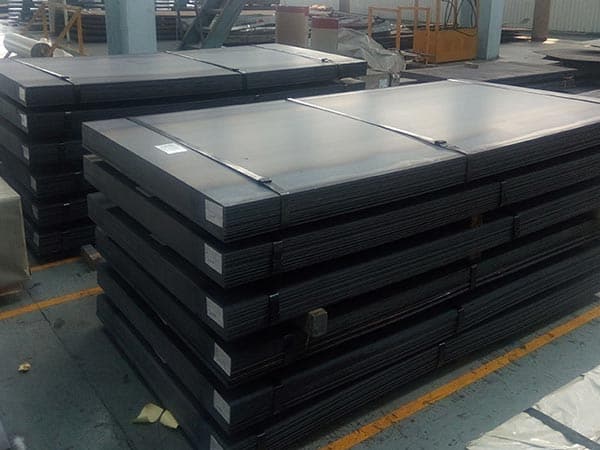
Defining S500MC: The Engineering Backbone of Modern Infrastructure
S500MC is a high-strength low-alloy (HSLA) steel grade specifically designed for cold-forming applications. Governed by the European standard EN 10149-2, this material is produced through a sophisticated thermomechanical rolling process. The nomenclature itself reveals its core identity: 'S' denotes structural steel, '500' represents the minimum yield strength of 500 MPa, 'M' signifies its thermomechanically rolled condition, and 'C' indicates its suitability for cold forming. Unlike traditional carbon steels, S500MC achieves its superior strength not through high carbon content, which can compromise ductility and weldability, but through precise micro-alloying and controlled cooling during production.
The Science of Thermomechanical Rolling (TMCP)
The exceptional properties of S500MC are a direct result of the Thermomechanical Control Process (TMCP). During rolling, the temperature and deformation are strictly monitored to refine the grain structure. By preventing the recrystallization of austenite at specific temperature ranges, the steel develops a fine-grained ferrite-pearlite or bainitic microstructure. This grain refinement is the only strengthening mechanism that simultaneously improves both strength and toughness. For engineers, this means S500MC offers a higher strength-to-weight ratio than standard S355 grades, allowing for significant weight reduction in structural designs without sacrificing safety or durability.
Chemical Composition and Micro-Alloying Elements
The chemical profile of S500MC is engineered for weldability and formability. By maintaining a low carbon equivalent (CEV), the steel avoids the brittle phases typically associated with high-strength materials. The inclusion of micro-alloying elements such as Niobium (Nb), Vanadium (V), and Titanium (Ti) is critical. These elements form fine carbides and nitrides that pin grain boundaries and provide precipitation hardening.
| Element | Maximum Percentage (%) |
|---|---|
| Carbon (C) | 0.12 |
| Manganese (Mn) | 1.60 |
| Silicon (Si) | 0.50 |
| Phosphorus (P) | 0.025 |
| Sulfur (S) | 0.015 |
| Aluminum (Al) | 0.015 |
| Niobium (Nb) | 0.09 |
| Titanium (Ti) | 0.15 |
| Vanadium (V) | 0.20 |
This lean chemistry ensures that S500MC remains highly ductile. The low sulfur content, often achieved through ladle desulfurization, minimizes non-metallic inclusions, which is vital for maintaining toughness in the transverse direction and preventing lamellar tearing during welding.
Mechanical Properties: Strength Meets Ductility
The primary appeal of S500MC is its mechanical performance. While it boasts a yield strength of at least 500 MPa, it maintains an elongation percentage that allows for complex bending and folding. This balance is essential for industries where components must withstand high loads while being manufactured through automated cold-forming processes.
| Property | Value (Thickness ≤ 16mm) |
|---|---|
| Minimum Yield Strength (ReH) | 500 MPa |
| Tensile Strength (Rm) | 550 - 700 MPa |
| Minimum Elongation (A5) | 12% - 14% (depending on thickness) |
| Bending Radius (90°) | 1.0t to 1.5t (t = thickness) |
It is important to note that the impact energy of S500MC can also be specified. While the standard EN 10149-2 focuses on cold forming, many manufacturers provide S500MC with guaranteed impact toughness at -20°C or -40°C, making it suitable for equipment operating in harsh, cold environments.
Superior Cold Forming and Fabricating Capabilities
One of the standout features of S500MC is its excellent cold-formability. Because of its fine-grained structure and low inclusion levels, it can be bent to tight radii without cracking. This allows manufacturers to replace heavy castings or complex multi-part weldments with single, cold-formed profiles. Using S500MC reduces production time and costs by minimizing the number of welds required. When bending S500MC, it is recommended to bend transverse to the rolling direction to utilize the material's maximum ductility, although its isotropic properties are much better than traditional hot-rolled steels.
Welding Characteristics of S500MC
Welding S500MC is straightforward due to its low carbon equivalent. It can be welded using all standard methods, including MIG/MAG, TIG, and submerged arc welding (SAW). Unlike high-carbon steels, S500MC does not generally require preheating, provided the thickness is moderate and the ambient conditions are controlled. However, care must be taken regarding the heat input. Excessive heat input can lead to grain growth in the Heat Affected Zone (HAZ), which may locally reduce the yield strength and toughness. Using low-hydrogen consumables is recommended to prevent hydrogen-induced cracking, ensuring the integrity of high-stress structural joints.
Strategic Applications Across Industries
The adoption of S500MC is driven by the global push for efficiency and sustainability. By using a stronger steel, designers can use thinner sections to achieve the same load-bearing capacity, leading to lighter structures. This is particularly transformative in the transportation sector.
- Automotive and Trucking: S500MC is widely used for truck chassis frames, cross members, and longitudinal beams. Lighter frames mean higher payloads and improved fuel efficiency.
- Lifting and Excavation: Crane arms, boom sections, and components for earthmoving machinery benefit from the high strength-to-weight ratio, allowing for longer reach and higher lift capacities.
- Agricultural Equipment: The durability and formability of S500MC make it ideal for plow frames, trailers, and harvesting machinery that must endure repetitive stress in outdoor environments.
- Cold Pressed Sections: Many structural profiles used in solar panel racking, storage systems, and building frames are manufactured from S500MC to ensure rigidity while keeping the overall weight manageable.
Environmental Adaptability and Longevity
While S500MC is not a weathering steel like Corten, its clean chemistry provides a consistent surface for protective coatings. Whether galvanized or painted, the lack of surface defects and tight oxide scale (if ordered in the pickled and oiled condition) ensures excellent coating adhesion. Furthermore, its performance in low-temperature environments makes it a reliable choice for mobile machinery used in northern climates, where brittle fracture is a significant risk for lower-grade steels.
Economic Advantages of Switching to S500MC
From a procurement perspective, S500MC offers a compelling value proposition. Although the price per ton may be higher than S355, the total cost of the project often decreases. Weight savings of 20% to 30% are common when redesigning with S500MC. This leads to lower shipping costs, reduced welding consumable usage, and faster assembly times. In a market where energy costs and carbon footprints are under scrutiny, the ability to produce more efficient, lighter products is a significant competitive advantage.
Technical Comparison: S500MC vs. Standard Structural Steels
When comparing S500MC to a standard S355J2, the differences are stark. S355J2 is a versatile structural steel, but it lacks the refined grain structure of S500MC. S500MC provides nearly 40% higher yield strength. Compared to S700MC, S500MC offers a better balance of cost and formability, making it the 'sweet spot' for many structural applications that require high strength but also involve significant bending or complex shaping during fabrication.
Leave a message