
What is the 1.0976 hot-rolled steel impact test
Explore the critical role of the 1.0976 (S355MC) hot-rolled steel impact test. This guide covers mechanical properties, chemical composition, welding, and cold-forming capabilities for industrial applications.
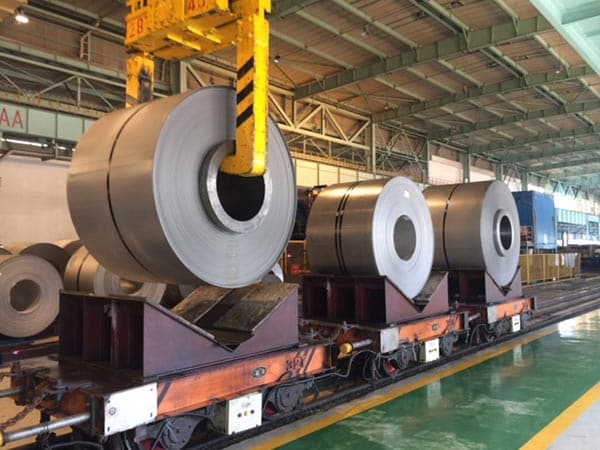
Understanding the 1.0976 Hot-Rolled Steel Impact Test and Material Integrity
The 1.0976 steel grade, widely recognized under the EN 10149-2 standard as S355MC, represents a pinnacle of thermomechanically rolled high-yield strength steel designed specifically for cold forming. The impact test for 1.0976 is a critical quality control procedure that determines the material's toughness, specifically its ability to absorb energy and resist brittle fracture under high-strain rates. For engineers and manufacturers, understanding this test is not just about compliance; it is about ensuring the structural safety of components operating in demanding environments.
Unlike standard structural steels, 1.0976 is engineered through a sophisticated thermomechanical rolling process. This process refines the grain structure, which directly influences how the material performs during a Charpy V-notch impact test. The test typically measures the energy absorbed (in Joules) when a notched specimen is struck by a pendulum at specific temperatures, such as 20°C, 0°C, or -20°C, depending on the specific sub-grade requirements and customer specifications.
The Significance of Toughness in High-Yield Steel
Why is the impact test so vital for 1.0976? High-yield strength steels often face a trade-off between strength and ductility. As yield strength increases, the risk of brittle failure—where the material snaps without significant deformation—also rises. The impact test serves as a safeguard, ensuring that the S355MC grade retains sufficient toughness to handle dynamic loads, vibrations, and sudden shocks. This is particularly crucial for the automotive and heavy machinery sectors, where chassis frames and crane arms are subjected to unpredictable stress cycles.
In the context of 1.0976, the impact energy values are typically verified on longitudinal specimens. While the standard EN 10149-2 focus heavily on yield strength and elongation, many high-end applications require guaranteed impact toughness at low temperatures (e.g., 40J at -20°C) to ensure the steel remains reliable in arctic or high-altitude conditions. This prevents the 'ductile-to-brittle transition,' a phenomenon where steel becomes as fragile as glass when cold.
Chemical Composition: The Metallurgy Behind the Performance
The superior impact resistance and mechanical strength of 1.0976 are rooted in its precise chemical balance. The use of micro-alloying elements is the secret to its high performance. By keeping carbon levels low, the steel maintains excellent weldability and toughness, while elements like Niobium (Nb), Vanadium (V), and Titanium (Ti) provide grain refinement.
| Element | Max Percentage (%) | Role in 1.0976 Performance |
|---|---|---|
| Carbon (C) | 0.12 | Ensures excellent weldability and prevents brittleness. |
| Manganese (Mn) | 1.50 | Increases strength and improves hardenability. |
| Silicon (Si) | 0.50 | Acts as a deoxidizer and contributes to solid-solution strengthening. |
| Phosphorus (P) | 0.025 | Kept low to prevent cold shortness and maintain toughness. |
| Sulphur (S) | 0.020 | Minimized to reduce inclusions and improve transverse ductility. |
| Aluminium (Al) | 0.015 (min) | Fine-grains the steel and fixes nitrogen. |
| Nb / V / Ti | 0.09 / 0.20 / 0.15 | Micro-alloys that provide high yield strength through grain refinement. |
This lean chemical design allows 1.0976 to achieve a yield strength of at least 355 MPa without the need for heavy alloying, which keeps the material cost-effective and highly processable.
Mechanical Properties and Impact Energy Benchmarks
The mechanical profile of 1.0976 is optimized for cold forming. This means the steel can be bent, folded, and shaped into complex geometries without cracking. The impact test values are a subset of this broader mechanical profile, which includes yield strength, tensile strength, and elongation.
- Yield Strength (ReH): Minimum 355 MPa.
- Tensile Strength (Rm): 430–550 MPa.
- Elongation (A80mm): Typically ≥ 19% (for thicknesses < 3mm) or ≥ 23% (for thicknesses ≥ 3mm).
- Impact Toughness: Often specified at 40 Joules at -20°C for premium batches, ensuring safety in cold climates.
The thermomechanical rolling process (denoted by the 'MC' suffix) ensures that these properties are consistent across the entire coil or plate. This consistency is vital for automated manufacturing processes where variations in material hardness or toughness could lead to machine downtime or part failure.
Processing Performance: Welding and Cold Forming
One of the primary reasons 1.0976 is favored in modern manufacturing is its exceptional processability. Because the impact test confirms the material's inherent toughness, fabricators can be confident when performing aggressive cold-forming operations. The material can be bent with very small radii, often 0.5 to 1.5 times the thickness, depending on the orientation relative to the rolling direction.
Welding is another area where 1.0976 excels. Due to its low Carbon Equivalent (CEV), it is not prone to cold cracking in the heat-affected zone (HAZ). Whether using MIG, MAG, or laser welding, the 1.0976 maintains its structural integrity. However, it is important to note that because the strength is derived from thermomechanical rolling, excessive heat input during welding should be controlled to avoid localized softening of the grain structure.
Environmental Adaptability and Longevity
The 1.0976 steel is designed for longevity in harsh environments. While it is not a 'weathering steel' in the sense of Corten, its fine-grained structure provides a more uniform surface for protective coatings like galvanizing or painting. The high toughness verified by the impact test means the steel can endure the thermal expansion and contraction cycles of outdoor structures without developing micro-cracks.
In the transport sector, where 1.0976 is used for truck frames and trailers, the material must withstand road salts, moisture, and physical impacts. The impact test ensures that even if a stone chips the protective coating and a small amount of corrosion begins, the steel has the fracture toughness to prevent that site from becoming a point of catastrophic failure under load.
Broad Spectrum Applications
The versatility of 1.0976 makes it a staple in several high-stakes industries. By passing the impact test and meeting high-yield requirements, it replaces heavier, traditional structural steels, allowing for 'lightweighting' without sacrificing safety.
- Automotive Industry: Used for longitudinal beams, cross members, and chassis components where energy absorption during a collision is critical.
- Construction Machinery: Ideal for crane jibs, excavator arms, and support structures that require high strength-to-weight ratios.
- Storage Systems: High-density racking systems benefit from the material's ability to be cold-formed into complex, load-bearing profiles.
- Agricultural Equipment: Plows, trailers, and harvesters utilize 1.0976 for its durability against impact and fatigue.
Selecting 1.0976 (S355MC) means choosing a material that balances the rigorous demands of modern engineering with the practicalities of manufacturing. The impact test remains the ultimate benchmark for this balance, proving that a steel can be both incredibly strong and remarkably resilient.
Leave a message