
How to improve the quality of 1.0986 weldable structural steel
Explore professional strategies to enhance the quality of 1.0986 (S460MC) weldable structural steel. This guide covers chemical optimization, TMCP parameters, welding techniques, and industrial applications for superior performance.
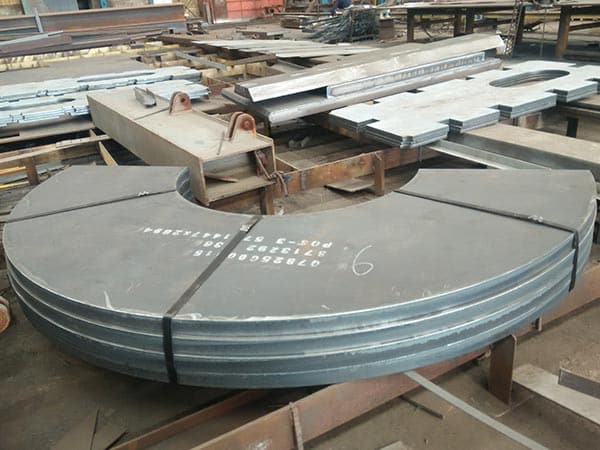
Technical Essence of 1.0986 High-Strength Structural Steel
1.0986 steel, widely recognized under the EN 10149-2 standard as S460MC, is a high-strength, thermomechanically rolled steel specifically engineered for cold forming and welding. Improving the quality of this material is not merely about meeting the minimum yield strength of 460 MPa; it involves a sophisticated orchestration of metallurgy, rolling precision, and post-processing techniques. To achieve superior performance, manufacturers and engineers must focus on grain refinement and the management of micro-alloying elements. 1.0986 is prized for its low carbon content, which provides an excellent carbon equivalent (CEV) value, ensuring that the steel remains highly weldable even at high strength levels.
Optimizing Chemical Composition for Enhanced Purity
The foundation of quality for 1.0986 steel begins in the electric arc furnace or basic oxygen furnace. To improve the material's toughness and fatigue resistance, it is critical to control the levels of sulfur and phosphorus. High-quality 1.0986 should ideally maintain sulfur levels below 0.010% to prevent the formation of elongated manganese sulfide inclusions, which can lead to lamellar tearing during welding or cracking during tight-radius cold bending.
- Micro-alloying Strategy: The strategic addition of Niobium (Nb), Vanadium (V), and Titanium (Ti) is essential. These elements form fine carbides and nitrides that pin grain boundaries during the reheating process, preventing grain growth.
- Carbon Management: Keeping carbon levels around 0.10% to 0.12% ensures high strength without sacrificing ductility or weldability.
- Inclusion Engineering: Implementing calcium treatment (Ca-treatment) to modify the shape of remaining inclusions from stringers to spheres significantly improves the transverse impact energy of the steel.
Mastering the Thermomechanical Controlled Processing (TMCP)
The quality of 1.0986 is largely determined by the TMCP (Thermomechanical Controlled Processing) route rather than traditional heat treatment. This process combines controlled rolling and accelerated cooling to achieve a fine-grained ferrite-pearlite or bainitic microstructure. To enhance quality, the rolling temperatures must be strictly monitored.
| Process Stage | Critical Parameter | Impact on Quality |
|---|---|---|
| Slab Reheating | 1150°C - 1250°C | Ensures complete dissolution of micro-alloying elements. |
| Roughing Rolling | Above Tnr (Recrystallization Temp) | Breaks down the initial cast structure into fine austenite grains. |
| Finishing Rolling | Below Tnr (800°C - 900°C) | Creates deformed austenite grains with high dislocation density for nucleation. |
| Accelerated Cooling | 15°C/s - 30°C/s | Suppresses grain growth and promotes a fine, homogenous microstructure. |
Uniformity across the width and length of the coil is paramount. Variations in the cooling rate can lead to inconsistent mechanical properties, causing issues during automated laser cutting or robotic welding in downstream fabrication.
Advanced Welding Techniques for 1.0986 Integrity
As a weldable structural steel, 1.0986 offers significant advantages, but its quality in the final structure depends on the Heat Affected Zone (HAZ) management. Because the strength is derived from TMCP, excessive heat input during welding can cause grain coarsening or "softening" in the HAZ, where the local yield strength drops below the parent metal specifications.
To improve welding quality, use low-hydrogen processes such as GMAW (Gas Metal Arc Welding) or FCAW (Flux-Cored Arc Welding). The heat input should be kept within the range of 10-25 kJ/cm. Maintaining a low interpass temperature is also vital to prevent the accumulation of heat that could degrade the fine-grained structure. Preheating is generally not required for 1.0986 due to its low carbon equivalent, which simplifies the production workflow and reduces the risk of hydrogen-induced cracking.
Enhancing Cold Forming and Bending Performance
1.0986 is frequently used in complex cold-pressed components. To improve the quality of formed parts, the steel must exhibit high isotropic properties. This means the difference between longitudinal and transverse elongation must be minimized. High-quality S460MC allows for a minimum bending radius (r) of 1.0 to 1.5 times the thickness (t) for 90-degree bends, depending on the thickness.
- Springback Control: High-strength steels exhibit more springback than standard S235 or S355 grades. Utilizing precision CNC press brakes with integrated angle measurement systems ensures dimensional accuracy.
- Edge Quality: The quality of the sheared or laser-cut edge is critical. Burrs or micro-cracks on the edge can propagate during bending. Improving the quality involves using sharp tooling or grinding the edges of high-stress zones before forming.
Environmental Adaptability and Surface Protection
While 1.0986 is primarily valued for its mechanical strength, its longevity in harsh environments is a key quality metric. The steel's fine-grained structure provides a slightly better substrate for protective coatings compared to coarse-grained steels. To enhance environmental resistance, proper surface preparation is mandatory.
Shot blasting to SA 2.5 grade followed by high-quality zinc-rich primers or hot-dip galvanizing is common. However, when galvanizing 1.0986, it is essential to consider the Sandelin Effect. Controlling the Silicon (Si) and Phosphorus (P) content during the steelmaking phase ensures a predictable and aesthetic galvanized coating, preventing excessively thick and brittle zinc layers that can peel off under mechanical stress.
Broadening Application Horizons
Improving the quality of 1.0986 allows it to penetrate industries where weight reduction is critical. In the automotive sector, it is used for truck chassis and cross members, where its high strength-to-weight ratio enables higher payloads and better fuel efficiency. In the heavy machinery sector, crane booms and excavator components benefit from its high yield strength and excellent low-temperature impact toughness, often tested at -20°C or -40°C.
Quality improvement also extends to the consistency of the material's flatness and thickness tolerances. Utilizing 1.0986 with restricted tolerances (e.g., half of EN 10051 standards) significantly improves the efficiency of automated production lines, reducing downtime and scrap rates.
Strict Quality Assurance and Testing Protocols
To guarantee the superior quality of 1.0986, a robust testing regime must be implemented. Beyond standard tensile and bend tests, sophisticated manufacturers employ non-destructive testing (NDT) such as ultrasonic inspection to ensure internal soundness. Microstructural analysis via scanning electron microscopy (SEM) can verify the effectiveness of the TMCP process by measuring grain size and identifying the distribution of micro-alloying precipitates. Each batch should be accompanied by a 3.1 or 3.2 inspection certificate according to EN 10204, documenting the chemical and mechanical properties that define the steel's performance profile.
Leave a message