
What is the 1.8974 steel for large truss truck boom thermo-mechanical condition
Discover the technical properties of 1.8974 (S700MC) steel, its thermo-mechanical rolling process, and why it is the preferred choice for high-performance truss truck booms.
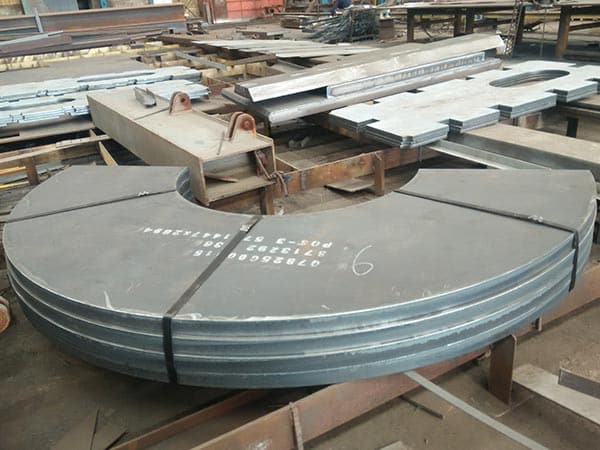
Defining 1.8974 Steel: The High-Strength Standard for Lifting
1.8974 steel, internationally categorized under the EN 10149-2 standard as S700MC, is a high-strength low-alloy (HSLA) steel specifically engineered for cold forming applications. This material represents a critical advancement in metallurgical engineering, designed to bridge the gap between structural stability and weight reduction. In the context of large truss truck booms, 1.8974 steel provides the necessary yield strength to support massive loads while maintaining a lean profile that enhances vehicle mobility and fuel efficiency.
The nomenclature '1.8974' refers to its numerical designation, while 'S700MC' provides insight into its characteristics: 'S' for structural steel, '700' for a minimum yield strength of 700 MPa, 'M' for the thermo-mechanically rolled condition, and 'C' for its suitability for cold forming. This combination of properties makes it indispensable for manufacturers of mobile cranes, concrete pumps, and specialized transport equipment where every kilogram of self-weight saved translates directly into increased payload capacity.
The Thermo-Mechanical Rolling Process (M Condition)
The 'M' in S700MC signifies the thermo-mechanical rolling (TMCP) process, a sophisticated production method that differs significantly from traditional normalized rolling. In TMCP, the final deformation is carried out in a specific temperature range where the austenite does not recrystallize. This technique results in an extremely fine-grained microstructure, which is the primary reason for the steel's exceptional strength and toughness.
By controlling the cooling rate and the rolling temperature, manufacturers can achieve high strength without the need for high levels of alloying elements like carbon or manganese. This low carbon equivalent (CEV) is the secret behind the material's superior weldability. Unlike traditional quenched and tempered steels, 1.8974 maintains its grain structure and mechanical properties more effectively during the thermal cycles of welding, provided the heat input is carefully managed.
Mechanical Properties and Performance Metrics
The mechanical integrity of 1.8974 steel is what defines its role in heavy-duty engineering. The minimum yield strength of 700 MPa is nearly double that of standard S355 structural steel. This allows engineers to design thinner sections that can withstand the same or higher stresses, a vital factor in the design of long-reach truss booms.
| Property | Value (Typical for 1.8974) |
|---|---|
| Minimum Yield Strength (ReH) | 700 MPa |
| Tensile Strength (Rm) | 750 - 950 MPa |
| Minimum Elongation (A50) | 12% - 14% |
| Impact Energy (Charpy-V) | 40J at -20°C (or lower depending on grade) |
Beyond simple strength, the ductility of 1.8974 is remarkable. An elongation factor of 12% or higher ensures that the material can absorb energy and undergo plastic deformation before failure, providing a safety margin in the event of an accidental overload. This balance of hardness and flexibility is essential for truss structures that experience dynamic loading and vibration during operation.
Processing Performance: Welding and Cold Forming
One of the primary reasons 1.8974 steel is favored for truss truck booms is its excellent processing characteristics. Truss booms are complex structures consisting of numerous welded joints and bent sections. The low carbon content (typically below 0.12%) and optimized chemical composition (including micro-alloying elements like Niobium, Vanadium, and Titanium) ensure that the steel remains weldable using standard MIG/MAG or MMA processes.
- Cold Forming: Despite its high strength, 1.8974 can be bent to tight radii. This allows for the creation of complex boom profiles and hollow sections that optimize the moment of inertia.
- Weldability: The low CEV minimizes the risk of cold cracking in the heat-affected zone (HAZ). Preheating is often unnecessary for thinner sections, reducing production time and energy costs.
- Cutting: The material is well-suited for laser, plasma, and oxy-fuel cutting, with minimal distortion and a clean edge finish.
Strategic Application in Large Truss Truck Booms
Truss booms, unlike telescopic box booms, rely on a network of interconnected members to distribute loads. This design is inherently lighter but requires materials that can handle high axial compression and tension. 1.8974 steel is the backbone of these structures. Its high yield-to-weight ratio allows for the construction of booms that can reach heights exceeding 100 meters while remaining light enough to be transported on public roads without excessive permits.
In a large truss truck boom, the main chords and diagonal lacings are often made from S700MC. The thermo-mechanical condition ensures that the material can withstand the repetitive stress cycles associated with lifting operations. Fatigue resistance is a critical factor here; the fine-grained structure of 1.8974 helps inhibit the initiation and propagation of micro-cracks, extending the service life of the equipment in demanding environments.
Environmental Adaptability and Resilience
Large truck booms operate in diverse climates, from the scorching heat of desert construction sites to the sub-zero temperatures of arctic mining operations. 1.8974 steel is designed to maintain its toughness across a wide temperature spectrum. The impact strength at low temperatures (often tested at -20°C or -40°C) ensures that the boom will not suffer from brittle fracture in cold weather.
Furthermore, the chemical purity of 1.8974 steel contributes to its atmospheric corrosion resistance. While it is not a 'weathering steel' in the traditional sense, its dense surface structure and uniform composition provide a stable base for modern coating systems, ensuring long-term protection against the elements. This resilience reduces maintenance intervals and total cost of ownership for fleet operators.
Comparative Analysis: S700MC vs. Conventional Steels
When comparing 1.8974 to conventional S355 or even S500 grades, the advantages become clear through a structural efficiency lens. By switching from S355 to S700MC, a designer can potentially reduce the weight of a boom component by up to 40% without sacrificing load-bearing capacity. This weight saving can be reinvested into a longer reach or a higher lifting capacity, providing a significant competitive edge in the heavy lifting market.
| Feature | s355jr | 1.8974 (S700MC) |
|---|---|---|
| Yield Strength | 355 MPa | 700 MPa |
| Weight Efficiency | Standard | High (Up to 40% saving) | Very Easy | Excellent for High Strength |
| Cost per Kg | Lower | Higher (Offset by weight reduction) |
Optimizing Production with 1.8974 Steel
Implementing 1.8974 steel into a manufacturing workflow requires an understanding of its unique metallurgy. For instance, while welding is highly efficient, excessive heat input must be avoided to prevent grain growth in the heat-affected zone, which could locally reduce the yield strength. Advanced welding parameters and automated systems are often employed to ensure consistent quality across the entire length of a 50-meter truss section.
The economic logic of using 1.8974 is compelling. Although the price per ton is higher than standard structural steel, the reduction in total material volume, lower transport costs, and the ability to manufacture a superior product often lead to a lower total project cost. For the end-user, a truck boom made from 1.8974 steel is more than just a piece of equipment; it is a high-performance tool capable of performing tasks that were previously impossible with heavier, traditional materials.
Future Perspectives in High-Strength Structural Design
The evolution of 1.8974 steel continues as metallurgical techniques refine the TMCP process even further. We are seeing a trend toward even higher grades, such as S960MC, but S700MC remains the 'sweet spot' for many truss boom applications due to its perfect balance of extreme strength, reliable toughness, and ease of fabrication. As global infrastructure projects grow in scale and complexity, the demand for materials that offer 'more with less' will only increase.
Engineers are now looking at hybrid designs, combining 1.8974 with other advanced materials to create the next generation of ultra-light, ultra-long booms. The focus is shifting toward life-cycle sustainability, where the energy saved during the operation of a lighter vehicle far outweighs the energy used in the production of high-strength steel. 1.8974 stands at the forefront of this green transition in the heavy machinery industry, proving that high-performance engineering and environmental responsibility can go hand in hand.
Leave a message