
What is the effect of B600L steel for car safety parts surface treatment on its properties
This article explores the profound impact of various surface treatments on the mechanical and chemical properties of B600L steel, focusing on automotive safety applications, corrosion resistance, and structural integrity.
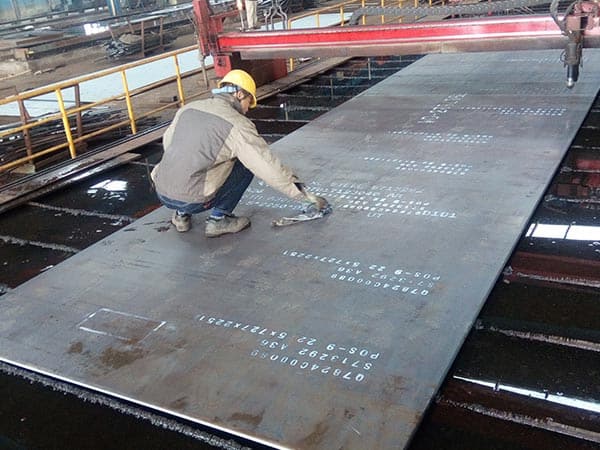
The Role of B600L Steel in Modern Automotive Safety Systems
B600L steel is a high-strength low-alloy (HSLA) grade specifically engineered for the demanding requirements of automotive structural components. Its designation, where '600' refers to the minimum tensile strength and 'L' indicates its suitability for cold forming, highlights its primary utility: balancing strength with ductility. In the context of vehicle safety parts—such as bumper beams, chassis cross-members, and seat rails—the material must not only withstand high-impact forces but also maintain its integrity over a vehicle's 15-year lifespan. The surface treatment of B600L is not merely a cosmetic choice; it is a critical engineering step that dictates the material's fatigue life, weldability, and resistance to environmental degradation.
Metallurgical Foundation and Surface Sensitivity
The microstructure of B600L typically consists of a fine-grained ferrite matrix with dispersed pearlite or small amounts of bainite. This structure is achieved through micro-alloying with elements like Niobium (Nb), Titanium (Ti), and Vanadium (V). These elements form stable carbides and nitrides that pin grain boundaries, preventing grain growth during processing. However, this sophisticated microstructure makes the steel sensitive to the thermal and chemical cycles involved in surface treatments. For instance, the high-temperature environment of hot-dip galvanizing can trigger aging effects or slight shifts in the precipitation state of micro-alloying elements, which in turn affects the yield-to-tensile ratio and uniform elongation.
Hot-Dip Galvanizing (HDG) and Thermal Influence
Hot-dip galvanizing is one of the most common treatments for B600L components located in the underbody. The process involves dipping the steel into molten zinc at temperatures around 450°C. The primary effect of HDG on B600L is the formation of a series of iron-zinc alloy layers. While these layers provide sacrificial protection, the thermal cycle can lead to a slight reduction in the yield strength of cold-worked areas due to recovery processes. Furthermore, the thickness of the zinc layer must be strictly controlled; an excessively thick layer can become brittle, leading to micro-cracking during the high-strain events characteristic of a vehicle collision. The interface between the zinc and the B600L substrate is where the 'battle' for adhesion and structural integrity is fought.
Electro-Galvanizing: Precision without Thermal Stress
Unlike HDG, electro-galvanizing (EG) is an electrochemical process that occurs at near-ambient temperatures. For B600L safety parts, EG offers the advantage of maintaining the steel's original mechanical properties without the risk of thermal softening. The precision of the EG coating allows for tighter tolerances in complex safety assemblies. However, the risk of hydrogen embrittlement during the pickling and plating stages is a significant concern for high-strength steels. Hydrogen atoms can migrate into the B600L lattice, particularly at grain boundaries pinned by Nb/Ti precipitates, potentially leading to delayed fracture under load. Modern EG lines for B600L incorporate baking cycles to facilitate hydrogen effusion, ensuring the safety parts remain ductile under impact.
Phosphating and Electrophoretic Coating (KTL)
For interior safety components like seat frames or dashboard supports, phosphating followed by Electrophoretic Coating (often called KTL or E-coat) is the standard. This treatment focuses on providing a uniform, corrosion-resistant organic layer. The phosphating process creates a crystalline layer that increases the surface area for E-coat adhesion. For B600L, the surface roughness and cleanliness are paramount. If the surface contains residual rolling oils or excessive carbonaceous residues, the phosphate crystals will be non-uniform, leading to 'holidays' or weak spots in the E-coat.
- Enhanced salt spray resistance (up to 1000 hours).
- Uniform coverage in recessed areas of complex stampings.
- Minimal impact on the base metal's mechanical ductility.
Mechanical Surface Modification: Shot Peening Effects
While not a 'coating' in the traditional sense, shot peening is a surface treatment often applied to B600L components subjected to cyclic loading, such as suspension brackets. By bombarding the surface with spherical media, a layer of compressive residual stress is induced. This layer acts as a barrier to crack initiation, significantly extending the fatigue life of B600L. In the automotive safety context, this means that parts can be designed thinner (contributing to lightweighting) without compromising the fatigue safety factor. When combined with subsequent coating processes, shot peening ensures that even if the surface coating is breached, the underlying steel remains resistant to stress corrosion cracking.
Comparative Analysis of Surface Treatments on B600L Properties
| Treatment Type | Corrosion Resistance | Impact on Fatigue Strength | Hydrogen Embrittlement Risk | Typical Application |
|---|---|---|---|---|
| Hot-Dip Galvanizing | Excellent (Sacrificial) | Moderate (due to Fe-Zn layers) | Low | Chassis Cross-members |
| Electro-Galvanizing | Good (Barrier/Sacrificial) | Neutral | High (requires baking) | Door Impact Beams |
| E-Coating (KTL) | Very Good (Barrier) | Neutral | Low | Seat Rails & Brackets |
| Shot Peening + Coating | Excellent | Significant Improvement | Low | Suspension Safety Links |
Environmental Adaptability and Long-term Durability
The environment in which a vehicle operates—ranging from salt-laden coastal roads to humid tropical climates—places immense stress on B600L safety parts. Surface treatments must provide a synergistic effect. For example, the 'zinc + E-coat' duplex system is increasingly used for B600L to provide both sacrificial and barrier protection. This combination ensures that even if the E-coat is chipped by road debris, the underlying zinc layer prevents the rapid lateral spread of corrosion (creep), which could otherwise undermine the structural thickness of the safety part. The environmental adaptability of B600L is thus a direct function of the surface treatment's ability to maintain its integrity under cyclic thermal expansion and contraction.
Influence on Joining and Welding Performance
A critical but often overlooked effect of surface treatment on B600L is its impact on weldability. Zinc coatings, while excellent for corrosion, have a lower boiling point than the melting point of steel. During Resistance Spot Welding (RSW) or Laser Welding of B600L safety parts, zinc vapor can become trapped in the weld pool, leading to porosity or 'zinc-induced liquid metal embrittlement' (LME). Optimizing the surface treatment involves selecting the right coating weight and morphology to ensure stable arc characteristics and defect-free joints. Manufacturers often use specialized welding parameters or 'venting' geometries to mitigate these effects, ensuring the safety assembly performs as a monolithic unit during a crash.
Optimizing Performance through Surface Synergy
The interaction between B600L steel and its surface treatment is a complex dance of chemistry, metallurgy, and mechanical engineering. Selecting the appropriate treatment requires a deep understanding of the part's functional environment and the steel's metallurgical response. Whether it is the robust protection of hot-dip galvanizing or the fatigue-enhancing benefits of mechanical treatments, the goal remains the same: to ensure that B600L safety parts deliver their maximum energy-absorption potential when it matters most. As automotive designs push toward thinner gauges and higher strengths, the role of surface engineering will only grow in importance, transforming B600L from a simple steel plate into a high-performance safety system component.
Leave a message