
S960MC auto steel flat cutting is widely used in mechanical manufacturing
Discover the superior properties of S960MC high-strength steel. This guide covers its mechanical performance, flat cutting advantages, and applications in modern mechanical manufacturing.
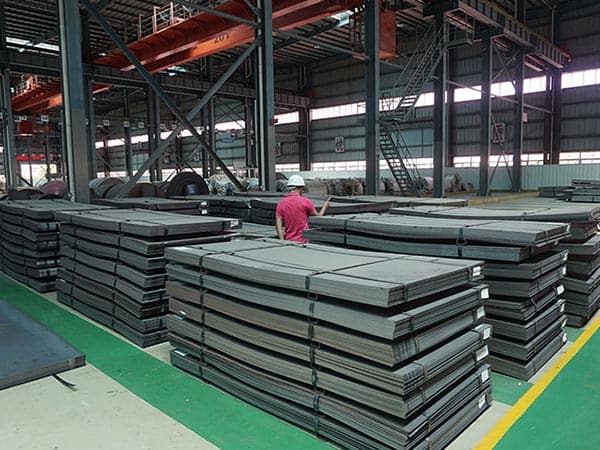
The Technical Foundation of S960MC High-Strength Steel
S960MC represents the pinnacle of thermomechanically rolled high-strength low-alloy (HSLA) steels, specifically engineered for demanding structural applications. As defined by the EN 10149-2 standard, the "S" denotes structural steel, "960" signifies a minimum yield strength of 960 MPa, "M" indicates its thermomechanical rolling process, and "C" highlights its suitability for cold forming. This material is not merely a piece of metal; it is a sophisticated metallurgical achievement designed to replace traditional, heavier steel grades while maintaining or exceeding structural integrity. In the context of modern mechanical manufacturing, the transition to S960MC is driven by the urgent need for lightweighting without compromising safety or load-bearing capacity.
The manufacturing process of S960MC involves precise temperature control during rolling, which creates a fine-grained microstructure. This microstructural refinement is the primary reason for its exceptional strength-to-weight ratio. Unlike traditional quenched and tempered steels, S960MC achieves its properties through a combination of micro-alloying and controlled cooling, resulting in a material that is both incredibly strong and remarkably ductile for its strength class. This balance is critical for flat cutting processes where edge quality and material stability are paramount.
Chemical Composition: The Synergy of Micro-Alloying
The performance of S960MC is rooted in its chemistry. To maintain weldability and formability at such high strength levels, the carbon content is kept strictly low, typically below 0.20%. The strength is instead derived from the addition of micro-alloying elements such as Niobium (Nb), Vanadium (V), and Titanium (Ti). These elements form fine precipitates that pin grain boundaries during the rolling process, preventing grain growth and ensuring a uniform, tough structure.
| Element | C (max %) | Si (max %) | Mn (max %) | P (max %) | S (max %) | Al (min %) |
|---|---|---|---|---|---|---|
| S960MC Value | 0.20 | 0.60 | 2.20 | 0.025 | 0.010 | 0.015 |
The low sulfur and phosphorus content are essential for the material's purity, which directly impacts its performance during flat cutting. High purity reduces the risk of inclusions that could cause crack initiation during laser or plasma cutting. Furthermore, the low carbon equivalent (CEV) ensures that the steel remains weldable even in complex mechanical assemblies, a factor that makes it a preferred choice for integrated structural components.
Mechanical Performance Metrics: Beyond 960 MPa
While the yield strength is the headline figure, the true value of S960MC lies in its comprehensive mechanical profile. It offers a tensile strength ranging from 980 to 1250 MPa, providing a significant safety margin for dynamic loads. Despite its extreme hardness, it retains a minimum elongation of 7%, allowing for necessary deformation before failure—a critical safety feature in automotive and lifting equipment.
| Property | Yield Strength (MPa) | Tensile Strength (MPa) | Elongation A5 (%) | Min. Bending Radius (90°) |
|---|---|---|---|---|
| Specification | ≥ 960 | 980 - 1250 | ≥ 7 | 3.0 x t (thickness) |
The impact toughness of S960MC is another critical attribute. Mechanical components often operate in harsh environments where low temperatures can cause brittle failure. S960MC is designed to maintain its toughness at temperatures as low as -20°C or even -40°C in specific sub-grades, ensuring that high-strength structures remain reliable in arctic or high-altitude conditions. This environmental adaptability extends the service life of machinery used in global logistics and infrastructure projects.
Flat Cutting Excellence: Precision in Mechanical Manufacturing
Flat cutting is the primary fabrication step for S960MC plates, and the material's characteristics significantly influence the choice of technology. Laser cutting is the most common method for S960MC due to its ability to produce high-precision edges with a narrow heat-affected zone (HAZ). Because S960MC relies on its thermomechanical history for strength, minimizing the HAZ is crucial to prevent local softening at the cut edges.
- Laser Cutting: Offers the highest precision and minimal thermal distortion. Modern fiber lasers can process S960MC with extreme speed, producing clean edges that often require no secondary finishing.
- Plasma Cutting: Suitable for thicker sections of S960MC. While the HAZ is larger than laser cutting, advanced high-definition plasma systems can still maintain the structural integrity of the component.
- Waterjet Cutting: The ideal choice when zero thermal impact is required. It preserves the original grain structure perfectly, though at a higher cost and slower speed.
The internal stress state of S960MC is carefully managed during production to ensure flatness after cutting. Low internal stress prevents the "bowing" effect often seen when cutting high-strength plates, allowing manufacturers to maintain tight tolerances in complex nested parts. This stability is vital for automated assembly lines where consistency is key to throughput.
Welding and Cold Forming: Processing Without Integrity Loss
A common misconception is that 960 MPa steel is difficult to weld or bend. On the contrary, S960MC is specifically designed for cold forming. Its fine-grained structure allows for tight bending radii without cracking, provided the manufacturer follows the recommended grain direction guidelines. This makes it possible to create complex, high-strength brackets and chassis members from a single flat-cut sheet, reducing the need for multiple welds.
When it comes to welding, the low carbon equivalent of S960MC facilitates excellent weldability using standard methods like MAG (Metal Active Gas) welding. However, precision is required in managing heat input. Excessive heat can lead to grain coarsening in the HAZ, which may reduce the local yield strength. By using optimized welding parameters and high-strength consumables, engineers can achieve joints that are nearly as strong as the base metal, ensuring the entire mechanical assembly performs as a cohesive unit.
Industry Applications: Where S960MC Redefines Possibilities
The adoption of S960MC flat-cut parts has transformed several heavy industries. In the crane and lifting sector, S960MC is used for telescopic booms and outriggers. By reducing the weight of the boom, the crane's lifting capacity and reach are significantly increased without increasing the overall vehicle weight. This directly translates to higher operational efficiency and lower transport costs.
In the automotive and transport industry, S960MC is utilized for trailer chassis, cross members, and protective structures. Lightweight trailers made from S960MC can carry heavier payloads while consuming less fuel during empty returns, providing a clear economic and environmental advantage. Similarly, in the mining and earthmoving sector, the high strength and abrasion resistance of S960MC make it ideal for dump truck bodies and bucket components that must withstand constant impact and heavy loads.
Environmental Resilience and Fatigue Life
Mechanical manufacturing today must account for the entire lifecycle of a product. S960MC contributes to sustainability by enabling the use of less material to achieve the same structural goals. This reduction in steel volume leads to lower CO2 emissions during production and transportation. Furthermore, the fatigue resistance of S960MC is superior to lower-strength grades. Under cyclic loading—common in mobile machinery—the high yield strength delays the onset of fatigue cracks, extending the maintenance intervals and total lifespan of the equipment.
The surface quality of S960MC also plays a role in its environmental adaptability. The thin, tightly adherent scale produced during thermomechanical rolling provides a degree of natural corrosion resistance during storage and fabrication. When combined with modern coating systems, S960MC components exhibit excellent durability in corrosive industrial or maritime environments, ensuring that the high-strength performance is maintained over decades of service.
Optimizing Manufacturing Workflows with S960MC
Integrating S960MC into a manufacturing workflow requires a holistic approach. From the initial flat cutting stage to the final assembly, every step must respect the material's unique properties. Manufacturers who master the processing of S960MC gain a significant competitive edge, offering products that are lighter, stronger, and more efficient than those made with conventional materials. The shift toward S960MC is not just a trend; it is a fundamental evolution in mechanical engineering, driven by the demand for high-performance, sustainable, and cost-effective structural solutions.
As laser cutting technology continues to advance, the ease of processing S960MC will only improve, further lowering the barrier to entry for smaller manufacturers. The synergy between advanced material science and precision cutting technology ensures that S960MC will remain at the forefront of mechanical manufacturing for the foreseeable future, pushing the boundaries of what is possible in structural design.
Leave a message