
What is S500MC automotive steel coil used for
Comprehensive guide to S500MC automotive steel coil, covering its chemical composition, mechanical properties, and diverse industrial applications in vehicle manufacturing.
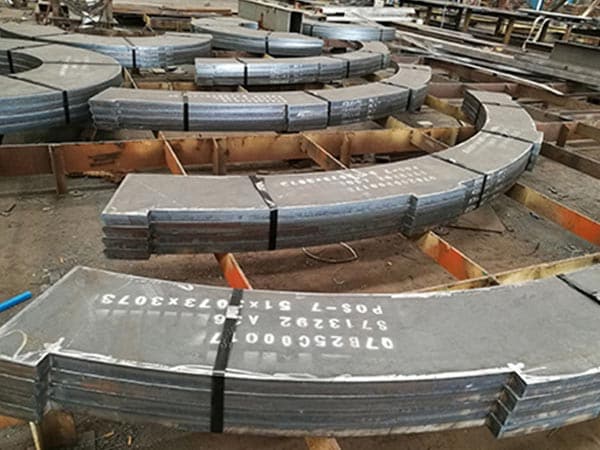
The Core Identity of S500MC High-Strength Steel
In the pursuit of vehicle lightweighting and enhanced safety, S500MC automotive steel coil has emerged as a cornerstone material. Classified under the EN 10149-2 standard, S500MC is a thermomechanically rolled, high-yield-strength cold-forming steel. The 'S' denotes structural steel, '500' represents the minimum yield strength of 500 MPa, and 'MC' indicates its delivery condition: thermomechanically rolled for cold forming.
Modern automotive engineering demands materials that offer a delicate balance between weight reduction and structural integrity. S500MC achieves this through precise micro-alloying techniques. By adding small amounts of niobium (Nb), vanadium (V), or titanium (Ti), manufacturers can refine the grain structure, significantly increasing strength without sacrificing the ductility required for complex shaping processes. This makes it far superior to traditional carbon steels in high-stress environments.
Chemical Composition and Micro-Alloying Logic
The performance of S500MC is rooted in its chemical blueprint. Unlike standard structural steels, S500MC maintains a low carbon content to ensure excellent weldability and toughness. The integration of alloying elements is strictly controlled to optimize performance:
| Element | Max Content (%) | Functional Role |
|---|---|---|
| Carbon (C) | 0.12 | Ensures weldability and prevents brittleness. |
| Manganese (Mn) | 1.60 | Increases strength and hardness through solid solution. |
| Silicon (Si) | 0.50 | Deoxidizer that improves yield strength. |
| Niobium (Nb) | 0.09 | Grain refinement and precipitation hardening. |
| Titanium (Ti) | 0.15 | Fixes nitrogen and refines microstructure. |
This chemical synergy allows the steel to remain lean yet incredibly strong. The low carbon equivalent (CEV) is particularly beneficial for automated welding lines in automotive assembly, reducing the risk of cold cracking in the heat-affected zone (HAZ).
Mechanical Properties: Beyond the 500 MPa Threshold
While the name highlights its yield strength, the mechanical profile of S500MC is multifaceted. It provides a high strength-to-weight ratio, which is the primary driver for its adoption in the heavy-duty vehicle sector. Key mechanical parameters include:
- Yield Strength: Minimum 500 MPa, providing the resistance needed to prevent permanent deformation under load.
- Tensile Strength: Typically ranging between 550 and 700 MPa, ensuring the material can withstand significant pulling forces before failure.
- Elongation: Minimum 12% to 14% (depending on thickness), allowing for complex bending and forming without fracture.
- Impact Toughness: Often tested at -20°C or -40°C to ensure the material remains ductile in cold climates.
The combination of high yield strength and adequate elongation allows engineers to use thinner gauges of S500MC compared to S355MC or standard Q235 steel, resulting in a weight saving of up to 20-30% in specific structural components.
Excellent Cold Forming and Processing Performance
One of the standout features of S500MC automotive steel coil is its cold forming capability. Despite its high strength, it can be bent, flanged, and cold-pressed into intricate shapes. This is vital for automotive parts that require aerodynamic curves or specific structural geometries. When processing S500MC, several factors contribute to its industrial utility:
Bending Radius: Due to its fine-grained structure, S500MC supports tight bending radii. For thicknesses less than 3mm, a minimum bending radius of 0.5 to 1.0 times the thickness is often achievable, though this depends on the bending direction relative to the rolling grain.
Weldability: S500MC is compatible with all standard welding methods, including MIG/MAG, TIG, and laser welding. The low level of impurities and micro-alloying elements means that preheating is rarely required, which streamlines the manufacturing cycle and reduces energy costs.
Cutting Precision: Whether using laser, plasma, or waterjet cutting, S500MC maintains edge stability. Its uniform internal stress distribution prevents warping during the cutting process, ensuring high dimensional accuracy for downstream assembly.
Primary Applications in the Automotive Industry
S500MC is predominantly used where high load-bearing capacity and weight reduction are critical. Its application spans across various vehicle types, from passenger cars to heavy-duty trucks and trailers.
1. Truck Chassis and Frames: The longitudinal and cross members of truck chassis are subjected to immense dynamic loads. S500MC provides the necessary stiffness and fatigue resistance to handle these stresses while keeping the vehicle's tare weight low, which increases payload capacity.
2. Structural Cross Members: In passenger vehicles, S500MC is used for cross members that support the engine or the suspension system. These parts must absorb energy during impacts while maintaining the integrity of the passenger cabin.
3. Cold-Pressed Components: Brackets, reinforcement plates, and complex mounting supports often utilize S500MC. Its ability to be stamped into precise shapes makes it ideal for mass production environments where consistency is paramount.
4. Trailer Manufacturing: For heavy-duty trailers and semi-trailers, S500MC is used in the side beams and floor supports. The high strength ensures the trailer can carry heavy machinery or bulk goods without structural failure over long distances.
Extended Applications Beyond Automotive
The versatility of S500MC has led to its expansion into other sectors that demand high-strength structural steel. Its properties are highly valued in:
- Crane and Lifting Equipment: Telescopic booms and crane arms benefit from the high yield strength, allowing for longer reach and higher lift capacities without adding excessive weight.
- Agricultural Machinery: Plow frames, harvester chassis, and trailer hitches use S500MC to withstand the rugged conditions of off-road environments and soil resistance.
- Storage Racking Systems: High-density warehouse racks require materials that can support massive vertical loads with minimal cross-sectional area.
- Construction Machinery: Components for excavators and bulldozers that require a balance of strength and weldability often incorporate S500MC.
Environmental Adaptability and Fatigue Life
S500MC is designed to perform under harsh environmental conditions. While it is not a weather-resisting steel like Corten, its fine-grained structure provides a better substrate for protective coatings. Whether galvanized or painted, the surface of S500MC bonds well with anti-corrosion layers, extending the service life of vehicles operating in coastal or salt-treated road environments.
Fatigue resistance is another critical factor. Automotive components are rarely subjected to static loads; they face millions of cycles of vibration and stress. The thermomechanical rolling process creates a homogeneous microstructure that resists the initiation and propagation of fatigue cracks. This reliability is why S500MC is a preferred choice for safety-critical components that must last the entire lifespan of the vehicle.
Comparison: S500MC vs. Other Grades
Choosing the right grade often involves comparing S500MC with its siblings in the EN 10149-2 family. While S355MC is more ductile and easier to form, it lacks the strength required for modern lightweighting goals. On the other end, S700MC offers even higher strength but requires more sophisticated tooling and larger bending radii due to its reduced elongation.
S500MC sits at the 'sweet spot' for many manufacturers. It offers a significant strength upgrade over standard structural steels while remaining compatible with existing cold-forming equipment and welding setups. This makes it a cost-effective solution for upgrading product designs without a complete overhaul of the production line.
Technical Considerations for Procurement
When sourcing S500MC automotive steel coil, it is essential to verify the material certification (MTC). Buyers should pay close attention to the silicon content if the steel is intended for hot-dip galvanizing, as silicon levels can influence the thickness and appearance of the zinc coating (the Sandelin effect). Furthermore, ensuring the coil has been produced via a reputable thermomechanical rolling process is key to achieving the specified mechanical properties consistently across the entire length of the coil.
By leveraging the high yield strength and exceptional formability of S500MC, industries can continue to innovate, creating safer, more efficient, and more durable structures for the global market.
Leave a message