
What are the well-know ten S315MC hot-rolled pickled strip hot rolled plates mills in Qatar
Explore the leading suppliers and mills for S315MC hot-rolled pickled strip and plates in Qatar, including technical specs, mechanical properties, and industrial applications.
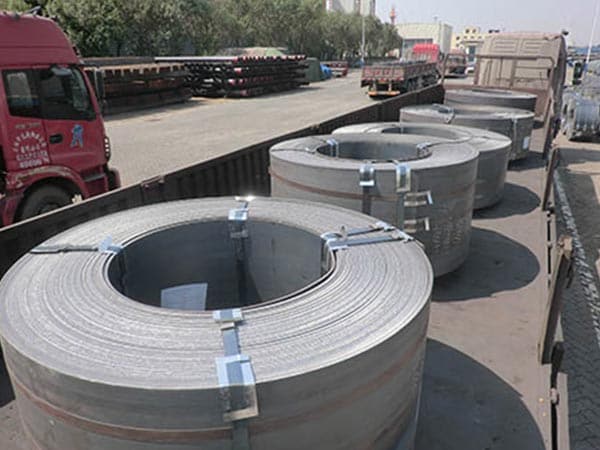
Understanding S315MC Hot-Rolled Pickled Steel in the Qatari Market
S315MC is a high-yield strength steel designed for cold forming, governed by the EN 10149-2 standard. In the rapidly developing industrial landscape of Qatar, particularly within the Mesaieed Industrial City and Ras Laffan, this material grade has become indispensable. The "MC" designation signifies that the steel is thermomechanically rolled, a process that refines the grain structure to achieve a balance of strength and ductility that traditional hot rolling cannot match. The "315" refers to its minimum yield strength of 315 MPa. When supplied as hot-rolled pickled and oiled (HRPO), the material undergoes an acid bath to remove the dark oxide scale, resulting in a clean, smooth surface that is ideal for subsequent processing such as laser cutting, painting, or galvanizing.
The Critical Role of Pickling and Oiling (HRPO) for Qatar's Environment
Qatar’s unique climatic conditions—characterized by high humidity, extreme temperatures, and saline air from the Persian Gulf—necessitate superior surface protection for steel. Hot-rolled pickled strip (HRPO) offers several advantages over standard black hot-rolled steel. The pickling process, typically using hydrochloric acid, removes the mill scale which can otherwise act as a site for localized corrosion. By applying a protective oil film immediately after pickling, mills ensure that S315MC plates remain rust-free during transit through Hamad Port and during storage in Doha’s industrial yards. This clean surface is also essential for precision welding and high-quality coating adhesion, which are mandatory for infrastructure projects like the Lusail City expansion and various petrochemical facilities.
Technical Specifications: Chemical Composition and Mechanical Properties
The performance of S315MC is rooted in its precise metallurgy. Unlike standard structural steels, S315MC utilizes micro-alloying elements such as Niobium (Nb), Titanium (Ti), and Vanadium (V) to achieve its strength without significantly increasing carbon content. This ensures excellent weldability and formability.
| Element | Carbon (C) % | Manganese (Mn) % | Silicon (Si) % | Phosphorus (P) % | Sulfur (S) % | Aluminium (Al) % |
|---|---|---|---|---|---|---|
| S315MC Max Values | 0.12 | 1.30 | 0.50 | 0.025 | 0.020 | 0.015 |
Mechanical properties are equally critical for engineering calculations. S315MC provides a robust framework for weight reduction in vehicle components and structural frames. The following table outlines the mechanical requirements according to EN 10149-2:
| Grade | Yield Strength (MPa) | Tensile Strength (MPa) | Elongation (A80mm %) | Elongation (A5.65 %) |
|---|---|---|---|---|
| S315MC | ≥ 315 | 390 - 510 | ≥ 20 | ≥ 24 |
Prominent Mill Sources and Suppliers for S315MC in Qatar
While Qatar produces a significant amount of steel domestically, the specialized S315MC HRPO plates are often sourced through a combination of local production and international mill partnerships. Here are the ten well-known entities and mill sources dominating the Qatari market:
- 1. Qatar Steel Company (QASCO): As the primary local producer based in Mesaieed, Qatar Steel provides the backbone for the nation's steel needs. While they focus heavily on rebar, their strategic partnerships allow for the supply of high-grade hot-rolled coils and plates to local fabricators.
- 2. ArcelorMittal: A global giant with a massive footprint in the GCC. They supply S315MC from their European mills (such as those in France and Belgium) directly to Qatari projects, often through their distribution hub in Dubai which services Doha.
- 3. Emirates Steel Arkan: Based in the neighboring UAE, they are a critical regional supplier. Their proximity allows for rapid logistics via road or sea, making them a preferred choice for S315MC strips used in Qatari construction.
- 4. POSCO (South Korea): Known for some of the highest quality HRPO products globally, POSCO’s S315MC is frequently specified for automotive and precision engineering projects in Qatar due to its superior surface finish and tight dimensional tolerances.
- 5. Baosteel (China): A major player in Qatar’s infrastructure boom, Baosteel provides cost-effective S315MC plates that meet international standards, widely used in large-scale storage tank fabrication.
- 6. Tata Steel: Through their European operations, Tata Steel supplies high-strength low-alloy (HSLA) steels like S315MC, particularly valued for their technical documentation and consistency in heavy-duty applications.
- 7. JFE Steel (Japan): JFE’s thermomechanically controlled process (TMCP) technology produces S315MC with exceptional grain refinement, making it a top choice for Qatari engineers requiring high fatigue resistance.
- 8. SSAB: Famous for their Domex range, which aligns with S315MC specifications, SSAB is a key supplier for specialized transport equipment manufacturers in Qatar.
- 9. Voestalpine: This Austrian mill is synonymous with high-end steel. Their S315MC HRPO strips are often found in high-precision Qatari manufacturing sectors where surface integrity is paramount.
- 10. Thyssenkrupp Steel: Providing comprehensive supply chain solutions, Thyssenkrupp serves the Qatari market with certified S315MC materials, often holding stock in regional service centers to meet urgent project timelines.
Processing Advantages: Welding, Bending, and Cutting
The micro-alloyed nature of S315MC makes it a favorite among Qatari fabricators. Unlike higher carbon steels, S315MC does not require pre-heating for welding in most thicknesses, which significantly reduces labor costs and energy consumption. The low Carbon Equivalent Value (CEV) ensures that the heat-affected zone (HAZ) remains ductile, preventing cold cracking—a vital factor for safety-critical structures in the oil and gas sector.
In terms of cold forming, S315MC exhibits excellent bendability. For a plate thickness (t), the recommended minimum inside bend radius is often as low as 0.25t to 0.5t, depending on the orientation relative to the rolling direction. This allows for the creation of complex profiles and lightweight structural sections without the risk of surface tearing or springback issues. Furthermore, the pickled surface of HRPO plates extends the life of laser cutting nozzles and CNC tooling by eliminating the abrasive mill scale found on standard hot-rolled plates.
Expanding Applications Across Qatari Industries
The versatility of S315MC hot-rolled pickled strip extends far beyond simple construction. Within the Oil and Gas sector, it is used for secondary structures, cable trays, and equipment housing where weight reduction is necessary but structural integrity cannot be compromised. The Transportation industry in Qatar utilizes S315MC for truck trailers and specialized transport frames, benefiting from the steel's ability to withstand high payloads while maintaining a lower tare weight.
The Construction and Infrastructure sector remains the largest consumer. From the support brackets in the Doha Metro to the intricate architectural elements of the National Museum of Qatar, S315MC provides the necessary strength-to-weight ratio. Additionally, the Renewable Energy sector, specifically solar farm mounting systems in Qatar's desert regions, increasingly specifies HRPO S315MC due to its readiness for high-quality galvanizing, ensuring a 25-year service life in harsh environments.
Quality Assurance and Procurement Strategies
When sourcing S315MC in Qatar, ensuring compliance with EN 10204 3.1 or 3.2 certification is non-negotiable. Major projects in Doha require full traceability from the melt shop to the final product. Procurement teams should prioritize mills that offer consistent thickness tolerances and flatness, as variations can lead to automated welding failures. Given the logistical dynamics of the Middle East, leveraging suppliers with local stock or established shipping routes into Hamad Port is essential for maintaining project schedules. Evaluating the pickling quality—ensuring no residual scale and a uniform oil film—will prevent costly surface preparation steps during the fabrication phase.
Leave a message