
What is the BBNSteel company s420mc astm equivalent main products
Discover the technical specifications of S420MC steel, its ASTM equivalents like A1011 Grade 60, and the high-quality main products offered by BBNSteel for automotive and structural engineering.
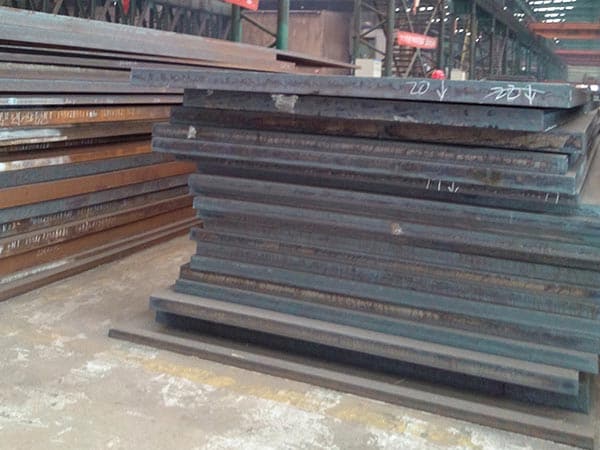
The Technical Essence of S420MC High-Strength Steel
S420MC belongs to the category of thermomechanically rolled steels for cold forming, governed by the EN 10149-2 standard. This material is engineered to provide a unique combination of high yield strength and exceptional formability. Manufacturers and engineers prioritize S420MC when they need to reduce the weight of components without sacrificing structural integrity. BBNSteel, as a prominent supplier, ensures that this grade meets rigorous international standards, providing a reliable foundation for complex engineering projects. The "S" denotes structural steel, "420" indicates the minimum yield strength of 420 MPa, and "MC" signifies that the material is thermomechanically rolled for cold forming.
Identifying the ASTM Equivalent for S420MC
In the global steel market, cross-referencing standards is essential for procurement and design. The closest ASTM equivalent to S420MC is ASTM A1011 HSLAS-F Grade 60 or ASTM A1018 HSLAS-F Grade 60, depending on the thickness of the material. ASTM A1011 typically covers thicknesses up to 6mm, while A1018 handles heavier gauges. The "HSLAS-F" designation stands for High-Strength Low-Alloy Steel with improved Formability, which mirrors the cold-forming characteristics of the European S420MC grade. Both standards focus on maintaining a low carbon content while utilizing micro-alloying elements like niobium, vanadium, and titanium to achieve strength and grain refinement.
| Feature | EN 10149-2 S420MC | ASTM A1011 HSLAS-F Grade 60 |
|---|---|---|
| Yield Strength (min) | 420 MPa | 410 MPa (60 ksi) |
| Tensile Strength | 480-620 MPa | 480 MPa (70 ksi) min |
| Elongation (min) | 16% (t < 3mm) | 18% |
| Micro-alloying | Nb, Ti, V | Nb, Ti, V, Zr |
Chemical Composition and Micro-Alloying Strategy
The superior performance of S420MC is not accidental; it is the result of a precise chemical balance. By keeping carbon levels extremely low (typically below 0.12%), the steel maintains excellent weldability. The addition of niobium (Nb) and titanium (Ti) facilitates grain refinement during the thermomechanical rolling process. This fine-grained structure is what allows the steel to remain tough even at lower temperatures and provides the ductility required for tight bending radii. BBNSteel monitors these trace elements strictly to ensure that every batch of S420MC performs consistently during high-speed automated manufacturing processes.
- Carbon (C): Max 0.12% - Ensures weldability and prevents brittleness.
- Manganese (Mn): Max 1.60% - Increases strength and hardness.
- Silicon (Si): Max 0.50% - Acts as a deoxidizer.
- Phosphorus (P) & Sulfur (S): Kept at minimum levels to prevent internal defects and improve surface quality.
- Niobium (Nb) & Titanium (Ti): Key elements for grain refinement and precipitation hardening.
Mechanical Properties and Processing Performance
The primary advantage of using S420MC lies in its mechanical versatility. While it possesses a high yield strength, it behaves remarkably well under cold-forming stress. This means it can be bent, flanged, and folded into complex shapes without cracking. For industries like automotive manufacturing, this allows for the creation of lightweight chassis components that can absorb energy during impacts. BBNSteel provides S420MC with guaranteed minimum yield strengths, ensuring that safety-critical parts meet design specifications every time. The material's low carbon equivalent (CEV) value also means it does not require pre-heating before welding, significantly reducing production time and costs.
BBNSteel Main Product Offerings for S420MC
BBNSteel specializes in a wide range of S420MC products tailored to diverse industrial needs. Their inventory and processing capabilities allow them to supply more than just raw coils. Key products include:
- Hot Rolled S420MC Coils: Available in various widths and thicknesses, suitable for large-scale stamping and roll-forming operations.
- Pickled and Oiled (P&O) Sheets: The pickling process removes surface scale, providing a clean finish that is ideal for painting, coating, or laser cutting.
- Precision Slit Strips: For manufacturers requiring specific widths for continuous feed lines, BBNSteel offers high-precision slitting services.
- Custom Cut-to-Length Plates: Utilizing advanced leveling machines, BBNSteel provides flat sheets cut to exact customer dimensions, reducing scrap and waste.
- Laser and Plasma Cut Parts: Leveraging CNC technology, BBNSteel can deliver semi-finished components ready for assembly.
Diverse Applications Across Modern Industries
The adoption of S420MC and its ASTM equivalents has transformed several sectors by enabling the transition from heavy, bulky designs to sleek, high-strength structures. In the Automotive Industry, S420MC is the standard for truck frames, longitudinal beams, and cross members. Its ability to be formed into deep-drawn parts makes it indispensable for structural reinforcements. The Construction and Heavy Machinery sector utilizes this steel for crane booms, excavator arms, and agricultural equipment where weight reduction is critical for operational efficiency and fuel economy. Furthermore, the Storage and Logistics industry uses S420MC for high-load racking systems and cold-formed sections that require high stability with minimal material thickness.
Environmental Adaptability and Sustainability
Using S420MC contributes directly to environmental sustainability through "down-gauging." By using a stronger steel, engineers can use thinner sections to achieve the same structural performance as thicker, lower-grade steels. This reduction in material volume leads to lighter vehicles and structures, which in turn lowers fuel consumption and CO2 emissions during the lifecycle of the product. BBNSteel is committed to providing materials that support these green initiatives, ensuring that the steel is not only high-performing but also fully recyclable at the end of its service life. The thermomechanical rolling process itself is more energy-efficient than traditional heat treatment methods, further enhancing the material's eco-friendly profile.
Optimizing Fabrication with S420MC
To get the most out of S420MC, fabricators should pay attention to the rolling direction. Like most thermomechanically rolled steels, the ductility is slightly higher in the direction of rolling. When performing tight bends, it is often recommended to bend transverse to the rolling direction to minimize the risk of surface tearing. BBNSteel's technical team provides guidance on the minimum bend radii for different thicknesses, ensuring that customers achieve perfect results without trial-and-error. The surface quality of BBNSteel's S420MC is also optimized for modern joining techniques, including robotic MIG/MAG welding and laser welding, providing clean, strong seams that are essential for high-stress applications.
| Thickness (mm) | Min. Bend Radius (90°) | Typical Applications |
|---|---|---|
| t ≤ 3 | 0.5 x t | Automotive brackets, small profiles |
| 3 < t ≤ 6 | 1.0 x t | Truck chassis, structural beams |
| t > 6 | 1.5 x t | Crane components, heavy machinery |
Choosing S420MC from BBNSteel means investing in a material that balances strength, formability, and weldability. Whether you are following EN standards or looking for an ASTM equivalent for North American projects, the consistency of this grade makes it a top-tier choice for modern engineering. By understanding the chemical and mechanical nuances of S420MC, manufacturers can push the boundaries of design, creating safer, lighter, and more efficient products for the global market.
Leave a message