
What is the chemical composition of s550mc equivalent?
Comprehensive guide to S550MC chemical composition and its global equivalents. Learn about mechanical properties, alloying elements, and industrial applications of this high-strength steel.
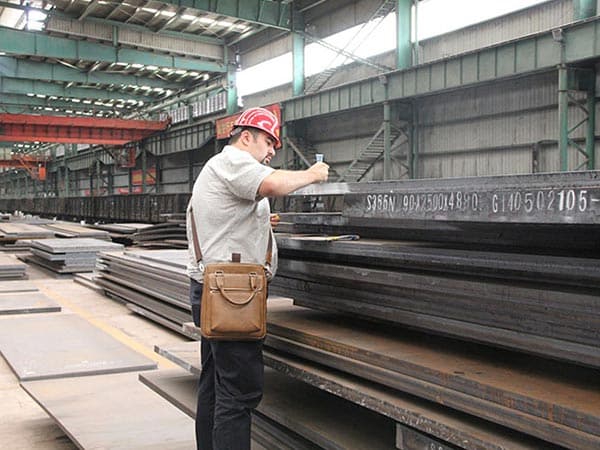
The Metallurgical Foundation of S550MC Steel
S550MC is a high-strength, hot-rolled steel specifically designed for cold forming. Governed by the European standard EN 10149-2, this grade represents a sophisticated balance between extreme strength and excellent ductility. The "S" denotes structural steel, "550" refers to the minimum yield strength of 550 MPa, and "MC" indicates its thermomechanically rolled condition suitable for cold forming. Understanding the chemical composition of S550MC and its equivalents is crucial for engineers looking to reduce weight without compromising structural integrity.
The primary appeal of S550MC lies in its micro-alloying technology. Unlike traditional carbon steels that rely on high carbon content for strength—which often leads to brittleness and poor weldability—S550MC utilizes minute additions of niobium, vanadium, and titanium. This approach creates a fine-grained microstructure that enhances both toughness and yield strength simultaneously.
Detailed Chemical Composition Analysis
The chemical makeup of S550MC is strictly controlled to ensure consistency across different production batches. Below is the standard chemical composition according to EN 10149-2:
| Element | Maximum Percentage (%) |
|---|---|
| Carbon (C) | 0.12 |
| Manganese (Mn) | 1.80 |
| Silicon (Si) | 0.50 |
| Phosphorus (P) | 0.025 |
| Sulfur (S) | 0.015 |
| Aluminum (Al) | 0.015 (min) |
| Niobium (Nb) | 0.09 |
| Vanadium (V) | 0.20 |
| Titanium (Ti) | 0.15 |
Carbon Content: Keeping carbon below 0.12% is essential for maintaining superior weldability. Low carbon reduces the risk of cold cracking in the heat-affected zone (HAZ) during welding processes.
Manganese and Silicon: Manganese acts as a solid solution strengthener and improves hardenability. Silicon is used as a deoxidizer and also contributes to the overall strength of the ferrite matrix.
Micro-alloying Elements (Nb, V, Ti): These are the "secret ingredients." Niobium and titanium prevent grain growth during the rolling process, resulting in a refined grain structure. This refinement is the primary reason why S550MC can achieve such high yield strength while remaining easy to bend and shape.
Global Equivalents and Comparison
When sourcing materials globally, finding an exact match for S550MC requires looking at standards like ASTM (USA), GB (China), and JIS (Japan). While these equivalents share similar mechanical targets, their chemical compositions may vary slightly to meet local manufacturing practices.
| Standard | Equivalent Grade | Comparison Notes |
|---|---|---|
| ASTM (USA) | A1011/A1018 HSLAS-F Grade 80 | Similar yield strength; focuses on formability. | GB/T (China) | Q550D / Q550MC | Widely used in heavy machinery; comparable micro-alloying. | JIS (Japan) | SPFH 590 | Closest match in the Japanese automotive steel standard. | ISO | ISO 6930-2 PW550 | International standard for high-yield strength steels. |
For instance, the ASTM A1011 Grade 80 often allows for a slightly higher carbon content but maintains similar performance through different rolling techniques. Engineers must verify that the specific equivalent meets the impact toughness requirements if the application involves low-temperature environments.
Mechanical Properties and Engineering Performance
The chemical composition directly dictates the mechanical behavior of S550MC. This grade is prized for its high yield-to-tensile ratio, which allows for significant weight reduction in structural components.
- Yield Strength: Minimum 550 MPa.
- Tensile Strength: 600 to 760 MPa.
- Elongation: Minimum 12% to 14% (depending on thickness), ensuring the material can be bent without fracturing.
- Impact Strength: Often tested at -20°C or -40°C to ensure reliability in cold climates.
The thermomechanical rolling process (indicated by the 'M' in MC) ensures that these properties are uniform throughout the coil. This uniformity is vital for automated processes like robotic welding and CNC bending, where material consistency prevents production downtime.
Processing and Fabrication Advantages
S550MC is engineered for modern manufacturing. Its low carbon equivalent (CEV) makes it exceptionally friendly to various fabrication techniques.
Welding: It can be welded using all standard methods, including MIG/MAG, TIG, and submerged arc welding. Because of the low alloy content, preheating is generally not required for standard thicknesses, which significantly reduces labor costs and energy consumption.
Cold Forming: Despite its high strength, S550MC exhibits excellent bendability. It can be formed into complex shapes, such as C-channels or U-profiles, with tight radii. This makes it a favorite for chassis components where both strength and geometry are critical.
Laser Cutting: The clean chemical composition and low impurity levels (low Phosphorus and Sulfur) result in high-quality edges during laser or plasma cutting. This reduces the need for secondary grinding or finishing operations.
Strategic Industrial Applications
The shift toward sustainability and fuel efficiency has propelled S550MC into several key industries. By using S550MC instead of standard S355 steel, manufacturers can often reduce the thickness of components by 20-30% while maintaining the same load-bearing capacity.
Automotive and Transportation: Used extensively in truck frames, chassis members, and cross-beams. Reducing the weight of a heavy-duty trailer directly translates to higher payloads and lower fuel consumption.
Lifting and Excavation: Crane booms, telescopic arms, and agricultural equipment benefit from the high strength-to-weight ratio. This allows cranes to reach higher and lift heavier loads without increasing the base weight of the machine.
Storage and Logistics: High-density racking systems and automated warehouse structures utilize S550MC to support massive weights with slim, space-saving profiles.
Environmental Adaptability and Longevity
S550MC performs remarkably well in diverse environmental conditions. While it is not a weathering steel like Corten, its fine-grained structure provides a consistent surface for protective coatings. Whether galvanized or painted, the material holds coatings well, preventing delamination and subsurface corrosion.
In low-temperature applications, the micro-alloyed structure maintains ductility where ordinary steels might become brittle. This makes S550MC suitable for equipment used in arctic mining or high-altitude construction. Furthermore, the ability to use less material (weight reduction) contributes to a lower carbon footprint for the entire lifecycle of the product, from raw material extraction to end-of-life recycling.
Technical Considerations for Procurement
When specifying S550MC or its equivalents, it is vital to request a Mill Test Certificate (MTC) that confirms compliance with EN 10149-2. Buyers should pay close attention to the Carbon Equivalent Value (CEV), as this is the most accurate predictor of how the steel will behave during welding. Most high-quality S550MC will have a CEV significantly lower than 0.40, indicating excellent weldability.
Choosing the right supplier involves verifying their thermomechanical rolling capabilities. The precise control of temperature and cooling rates during production is what activates the micro-alloying elements. Without this process, the chemical composition alone cannot guarantee the mechanical performance required for high-stress applications.
Leave a message