
s420mc en 10149-2 ASTM equivalent steel grade
Detailed technical analysis of S420MC (EN 10149-2) steel, including its chemical composition, mechanical properties, and ASTM equivalents like A1011 and A656.
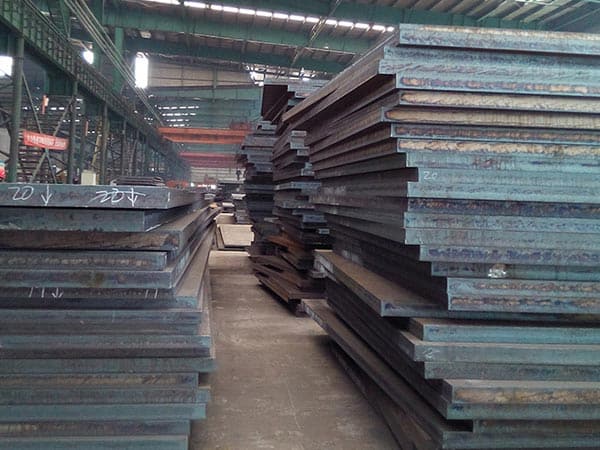
Understanding the Essence of S420MC and EN 10149-2 Standard
S420MC is a high-yield strength, thermomechanically rolled steel specifically designed for cold forming. Governed by the EN 10149-2 European standard, this grade represents a pinnacle in metallurgical engineering where strength meets ductility. The designation "S" stands for structural steel, "420" refers to the minimum yield strength of 420 MPa, and "MC" indicates that the material is thermomechanically rolled (M) and intended for cold forming (C). This unique processing route allows for a refined grain structure that is far superior to traditional normalized steels.
Engineers and manufacturers prioritize S420MC when they need to reduce the weight of components without sacrificing structural integrity. By utilizing higher strength steel, the thickness of parts can be reduced, leading to significant fuel savings in transportation and lower material costs in construction. The thermomechanical rolling process involves precise temperature control during the rolling stages, which prevents grain growth and ensures a fine-grained microstructure, typically enriched with micro-alloying elements like Niobium, Vanadium, or Titanium.
Direct ASTM Equivalents for S420MC
When sourcing materials globally, identifying the correct ASTM equivalent steel grade for S420MC is critical. While no two standards are identical, several ASTM grades offer comparable performance characteristics. The most common equivalents include:
- ASTM A1011 HSLAS Grade 60 Class 1: This is the primary equivalent for hot-rolled sheets. It offers a similar yield strength (approx. 415-420 MPa) and is designed for applications requiring high strength and improved formability.
- ASTM A656 Grade 60: Often used for structural plates, this grade provides excellent weldability and notch toughness, mirroring the characteristics of S420MC in heavier gauge applications.
- ASTM A572 Grade 60: While more focused on general structural use, it shares the yield strength requirements, though its formability might slightly differ due to variations in micro-alloying strategies.
Chemical Composition and Metallurgical Strategy
The performance of S420MC is dictated by its precise chemical makeup. Unlike standard carbon steels, S420MC relies on micro-alloying rather than high carbon content to achieve its strength. This ensures that the steel remains highly weldable and ductile.
| Element | Max % (EN 10149-2) | ASTM A1011 Grade 60 (Typical) |
|---|---|---|
| Carbon (C) | 0.12 | 0.15 | Manganese (Mn) | 1.60 | 1.35 | Silicon (Si) | 0.50 | 0.04 | Phosphorus (P) | 0.025 | 0.020 | Sulfur (S) | 0.015 | 0.010 | Aluminium (Al) | 0.015 (min) | - |
The low carbon equivalent (CEV) is a standout feature of S420MC. By keeping carbon levels low (typically below 0.12%), the steel avoids the formation of brittle phases during welding. The addition of Niobium (Nb) and Titanium (Ti) creates fine precipitates that pin grain boundaries, maintaining a fine-grained structure even after the heat of processing.
Mechanical Properties and Performance Metrics
The mechanical integrity of S420MC is defined by its ability to withstand high loads while remaining flexible enough for complex bending operations. The following table highlights the core mechanical requirements:
| Property | S420MC Value | ASTM A1011 Gr 60 Value |
|---|---|---|
| Yield Strength (MPa) | Min 420 | Min 410 | Tensile Strength (MPa) | 480 - 620 | Min 520 | Elongation (A80mm %) | Min 16 (t < 3mm) | Min 18 | Bending Radius (180°) | 0.5t to 1.5t | 1.5t to 2.0t |
One of the most critical advantages of S420MC over its ASTM counterparts is the tight control over the bending radius. In automotive chassis manufacturing, the ability to fold steel at sharp angles without cracking is paramount. S420MC consistently outperforms standard HSLAS grades in severe cold-forming environments due to its cleaner steel-making process and inclusion shape control (often achieved through Calcium treatment).
Superior Processability: Welding and Cutting
S420MC is engineered for modern manufacturing workflows. Its weldability is exceptional; it can be joined using all standard welding methods, including MIG/MAG, TIG, and submerged arc welding. Because of the low alloy content, preheating is generally unnecessary for standard thicknesses, which reduces production cycle times.
When it comes to laser and plasma cutting, S420MC provides a clean edge with minimal dross. The consistency of the thermomechanical rolling process ensures that internal stresses are minimized, preventing the "bowing" or warping of parts after they are cut from a large sheet. This dimensional stability is vital for automated assembly lines where precision is non-negotiable.
Environmental Adaptability and Durability
While S420MC is not a weathering steel, its fine-grained structure provides a slight advantage in atmospheric corrosion resistance compared to coarse-grained mild steels. More importantly, its low-temperature toughness is a key attribute. Many projects in cold climates require materials that do not become brittle at sub-zero temperatures. S420MC maintains its impact strength at temperatures as low as -20°C or even -40°C in specialized variations, ensuring safety in harsh environments.
The material's surface quality is also optimized for coating. Whether it is hot-dip galvanizing, powder coating, or sophisticated E-coating used in the automotive industry, the low silicon and phosphorus levels ensure a uniform and adherent protective layer, extending the service life of the final product.
Industrial Applications: Where S420MC Excels
The versatility of S420MC makes it a staple in several high-demand industries. Its high strength-to-weight ratio is particularly valued in:
- Automotive Engineering: Longitudinal beams, chassis components, and cross members where weight reduction directly impacts fuel efficiency and payload capacity.
- Heavy Machinery: Crane arms, excavator buckets, and agricultural equipment frames that must endure high cyclic loading.
- Transport and Logistics: Trailer frames, truck bodies, and shipping containers where durability and tare weight are critical.
- Cold Pressed Parts: Complex brackets and structural supports in building construction and renewable energy (solar tracking systems).
Strategic Selection: S420MC vs. ASTM Grade 60
Choosing between the EN 10149-2 standard and the ASTM equivalent often depends on the geographic location of the project and the specific manufacturing requirements. S420MC is typically the preferred choice for European-designed machinery and automotive platforms due to its more stringent requirements for formability and surface finish. Conversely, ASTM A1011 or A656 is the standard for North American infrastructure and heavy equipment.
When substituting S420MC with an ASTM grade, it is essential to verify the elongation and bending requirements. ASTM A1011 Class 2, for instance, might have higher strength but lower ductility compared to S420MC. Always consult the mill test report (MTR) to ensure the specific heat of steel meets the dual-certification requirements if the project spans multiple international jurisdictions.
The evolution of high-strength low-alloy (HSLA) steels continues to push the boundaries of what is possible in metal fabrication. S420MC stands as a testament to this progress, offering a reliable, high-performance solution for the most demanding structural challenges of the modern age.
Leave a message