
What are the top ten supplier of en 10149-2 pdf in Thailand
A comprehensive technical guide to EN 10149-2 high-yield strength steel grades, their mechanical properties, and the landscape of procurement for the Thai industrial market.
The Critical Role of EN 10149-2 Steel in Modern Engineering
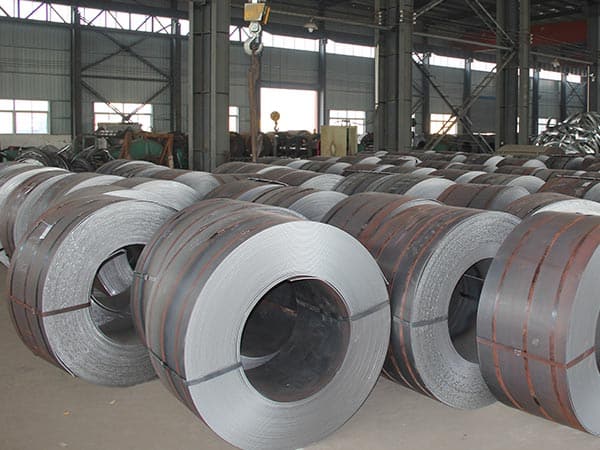
EN 10149-2 is a cornerstone European standard for hot-rolled flat products made of high yield strength steels specifically designed for cold forming. In the rapidly evolving industrial landscape of Thailand, particularly within the automotive and heavy machinery sectors, the demand for materials that offer both high strength and excellent formability has skyrocketed. This standard covers steels that are thermomechanically rolled, a process that refines the grain structure to achieve superior mechanical properties without the need for excessive alloying elements. For engineers and procurement specialists in Thailand, finding a reliable supplier who provides not just the material, but the comprehensive EN 10149-2 PDF technical documentation, is vital for ensuring project compliance and structural integrity.
Understanding the Metallurgy of Thermomechanically Rolled Steels
The "MC" suffix in grades like S355MC or S700MC denotes that the steel is thermomechanically rolled (M) and intended for cold forming (C). Unlike traditional normalized steels, thermomechanical rolling involves precise temperature control during the deformation process. This results in a fine-grained microstructure that provides a unique combination of high yield strength, excellent toughness, and superb weldability. The reduction in carbon equivalent (CEV) values compared to traditional structural steels makes these grades particularly attractive for Thai manufacturers looking to reduce vehicle weight (lightweighting) while maintaining or increasing safety standards.
The chemical composition of EN 10149-2 steels is strictly controlled. Elements like Niobium (Nb), Vanadium (V), and Titanium (Ti) are used in micro-alloying quantities to facilitate grain refinement and precipitation hardening. This allows for a significant increase in strength without compromising the steel's ability to be bent, folded, or drawn into complex shapes. For the Thai market, where humidity and temperature can influence manufacturing processes, the stability of these micro-alloyed steels provides a consistent baseline for high-precision production.
Mechanical Properties and Performance Metrics
When evaluating EN 10149-2 materials, the mechanical properties are the primary focus. The standard spans a wide range of yield strengths, from 315 MPa up to 700 MPa. Below is a detailed comparison of the most commonly utilized grades in the Thai industrial sector:
| Grade | Min. Yield Strength (MPa) | Tensile Strength (MPa) | Min. Elongation (%) | Bending Radius (180°) |
|---|---|---|---|---|
| S315MC | 315 | 390-510 | 20-24 | 0.25t |
| S355MC | 355 | 430-550 | 19-23 | 0.5t |
| S420MC | 420 | 480-620 | 16-19 | 0.5t |
| S500MC | 500 | 550-700 | 12-14 | 1.0t |
| S700MC | 700 | 750-950 | 10-12 | 2.0t |
These properties allow for significant thickness reduction in structural components. For instance, replacing a standard S235JR steel with S700MC can result in a weight saving of up to 40% in certain applications, which is a critical factor for the Thai logistics industry aiming to optimize fuel efficiency and payload capacity.
Cold Forming and Fabrication Excellence
The standout feature of EN 10149-2 is its exceptional cold forming capability. Manufacturers in Thailand's "Detroit of the East" automotive hubs utilize these steels for chassis frames, cross members, and structural reinforcements. Because the steel is designed for cold forming, it exhibits minimal springback and high dimensional accuracy after bending. Proper lubrication and tool maintenance are essential when working with higher grades like S600MC or S700MC to prevent surface galling and ensure the longevity of the forming dies.
Welding is another area where EN 10149-2 excels. Due to the low carbon content and low carbon equivalent, these steels can be welded using all standard methods, including MIG/MAG, TIG, and submerged arc welding. It is important to note that excessive heat input should be avoided to prevent grain growth in the heat-affected zone (HAZ), which could locally reduce the yield strength. Following the guidelines provided in the supplier's technical PDF is crucial for maintaining the integrity of the welded joint.
Identifying Top-Tier Suppliers in the Thai Market
Sourcing EN 10149-2 in Thailand requires a strategic approach. While many local stockholders carry basic structural steels, high-yield thermomechanically rolled products require specialized handling and documentation. A "top-tier" supplier is not defined solely by volume, but by their ability to provide full traceability and technical support. When searching for the top ten supplier types in Thailand, consider the following categories:
- International Steel Trading Hubs: Large entities located in Bangkok and Samut Prakan that bridge the gap between European/Chinese mills and local manufacturers.
- EEC Zone Specialists: Suppliers located within the Eastern Economic Corridor (Chonburi, Rayong) who specialize in automotive-grade materials and offer just-in-time delivery.
- Precision Service Centers: Facilities that provide not just the raw plate, but also laser cutting, plasma cutting, and pre-bending services according to EN 10149-2 specifications.
- Mill-Direct Representatives: Local offices of global steel giants (such as ThyssenKrupp, ArcelorMittal, or Baosteel) that provide the most authoritative technical PDFs and MTCs (Mill Test Certificates).
- Specialized High-Strength Stockists: Boutique suppliers who focus exclusively on high-performance alloys and thermomechanically rolled products.
The availability of a comprehensive PDF datasheet is a non-negotiable requirement. This document should detail the ladle analysis, mechanical testing results (including impact tests at specific temperatures), and the specific rolling conditions. In the tropical climate of Thailand, understanding the surface condition and pickling options (e.g., S355MC+P) is also vital to prevent corrosion during storage and transit.
Environmental Adaptability and Long-term Durability
Thailand's industrial environment presents unique challenges, including high humidity and coastal salinity. While EN 10149-2 steels are not stainless, their fine-grained structure provides a slightly better uniform corrosion resistance compared to coarse-grained hot-rolled steels. However, for long-term durability, these steels are often used as a substrate for advanced coating systems. Whether it is hot-dip galvanizing or sophisticated automotive E-coating, the surface of EN 10149-2 provides excellent adhesion properties.
Furthermore, the fatigue resistance of these steels is exemplary. In the heavy-duty transport sector—such as the trailers and tankers moving goods from Laem Chabang Port—the ability of S420MC and S500MC to withstand cyclic loading is a major safety advantage. This reduces the risk of stress cracking and extends the service life of the equipment, providing a better return on investment for Thai fleet operators.
Strategic Procurement: Beyond the Price Per Ton
Purchasing EN 10149-2 steel in Thailand should be viewed as a value-engineering exercise rather than a simple commodity acquisition. The "cheapest" supplier often fails to provide the necessary PDF documentation or the consistent quality required for automated welding and forming lines. Verification of the Mill Test Certificate (MTC) against the actual heat numbers on the steel plates is a mandatory step in quality assurance. Reliable suppliers will always facilitate this process and provide technical assistance if the material behavior deviates from expectations during production.
As Thailand continues to upgrade its infrastructure and manufacturing capabilities through the Industry 4.0 initiative, the role of high-performance materials like those specified in EN 10149-2 will only become more prominent. By partnering with suppliers who understand the technical nuances of thermomechanical rolling and cold forming, Thai businesses can ensure they remain competitive on a global scale, producing goods that are lighter, stronger, and more efficient.
Leave a message