
How to improve toughness of s500mc steel equivalent astm
Discover expert strategies to enhance the toughness of S500MC steel and its ASTM equivalents like A1011 and A656. Learn about micro-alloying, TMCP, and inclusion control for superior performance.
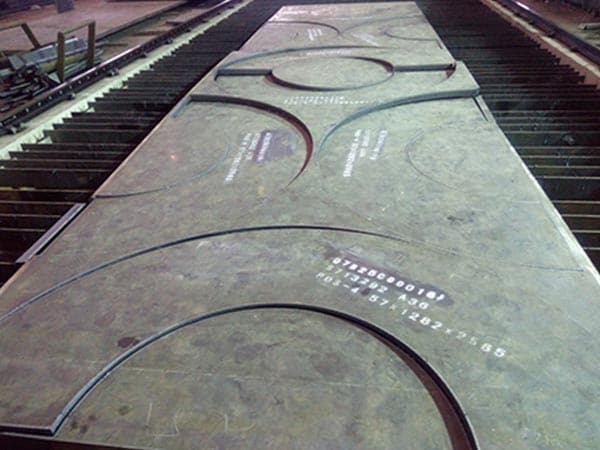
Understanding the Toughness Profile of S500MC and ASTM Equivalents
S500MC steel, governed by the EN 10149-2 standard, represents a pinnacle of high-strength low-alloy (HSLA) engineering, specifically designed for cold forming applications where a balance of high yield strength and exceptional toughness is paramount. When seeking an ASTM equivalent, engineers typically look toward ASTM A1011 HSLAS Grade 70 or ASTM A656 Grade 70. While these grades share similar yield strengths—approximately 500 MPa—their toughness characteristics can vary significantly based on the manufacturing route and chemical nuances. Improving the toughness of these materials is not merely about meeting a specification; it is about ensuring structural integrity under dynamic loads and extreme environmental conditions.
Toughness, specifically fracture toughness and impact energy absorption, is the material's ability to resist crack propagation. For S500MC and its ASTM counterparts, this property is often measured via the Charpy V-notch (CVN) test. Enhancing this attribute requires a multi-faceted approach involving chemical optimization, precise thermomechanical processing, and rigorous control over the microscopic landscape of the steel.
Chemical Composition Fine-Tuning: The Role of Micro-alloying
The chemical architecture of S500MC is the first lever in the pursuit of enhanced toughness. Unlike traditional carbon steels, HSLA steels rely on minute additions of alloying elements to achieve strength without compromising ductility. To improve toughness, the primary goal is to minimize the presence of brittle phases and detrimental inclusions while promoting a fine-grained structure.
- Carbon Content Reduction: High carbon levels increase strength but significantly reduce toughness and weldability. By keeping carbon levels below 0.12%, the formation of coarse pearlite is suppressed, favoring a tougher ferritic-bainitic matrix.
- Manganese Optimization: Manganese acts as a solid solution strengthener and lowers the austenite-to-ferrite transformation temperature. This leads to a finer ferrite grain size, which is the only mechanism that simultaneously increases both strength and toughness.
- Niobium (Nb) and Titanium (Ti) Synergies: These micro-alloying elements are critical for grain refinement. Niobium retards the recrystallization of austenite during rolling, while Titanium forms stable nitrides that prevent grain growth at high temperatures.
| Element | S500MC (EN 10149-2) % Max | ASTM A656 Grade 70 % Max | Optimized for Toughness % |
|---|---|---|---|
| Carbon (C) | 0.12 | 0.18 | 0.08 - 0.10 |
| Manganese (Mn) | 1.60 | 1.65 | 1.40 - 1.55 |
| Silicon (Si) | 0.50 | 0.60 | 0.15 - 0.25 |
| Phosphorus (P) | 0.025 | 0.035 | < 0.015 |
| Sulfur (S) | 0.015 | 0.035 | < 0.005 |
Thermomechanical Controlled Processing (TMCP) Strategies
The "M" in S500MC stands for thermomechanically rolled, a process that is fundamental to its toughness. Unlike traditional hot rolling followed by heat treatment, TMCP integrates controlled rolling and accelerated cooling to dictate the final microstructure. To maximize toughness in S500MC and its ASTM equivalents, the rolling schedule must be meticulously managed.
Roughing and Finishing Stages: During the roughing stage, the goal is to achieve a uniform austenite grain size through repeated recrystallization. As the temperature drops below the recrystallization stop temperature (Tnr), the finishing stage begins. Rolling in this regime flattens the austenite grains (pancaking), creating a high density of nucleation sites for ferrite. This results in an ultra-fine ferrite grain size, often less than 5 microns, which drastically lowers the ductile-to-brittle transition temperature (DBTT).
Accelerated Cooling (ACC): After the final rolling pass, rapid cooling through the transformation range prevents the growth of ferrite grains and suppresses the formation of undesirable coarse carbides. By controlling the start and stop temperatures of the cooling process, a complex microstructure of fine-grained ferrite and acicular ferrite can be achieved, providing superior resistance to impact even at sub-zero temperatures.
Inclusion Morphology and Cleanliness Control
The presence of non-metallic inclusions, particularly Manganese Sulfides (MnS), acts as a primary site for crack initiation. In ASTM A1011 or A656 steels, if sulfur levels are high, these inclusions elongate during rolling, creating planes of weakness that severely reduce transverse toughness. This is why S500MC often outperforms standard ASTM grades in complex bending operations.
Calcium Treatment: To mitigate the effects of sulfur, calcium globulization is employed. Calcium reacts with sulfur to form complex oxy-sulfides that remain spherical during rolling. This "shape control" ensures that the steel maintains high toughness in all directions (longitudinal, transverse, and through-thickness), which is vital for heavy-duty crane booms and chassis components.
Degassing and Filtration: Vacuum degassing during the steelmaking process reduces the levels of dissolved gases like Oxygen, Nitrogen, and Hydrogen. Lowering Oxygen content reduces the volume fraction of oxide inclusions, while minimizing Nitrogen prevents the formation of coarse nitrides that can embrittle the matrix.
Comparative Analysis: S500MC vs. ASTM Standards
While S500MC and ASTM A656 Grade 70 are often used interchangeably, their toughness requirements in standard specifications differ. S500MC usually guarantees impact energy values at specific temperatures (e.g., 40J at -20°C), whereas many ASTM standards for hot-rolled sheet focus primarily on tensile properties unless specific supplementary requirements are requested.
| Property | S500MC (EN 10149-2) | ASTM A656 Grade 70 | ASTM A1011 HSLAS-F Gr 70 |
|---|---|---|---|
| Yield Strength (min) | 500 MPa | 485 MPa | 480 MPa |
| Tensile Strength | 550 - 700 MPa | 550 MPa (min) | 550 MPa (min) |
| Elongation (min) | 12 - 14% | 14% | 12% |
| Toughness Focus | High (Standardized) | Moderate (Standardized) | Improved Formability |
For applications requiring the highest toughness, specifying ASTM A656 Grade 70 Type 7 (which includes Niobium, Vanadium, and Titanium) combined with a low-sulfur requirement is the most effective way to match or exceed S500MC performance. The "F" designation in ASTM A1011 (HSLAS-F) also indicates improved formability through inclusion shape control, making it a closer match for the toughness profile of S500MC.
Influence of Microstructure on Environmental Adaptability
The toughness of S500MC equivalent steels is not a static value; it is highly dependent on the operating environment. In cold climates, the risk of brittle fracture increases. The key to environmental adaptability lies in the Ductile-to-Brittle Transition Temperature (DBTT). A steel with a fine-grained ferritic-bainitic microstructure will maintain its toughness at much lower temperatures than a coarse-grained pearlitic steel.
By refining the grain size through TMCP, the DBTT can be pushed as low as -40°C or even -60°C. This makes these steels ideal for transport equipment and structural components used in arctic conditions or high-altitude environments. Furthermore, the low carbon equivalent (CEV) of S500MC ensures that the heat-affected zone (HAZ) during welding does not become excessively hard or brittle, preserving the toughness of the entire welded assembly.
Practical Fabrication Tips to Preserve Toughness
Even the highest quality S500MC or ASTM equivalent can lose its toughness if mishandled during fabrication. Maintaining the integrity of the micro-alloyed structure is essential throughout the manufacturing process.
- Avoid Excessive Heat Input: During welding, high heat input can cause grain growth in the HAZ, leading to localized embrittlement. Using low-heat welding processes and controlled interpass temperatures is vital.
- Cold Forming Limits: While S500MC is designed for cold forming, exceeding the recommended minimum bend radius can introduce micro-cracks. Ensuring smooth edges and removing burrs before bending reduces the stress concentrators that lead to premature failure.
- Stress Relieving: If thermal stress relieving is required, it must be performed at temperatures that do not trigger the precipitation of coarse carbides or the coarsening of the refined grains. Typically, temperatures should stay below 580°C.
The evolution of HSLA steels like S500MC and its ASTM equivalents has revolutionized the transport and construction industries. By understanding the metallurgical drivers of toughness—grain refinement, chemical purity, and controlled processing—manufacturers can produce components that are not only lighter and stronger but also exceptionally resilient to the rigors of real-world service. Focusing on these technical nuances ensures that the material performs reliably, whether it is in the frame of a heavy-duty truck or the boom of a high-reach crane.
Leave a message