
The usage of s420 steel equivalent
Explore the comprehensive technical attributes, equivalent standards, and industrial applications of S420 high-strength structural steel, including mechanical properties and processing performance.
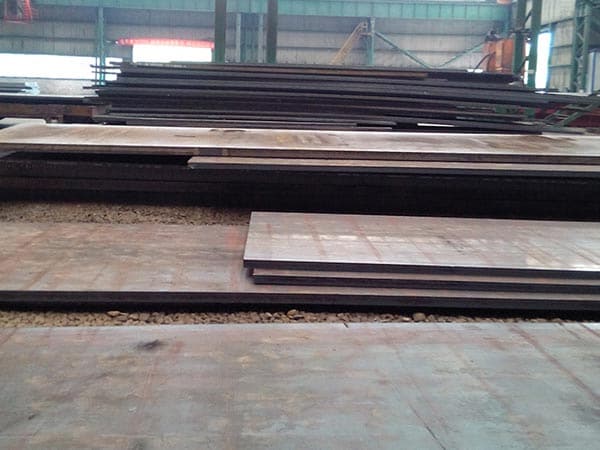
Understanding the S420 Steel Grade and Its Global Equivalents
S420 steel represents a pinnacle of high-strength structural steel technology, specifically designed for applications where weight reduction and high load-bearing capacity are paramount. Governed by the EN 10025 series of standards, particularly EN 10025-3 (for normalized/normalized rolled steels) and EN 10025-4 (for thermomechanically rolled steels), S420 provides a minimum yield strength of 420 MPa. This strength level places it strategically between the widely used S355 and the ultra-high-strength S460, offering a balanced solution for modern engineering challenges. When engineers discuss the usage of S420 steel equivalent, they are navigating a complex landscape of international standards including ASTM, GB/T, and JIS, each with specific nuances in chemical composition and mechanical delivery conditions.
The primary appeal of S420 lies in its ability to reduce the overall weight of structures without compromising safety. By utilizing the higher yield strength of S420 compared to S355, designers can specify thinner sections for beams, columns, and plates. This weight optimization cascades into cost savings across the supply chain, from reduced raw material procurement to lower transportation costs and simplified on-site assembly. The equivalent grades across different regions ensure that global projects can maintain consistency in structural integrity regardless of local sourcing limitations.
Cross-Reference of S420 Steel Equivalents
Identifying the correct S420 steel equivalent requires a deep understanding of the delivery conditions, such as 'N' for normalized or 'M' for thermomechanically rolled (TMCP). The following table outlines the most common equivalents used in international procurement and design.
| Standard | Equivalent Grade | Delivery Condition |
|---|---|---|
| EN 10025-3 | S420N / S420NL | Normalized / Normalized Rolled |
| EN 10025-4 | S420M / S420ML | Thermomechanically Rolled (TMCP) |
| ASTM (USA) | A572 Grade 60 / A633 Grade E | High-Strength Low-Alloy (HSLA) |
| GB/T (China) | Q420 (B, C, D, E) | Hot Rolled / TMCP |
| JIS (Japan) | SM520 / SM570 (Partial overlap) | Structural Steel for Welding |
| ISO 630 | S420 | International Standard Grade |
While these grades are often treated as equivalents, metallurgical differences exist. For instance, the Chinese Q420 grade may have slightly different micro-alloying elements like Vanadium or Niobium compared to the European S420ML. Engineers must verify the impact energy requirements (e.g., -20°C for 'L' or 'ML' grades vs. -50°C for 'NL' grades) to ensure the equivalent material meets the specific environmental demands of the project site.
Chemical Composition and Weldability Attributes
The chemical profile of S420 and its equivalents is meticulously controlled to ensure a low Carbon Equivalent Value (CEV). This is critical for maintaining excellent weldability, a core requirement for large-scale structural fabrication. By keeping carbon content low (typically below 0.16% for S420ML) and utilizing micro-alloying elements such as Titanium, Niobium, and Vanadium, the steel achieves high strength through grain refinement rather than high carbon levels.
- Carbon (C): Kept low to prevent the formation of brittle martensite in the heat-affected zone (HAZ) during welding.
- Manganese (Mn): Enhances strength and toughness, usually ranging from 1.0% to 1.7%.
- Silicon (Si): Acts as a deoxidizer during the steelmaking process.
- Micro-alloying (Nb, V, Ti): These elements facilitate fine grain structures, which are the primary source of the steel's strength and low-temperature toughness.
The usage of S420 steel equivalent in welded structures is highly efficient because the low CEV reduces the need for extensive preheating. For S420ML (TMCP), the CEV is often lower than its normalized counterpart (S420N), making it the preferred choice for offshore structures and heavy machinery where thick plates are joined using high-heat input welding processes like Submerged Arc Welding (SAW).
Mechanical Performance: Beyond Yield Strength
While the "420" in the name signifies the minimum yield strength, the mechanical performance of S420 equivalents encompasses tensile strength, elongation, and impact toughness. For S420, the tensile strength typically ranges between 520 and 680 MPa. The elongation properties, usually exceeding 18-19%, ensure that the material can undergo significant plastic deformation before failure, providing a vital safety margin in seismic zones or under dynamic loading.
Impact toughness is another critical metric. Grades like S420ML or Q420D are tested at -20°C, while S420NL or Q420E are tested at -50°C. This low-temperature resilience makes S420 equivalents indispensable for Arctic engineering, offshore oil and gas platforms, and high-altitude infrastructure. The ability of the steel to resist brittle fracture at sub-zero temperatures is a direct result of the fine-grained microstructure achieved through advanced rolling techniques.
Processing and Fabrication Performance
Fabricating S420 steel equivalents requires an understanding of how the delivery condition affects the material's reaction to heat and mechanical stress. S420M and S420ML, produced via Thermomechanical Controlled Processing (TMCP), derive their properties from the rolling schedule rather than post-rolling heat treatment. Consequently, if these steels are heated above their transformation temperature during fabrication (such as in hot forming), they may lose their high-strength properties. For applications requiring hot forming, the normalized S420N equivalent is more suitable as it can be re-normalized to restore its properties.
Cold forming is highly effective for S420 equivalents. Due to their high purity and fine grain size, these steels exhibit excellent bendability. However, because of the higher yield strength compared to S355, fabrication shops must account for increased springback and require higher-capacity pressing equipment. Cutting S420 is typically performed using plasma or laser cutting for precision, though oxy-fuel cutting is also viable provided that the edge hardening is managed for subsequent welding operations.
Strategic Industry Applications
The adoption of S420 steel equivalents is widespread across industries that demand high performance-to-weight ratios. In the heavy lifting industry, crane booms and chassis are frequently manufactured from S420 equivalents to maximize lifting capacity while keeping the vehicle's dead weight within road-legal limits. The high fatigue resistance of the steel ensures a long service life under cyclic loading conditions.
In bridge engineering, S420 is used for long-span girders and truss members. The increased strength allows for sleeker designs, which not only improves aesthetics but also reduces the wind load on the structure. Similarly, in high-rise construction, using S420 for lower-level columns reduces the column footprint, thereby increasing the usable floor area—a significant economic factor for commercial developers.
The offshore energy sector relies heavily on S420ML equivalents for the fabrication of jackets, topsides, and wind turbine foundations. These structures face extreme environmental stresses, including wave impact and corrosive marine atmospheres. S420's combination of weldability and low-temperature toughness makes it the standard choice for ensuring structural integrity in the harsh North Sea or similar environments.
Environmental Adaptability and Sustainability
Modern steel production for S420 equivalents increasingly focuses on sustainability. The high strength of the material inherently supports green building goals by reducing the total tonnage of steel required for a project. This reduction in material volume leads to a lower embodied carbon footprint for the entire structure. Furthermore, S420 steel is 100% recyclable, fitting perfectly into the circular economy model of the modern construction industry.
Regarding environmental resilience, while S420 is not inherently "weathering steel" (like Corten), it can be supplied with copper additions to improve atmospheric corrosion resistance, or it can be easily galvanized or coated with high-performance marine paints. Its compatibility with various protective systems ensures that S420 structures can achieve design lives exceeding 50 or 100 years even in aggressive industrial or coastal zones.
Technical Considerations for Procurement
When specifying or purchasing S420 steel equivalents, it is vital to go beyond the basic grade designation. Buyers should request Mill Test Certificates (MTC) that confirm compliance with the specific sub-grade (e.g., S420ML vs S420M). The MTC should detail the chemical analysis, including the CEV, and the results of the Charpy V-notch impact tests. For critical structural applications, ultrasonic testing (UT) may be required to ensure the absence of internal laminations or defects, especially in thick plates.
Understanding the nuances between S420 equivalents like A572 Gr 60 and Q420 allows procurement teams to optimize their supply chains. In many cases, a project designed to European standards can successfully utilize Q420D if the impact testing and chemical tolerances are verified against the original design criteria. This flexibility is essential for maintaining project timelines in an era of global supply chain volatility.
The usage of S420 steel equivalent represents a sophisticated choice for engineers seeking to push the boundaries of structural design. By leveraging the material's high yield strength, superior weldability, and exceptional toughness, the industry continues to build safer, more efficient, and more sustainable infrastructure across the globe.
Leave a message