
What is s420mc density used for
Discover why S420MC density is critical for engineering calculations, weight reduction in automotive design, and cost-effective structural manufacturing.
The Fundamental Role of S420MC Density in Modern Engineering
When engineers and procurement specialists ask what is S420MC density used for, they are looking beyond a simple physical constant. S420MC, a high-yield-strength steel for cold forming, possesses a density of approximately 7.85 g/cm³ (7850 kg/m³). This value is the cornerstone of structural calculations, logistics planning, and material efficiency strategies. In the competitive landscape of industrial manufacturing, understanding how this density interacts with high yield strength allows for the creation of lighter, more durable components without compromising safety.
S420MC is governed by the EN 10149-2 standard, which specifies thermomechanically rolled steels. The density of 7.85 g/cm³ is standard for most carbon and low-alloy steels, but its application in S420MC is unique because of the material's high strength-to-weight ratio. By utilizing the precise density, designers can calculate the exact mass of complex geometries, ensuring that heavy-duty vehicles and machinery meet strict weight limit regulations while maintaining structural integrity.
Calculating Theoretical Weight and Material Procurement
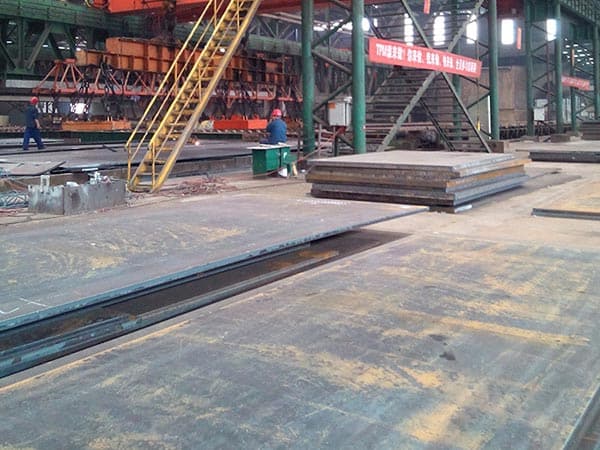
In the steel trade, density is the primary variable used to convert volume into weight. For S420MC, which is often supplied as hot-rolled coils or sheets, accurate weight calculation is vital for cost estimation. Since steel is frequently sold by the metric ton, a slight deviation in thickness or an incorrect density assumption can lead to significant financial discrepancies in large-scale projects.
Using the formula Weight = Volume × Density, manufacturers can predict the load-bearing requirements for transport and storage. For instance, a sheet of S420MC with a thickness of 5mm and dimensions of 1500mm x 3000mm would be calculated as follows:
- Volume = 0.005m × 1.5m × 3.0m = 0.0225 m³
- Mass = 0.0225 m³ × 7850 kg/m³ = 176.625 kg
This precision allows for optimized shipping schedules and ensures that lifting equipment used in the factory is rated correctly for the material being handled.
Mechanical Performance and Chemical Composition Synergy
While density provides the weight, the chemical composition of S420MC provides the strength. The "MC" designation indicates that the steel is thermomechanically rolled (M) and suitable for cold forming (C). The density remains consistent with standard steel, but the addition of micro-alloying elements like niobium, vanadium, and titanium enhances the grain structure.
| Element | Maximum Percentage (%) |
|---|---|
| Carbon (C) | 0.12 |
| Manganese (Mn) | 1.60 |
| Silicon (Si) | 0.50 |
| Phosphorus (P) | 0.025 |
| Sulfur (S) | 0.015 |
| Aluminium (Al) | 0.015 |
These elements allow S420MC to achieve a minimum yield strength of 420 MPa. Because the density is the same as lower-grade steels like S235JR, but the strength is nearly double, engineers can use thinner sections of S420MC to support the same load. This concept, known as lightweighting, is where the knowledge of density becomes a competitive advantage.
Applications in Automotive and Heavy Machinery
The transport sector is one of the largest consumers of S420MC. Here, the density is used to calculate the sprung and unsprung mass of vehicles. Reducing the weight of a truck chassis or a trailer frame directly translates to higher payload capacity and improved fuel efficiency. Since S420MC offers excellent cold-forming properties, it can be bent into complex longitudinal beams and cross-members.
- Truck Chassis: High-strength frames that resist fatigue while remaining light.
- Crane Arms: Telescopic sections that require high stiffness and low self-weight to maximize lifting height.
- Agricultural Equipment: Plows and trailers that must withstand high stress without becoming excessively heavy for tractors to pull.
- Cold Pressed Parts: Brackets and supports where weight savings contribute to overall assembly efficiency.
Processing Performance: Bending and Welding
S420MC is favored for its exceptional processing capabilities. The density plays a role in thermal conductivity and heat distribution during welding. Because the material is relatively lean in alloying elements (low carbon equivalent), it exhibits excellent weldability using standard methods like MIG, TIG, or submerged arc welding.
When cold forming or bending S420MC, the material's ductility is paramount. The standard requires a minimum elongation of 16% to 19% depending on the thickness. Designers use the density and volume to calculate the force required for hydraulic presses. Because S420MC is stronger than mild steel, the springback effect during bending is more pronounced, requiring precise calculation of the material's volume and thickness to achieve the desired final geometry.
Environmental Adaptability and Sustainability
In the context of global sustainability, S420MC density is used to perform Life Cycle Assessments (LCA). By calculating the mass of steel used in a structure, companies can determine the carbon footprint associated with its production and transport. Using S420MC allows for a reduction in total steel volume (and thus total mass) compared to conventional grades. Less steel mass means less energy consumed during melting, rolling, and shipping.
Furthermore, S420MC is fully recyclable. Its density ensures that it can be easily separated from lighter contaminants in scrap yards using magnetic and gravity-based separation techniques. The longevity of S420MC in harsh environments can be further enhanced through galvanizing or painting, as its surface chemistry is compatible with most industrial coating systems.
Technical Comparison: S420MC vs. Conventional Grades
To understand the value proposition of S420MC, it is helpful to compare its properties with other common structural steels. While the density remains virtually unchanged, the mechanical advantages are clear.
| Steel Grade | Density (kg/m³) | Min. Yield Strength (MPa) | Tensile Strength (MPa) |
|---|---|---|---|
| S235JR | 7850 | 235 | 360 - 510 |
| S355MC | 7850 | 355 | 430 - 550 |
| S420MC | 7850 | 420 | 480 - 620 |
| S500MC | 7850 | 500 | 550 - 700 |
This table illustrates that while you are not saving weight through a lower density, you are saving weight through material reduction. A component designed with S420MC can be significantly thinner than one made of S235JR while providing superior load-bearing capacity. This is the primary reason why S420MC density is such a vital metric in modern CAD (Computer-Aided Design) software, where the material density is input to simulate real-world stresses and weight distributions.
Optimizing Logistics and Storage
For warehouse managers, S420MC density is used to calculate floor loading capacities. Steel coils are incredibly dense and can easily exceed the weight limits of standard industrial flooring. Knowing that every cubic meter of S420MC weighs 7.85 tons allows for the safe stacking of coils and sheets. It also dictates the type of forklifts and overhead cranes required for internal movement. Safety protocols in steel service centers are built around these density-derived weight calculations to prevent structural failure of racking systems and transport vehicles.
In summary, S420MC density is the silent partner to its high yield strength. It is the bridge between theoretical design and physical reality, enabling the production of efficient, high-performance, and cost-effective structures across the automotive, construction, and heavy machinery industries. By mastering the application of this property, manufacturers can push the boundaries of what is possible in metal fabrication.
Leave a message