
What is the best quality 1.0982 thermomechanically rolled steels?
Discover the technical specifications, processing advantages, and industrial applications of 1.0982 (S460MC) thermomechanically rolled steel for high-performance engineering.
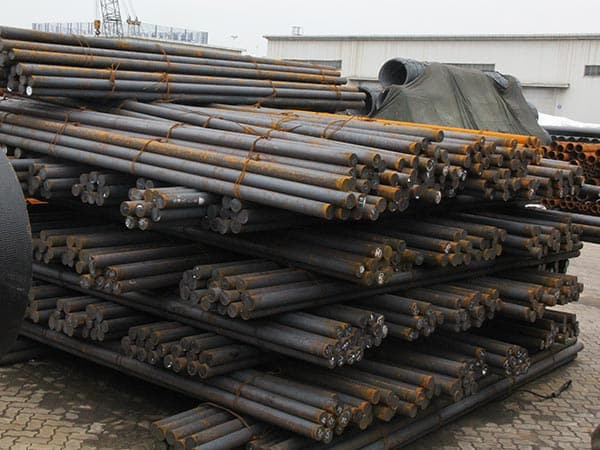
Understanding the Essence of 1.0982 Thermomechanically Rolled Steel
In the landscape of modern metallurgy, 1.0982, commonly known by its designation S460MC under the EN 10149-2 standard, represents a pinnacle of high-strength low-alloy (HSLA) steel technology. This material is not merely a product of chemical composition but a masterpiece of advanced processing known as thermomechanical rolling (TMCP). Unlike traditional hot rolling, TMCP integrates precise temperature control and specific deformation rates to refine the grain structure of the steel to a microscopic level. This refinement is what defines the 'best quality' for 1.0982, offering a unique synergy of high yield strength, exceptional toughness, and superior weldability.
The designation 1.0982 signifies a steel with a minimum yield strength of 460 MPa, designed specifically for cold-forming applications. The 'MC' suffix denotes that the material is thermomechanically rolled (M) and possesses high cold-forming capacity (C). For engineers and procurement specialists, identifying the highest quality 1.0982 involves looking beyond the basic datasheet to understand how the grain structure and micro-alloying elements interact to provide long-term structural integrity in demanding environments.
The Science of TMCP: Why 1.0982 Outperforms Traditional Grades
The superiority of 1.0982 lies in its manufacturing process. Thermomechanical rolling involves a controlled cooling process during the rolling stages, which prevents the growth of austenite grains. By adding micro-alloying elements such as Niobium (Nb), Vanadium (V), and Titanium (Ti), the steel achieves a fine-grained ferrite-pearlite or even bainitic structure. This fine grain size is the primary reason why 1.0982 can maintain high strength without the brittleness typically associated with high-carbon steels.
Chemical Composition and Its Impact on Performance
The chemical makeup of high-quality 1.0982 is strictly controlled to ensure a low carbon equivalent (CEV). A low CEV is critical because it directly translates to better weldability. When the carbon content is kept low (typically below 0.12%), the risk of cold cracking in the heat-affected zone (HAZ) during welding is significantly reduced, often eliminating the need for preheating.
| Element | Maximum Percentage (%) | Function in 1.0982 |
|---|---|---|
| Carbon (C) | 0.12 | Ensures strength while maintaining weldability. |
| Manganese (Mn) | 1.60 | Increases hardness and tensile strength. |
| Silicon (Si) | 0.50 | Acts as a deoxidizer and strengthens ferrite. |
| Phosphorus (P) | 0.025 | Kept low to prevent embrittlement. |
| Sulfur (S) | 0.015 | Minimized to improve lamellar tearing resistance. |
| Nb + V + Ti | 0.22 | Micro-alloying for grain refinement and precipitation hardening. |
Mechanical Properties: Defining the Structural Limits
The 'best' 1.0982 steel must meet or exceed the mechanical requirements set by international standards. For structural components that undergo heavy loading, the yield strength is the most critical parameter. However, for 1.0982, the tensile strength and elongation are equally vital, as they determine how the material will behave under extreme stress and during the fabrication process.
| Property | Value (Nominal Thickness ≤ 16mm) |
|---|---|
| Yield Strength (ReH) | Min. 460 MPa |
| Tensile Strength (Rm) | 520 - 670 MPa |
| Elongation (A80mm) | Min. 14% |
| Elongation (A5) | Min. 17% |
High-quality 1.0982 exhibits consistent mechanical properties across the entire length and width of the coil or plate. This consistency is a hallmark of top-tier steel mills that utilize automated gauge control and advanced cooling systems. When the mechanical properties are uniform, the material behaves predictably during laser cutting and CNC bending, reducing scrap rates and improving production efficiency.
Cold Forming and Processing Performance
One of the standout features of 1.0982 is its exceptional cold-forming capability. Despite its high strength, it can be bent to tight radii without cracking. This is particularly advantageous for the manufacturing of complex chassis components, crane booms, and structural sections where weight reduction is a priority. The fine grain structure provided by the TMCP process allows the steel to flow more uniformly during deformation.
- Bending Radius: For a thickness (t) of less than 3mm, a minimum bending radius of 0.8t is often achievable, though standard guidelines suggest 1.0t to 1.5t for safety margins.
- Laser Cutting: The low impurity levels and uniform surface finish of premium 1.0982 make it ideal for high-speed laser cutting, resulting in clean edges and minimal dross.
- Welding: It is compatible with all standard welding processes, including MAG, TIG, and laser welding. The low carbon content ensures that the joint strength remains comparable to the base metal.
Environmental Adaptability and Durability
While 1.0982 is not a weathering steel like Corten, its refined structure offers better resistance to atmospheric corrosion compared to standard S235 or S355 grades when properly coated. Its performance in low-temperature environments is also noteworthy. Many variants of 1.0982 are tested for impact energy at -20°C or even -40°C, ensuring that structures remain safe in arctic or high-altitude conditions. This environmental resilience makes it a preferred choice for transport trailers and mobile cranes that operate globally.
Expanding Industry Applications: Beyond the Basics
The adoption of 1.0982 has revolutionized several heavy industries by allowing for 'lightweighting'—the process of reducing the weight of a structure without sacrificing its load-bearing capacity. By switching from S355 to S460MC (1.0982), engineers can often reduce material thickness by 15-20%, leading to significant fuel savings in transport and lower material costs in construction.
Automotive and Heavy Transport: In the truck manufacturing sector, 1.0982 is used for longitudinal beams, cross members, and chassis frames. The high yield strength allows these vehicles to carry heavier payloads while maintaining a lower curb weight. Lifting and Handling Equipment: Telescopic booms for cranes and components for forklifts rely on the high strength-to-weight ratio of 1.0982 to reach greater heights and lift heavier loads safely. Renewable Energy: The solar industry utilizes 1.0982 for torque tubes and mounting structures in large-scale solar farms, where wind resistance and structural rigidity are paramount.
How to Identify and Source the Best Quality 1.0982
Sourcing the best quality 1.0982 requires a deep dive into the mill test certificates (MTC). A 'best-in-class' product will show carbon levels significantly below the maximum limit and a fine-tuned balance of micro-alloys. Furthermore, the surface quality should be free from scale pits or laminations, which can compromise the integrity of the final product. Key indicators of quality include:
- Tight Tolerance Control: Precision in thickness and flatness that exceeds standard EN 10051 requirements.
- Cleanliness: Low sulfur and phosphorus levels to ensure isotropic properties (consistent strength in both longitudinal and transverse directions).
- Traceability: Full documentation from the melting stage to the final rolling, ensuring the material meets the specific TMCP parameters.
By focusing on these technical nuances, manufacturers can ensure they are utilizing 1.0982 to its full potential, creating products that are safer, lighter, and more cost-effective. The transition to high-strength thermomechanically rolled steels is not just a trend; it is a fundamental shift toward more efficient and sustainable engineering practices.
Leave a message