
What is the price S960MC steel for car safety parts in Iran?
Explore the pricing factors, technical specifications, and application benefits of S960MC high-strength steel for the Iranian automotive safety sector.
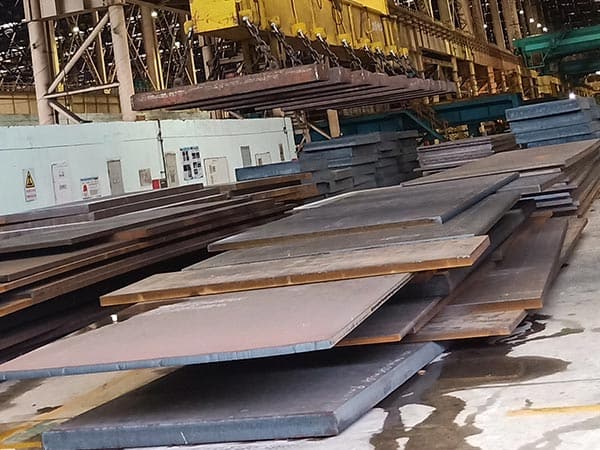
The Critical Role of S960MC Steel in Modern Vehicle Safety
The global automotive industry is undergoing a paradigm shift towards lightweighting without compromising structural integrity. S960MC steel, a thermomechanically rolled high-strength low-alloy (HSLA) steel, stands at the forefront of this evolution. In Iran, where the automotive sector is a pillar of the national economy, the demand for advanced materials that can enhance passenger safety while reducing fuel consumption is higher than ever. S960MC offers a minimum yield strength of 960 MPa, making it an ideal candidate for safety-critical components such as bumper beams, chassis reinforcements, and cross members.
Technical Specifications and Mechanical Performance
To understand the price of S960MC in the Iranian market, one must first appreciate its complex metallurgical profile. This steel grade is produced through a controlled thermomechanical rolling process, which results in a fine-grained microstructure. This structure provides a unique combination of high yield strength and excellent cold formability. Unlike traditional high-carbon steels, S960MC maintains its toughness even at lower temperatures, which is vital for vehicles operating in the diverse climatic conditions of the Iranian plateau.
The mechanical properties of S960MC are strictly governed by international standards like EN 10149-2. Below is a detailed breakdown of its performance metrics:
| Property | Value (Metric) | Significance for Safety Parts |
|---|---|---|
| Yield Strength (ReH) | Min. 960 MPa | Prevents permanent deformation during collisions. |
| Tensile Strength (Rm) | 980 - 1250 MPa | Ensures structural integrity under extreme loads. |
| Elongation (A5) | Min. 7% | Allows for energy absorption through plastic deformation. |
| Bending Radius (90°) | Min. 3.0 t (thickness) | Facilitates complex geometric designs in safety cages. |
Factors Influencing S960MC Prices in Iran
Determining the exact price of S960MC steel in Iran requires an analysis of several localized and global variables. Because this is a high-end specialty steel, it is not as readily available as standard carbon steel, leading to price premiums. Several factors dictate the final quotation for Iranian automotive manufacturers:
- Import Logistics and Sanctions: Much of the ultra-high-strength steel used in Iran is imported. Shipping costs, insurance, and the complexities of international trade under current sanctions significantly impact the landed cost in ports like Bandar Abbas.
- Currency Volatility: The exchange rate between the Iranian Rial (IRR) and the Euro or US Dollar is a primary driver of price fluctuations. Steel is globally traded in hard currencies, meaning local prices can change daily based on currency market shifts.
- Raw Material Surcharges: The cost of alloying elements such as Niobium (Nb), Vanadium (V), and Titanium (Ti), which are essential for the fine-grained structure of S960MC, directly affects the base price from the mill.
- Order Volume and Customization: Large-scale procurement by major Iranian automakers like IKCO or Saipa often results in better pricing compared to smaller tier-2 or tier-3 component suppliers. Custom dimensions or specific surface treatments also add to the cost.
Processing Advantages for Iranian Manufacturers
While the initial price per ton of S960MC might be higher than S700MC or S355MC, the total cost of ownership is often lower. The high strength-to-weight ratio allows engineers to use thinner gauges of steel to achieve the same or better safety ratings. This weight reduction leads to lower material consumption per vehicle. Furthermore, S960MC is designed for excellent weldability. Iranian fabrication shops can use standard MIG/MAG welding processes, provided they follow specific heat input guidelines to avoid softening the heat-affected zone (HAZ).
The surface quality of S960MC is typically superior, often provided in a pickled and oiled condition. This reduces the need for extensive pre-treatment before painting or coating, further streamlining the production line for car safety parts. For components like door impact beams, the ability to cold-form S960MC into complex shapes without cracking is a significant technological advantage that reduces scrap rates.
Environmental Adaptation and Durability
Iran's geography ranges from the humid Caspian coast to the arid central deserts. S960MC steel exhibits good environmental adaptability. When treated with appropriate zinc-based coatings or cataphoretic painting (KTL), parts made from S960MC offer long-term corrosion resistance. The fine-grained structure also provides a level of resistance to fatigue, which is essential for chassis components that endure constant vibration and stress cycles over the vehicle's lifespan.
Strategic Procurement in the Iranian Context
For procurement managers in Tehran, Isfahan, or Tabriz, sourcing S960MC requires a focus on certification and traceability. Given the safety-critical nature of the parts—such as seat belt anchors or steering column supports—ensuring that the steel meets EN 10149-2 standards is non-negotiable. Working with reputable distributors who can provide mill test certificates (MTC) is the only way to guarantee the material's chemical and mechanical integrity.
Market trends suggest that as Iranian vehicle safety standards align more closely with international benchmarks, the demand for S960MC will continue to grow. This increased volume may eventually lead to more stable supply chains and competitive pricing structures within the domestic market. Currently, buyers should expect to pay a premium for this grade, reflecting its high performance and the technical expertise required for its production.
Comparative Analysis of HSLA Grades
When evaluating whether to invest in S960MC, it is helpful to compare it with other high-strength grades commonly used in the Iranian automotive industry. The choice often depends on the specific balance between weight saving and manufacturing cost.
| Grade | Yield Strength | Typical Application | Price Index (Relative) |
|---|---|---|---|
| S355MC | 355 MPa | General structural parts | Baseline (1.0) |
| S700MC | 700 MPa | Chassis frames, heavy trailers | 1.4x - 1.6x |
| S960MC | 960 MPa | Safety cages, bumper beams | 1.9x - 2.3x |
The transition from S700MC to S960MC allows for a weight reduction of approximately 15-20% in specific components. For electric vehicles (EVs) being developed in Iran, this weight saving is even more critical to extend battery range, justifying the higher price point of the material.
Optimizing Production with S960MC
To maximize the value of S960MC, Iranian manufacturers are increasingly adopting advanced simulation tools. Finite Element Analysis (FEA) allows designers to predict how S960MC will behave during a crash, ensuring that the high yield strength is utilized effectively to protect the cabin. By optimizing the geometry of the part, manufacturers can often use even less material, further offsetting the higher per-ton price of the steel. This holistic approach to design and material selection is the key to producing world-class safety parts in the local market.
Leave a message