
What is carbon s500mc en 10149-2 automobile structure steel equivalent to
A comprehensive guide to S500MC (EN 10149-2) steel, exploring its chemical composition, mechanical properties, and global equivalents like Q500D and ASTM Grade 70.
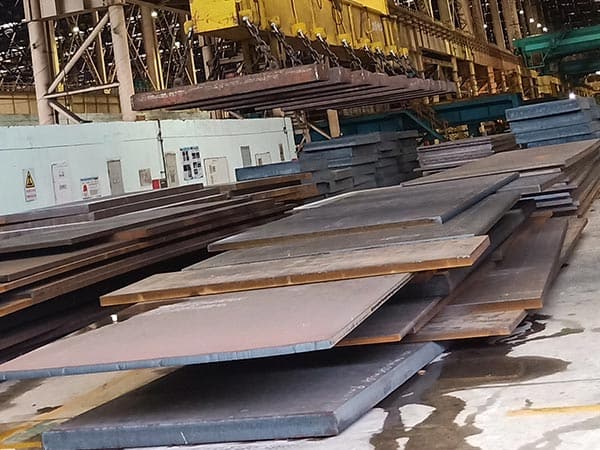
The Technical Essence of S500MC: Beyond Basic Carbon Steel
S500MC is a high-yield-strength, thermomechanically rolled steel specifically engineered for cold forming. Governed by the European standard EN 10149-2, this grade represents a sophisticated balance between high strength and excellent ductility. Unlike traditional hot-rolled carbon steels, the 'MC' suffix denotes that the material has undergone thermomechanical rolling, a process that refines the grain structure through controlled deformation and cooling rates. This metallurgical approach allows for a significant reduction in alloying elements while achieving superior mechanical performance, making it a cornerstone of modern automotive engineering.
The primary appeal of S500MC lies in its ability to facilitate lightweighting. By utilizing a steel with a minimum yield strength of 500 MPa, engineers can design thinner components that maintain the same structural integrity as thicker, lower-grade alternatives. This weight reduction is critical for improving fuel efficiency and increasing the payload capacity of commercial vehicles without compromising safety or durability.
Global Equivalents: Mapping S500MC Across International Standards
When sourcing materials for global projects, identifying the correct equivalent is paramount. While S500MC is the European designation, other industrial regions have developed similar grades under their respective standards. Understanding these nuances ensures that structural calculations and fabrication processes remain consistent across borders.
| Standard Authority | Equivalent Grade | Key Comparison Notes |
|---|---|---|
| China (GB/T 1591) | Q500D / Q500E | Q500D offers similar yield strength and excellent low-temperature impact toughness, often used in heavy machinery. |
| USA (ASTM) | ASTM A1011 / A1011M HSLAS Grade 70 | ASTM Grade 70 provides a yield strength of approximately 480-500 MPa, though chemical tolerances may vary slightly. |
| Japan (JIS G3134) | SPFH 590 | A high-strength steel for automobile structural use, focusing on superior press-formability. |
| ISO (ISO 6930) | H500 | The international standard for high yield strength steels for cold forming, closely mirroring EN 10149-2. |
| Germany (Old DIN) | QStE 500 TM | The legacy German designation before the full adoption of the EN 10149 framework. |
While these equivalents are functionally similar, it is essential to verify specific requirements such as impact energy at sub-zero temperatures and minimum elongation values, as these can differ slightly between the EN and ASTM/GB standards.
Chemical Composition: The Role of Micro-Alloying
The performance of S500MC is rooted in its chemistry. To maintain weldability and formability, the carbon content is kept remarkably low, typically below 0.12%. The strength is derived not from carbon, but from micro-alloying elements such as Niobium (Nb), Vanadium (V), and Titanium (Ti).
- Carbon (C): Kept low to ensure excellent weldability and prevent brittleness in the heat-affected zone (HAZ).
- Manganese (Mn): Enhances strength and contributes to grain refinement during the rolling process.
- Silicon (Si): Acts as a deoxidizer and provides solid-solution strengthening.
- Niobium & Titanium: These elements form fine carbides and nitrides that pin grain boundaries, preventing grain growth and resulting in an ultra-fine ferrite-pearlite microstructure.
- Sulfur (S) & Phosphorus (P): Maintained at extremely low levels to improve internal cleanliness and prevent edge cracking during severe bending.
This precise chemical control ensures that the steel remains "clean," which is vital for high-speed automated welding and laser cutting processes common in the automotive supply chain.
Mechanical Performance and Structural Integrity
The mechanical properties of S500MC are defined by its high yield-to-tensile ratio. For structural components in vehicles, the yield strength is the most critical metric, as it determines the point at which permanent deformation occurs.
- Yield Strength (ReH): Minimum 500 MPa.
- Tensile Strength (Rm): 550 to 700 MPa.
- Elongation (A80mm): Minimum 12% to 14% depending on the thickness of the material.
- Bending Ability: S500MC is designed for tight bending radii. For thicknesses under 3mm, a 180-degree bend can often be achieved with a radius of 0.5 to 1.0 times the material thickness.
These properties allow the steel to absorb significant energy during a collision, making it an ideal choice for safety-critical components like bumper beams and chassis reinforcements. The consistent mechanical profile across the entire coil ensures that automated stamping presses can operate with minimal adjustments.
Processing Performance: Welding and Cold Forming
Fabricating with S500MC requires an understanding of its thermomechanical nature. Because its strength is derived from the rolling process rather than heat treatment, excessive heat input during welding or secondary processing must be managed.
Welding: S500MC exhibits superb weldability using all standard methods, including MAG (Metal Active Gas), laser welding, and resistance welding. Due to the low carbon equivalent (CEV), the risk of cold cracking is minimal, and preheating is generally unnecessary. However, it is advisable to use low-heat input techniques to preserve the fine-grained structure in the heat-affected zone.
Cold Forming: The material is specifically optimized for cold pressing and folding. It shows very little springback compared to other high-strength steels, which allows for high dimensional accuracy in complex geometries. When designing tools for S500MC, engineers should account for the material's strength to ensure the press capacity is sufficient.
Diverse Applications in the Automotive and Transport Sectors
The versatility of S500MC extends far beyond simple brackets. Its high strength-to-weight ratio makes it the preferred material for several high-stress environments:
- Truck Chassis Frames: Longitudinal beams and cross members benefit from the weight savings, directly translating to higher cargo efficiency.
- Crane Arms and Lifting Equipment: The high yield strength allows for longer reach and higher lift capacities in mobile cranes.
- Agricultural Machinery: Plow frames and harvester components require the durability and fatigue resistance that S500MC provides.
- Cold-Pressed Parts: Complex structural reinforcements within car doors, pillars, and seat frames.
By replacing standard S235 or S355 grades with S500MC, manufacturers can often reduce the weight of a structural assembly by 20% to 30% while maintaining or even improving the fatigue life of the component.
Environmental Adaptation and Longevity
In the context of environmental sustainability, S500MC plays a dual role. Firstly, the reduction in vehicle weight leads to lower CO2 emissions during the vehicle's operational life. Secondly, the material is fully recyclable, fitting perfectly into the circular economy of the steel industry. Its resistance to atmospheric corrosion is comparable to other carbon steels, but because it is often used in thinner gauges, appropriate surface treatments such as galvanizing or E-coating are recommended to ensure long-term durability in harsh road environments.
Furthermore, the fine-grained structure of S500MC provides excellent resistance to fatigue. In components subjected to cyclic loading, such as trailer suspensions or chassis rails, this steel maintains its structural integrity over millions of cycles, reducing the need for frequent repairs or premature replacement.
Strategic Advantages of Choosing S500MC
Selecting S500MC EN 10149-2 is a strategic decision that impacts the entire production chain. For the procurement specialist, it offers a globally recognized standard with multiple equivalent options. For the production manager, it provides a material that is easy to weld, cut, and form. For the end-user, it results in a vehicle or machine that is lighter, stronger, and more efficient.
As the automotive industry continues to push the boundaries of performance and environmental responsibility, high-strength low-alloy (HSLA) steels like S500MC will remain indispensable. Its ability to bridge the gap between traditional mild steels and ultra-high-strength specialized alloys makes it one of the most cost-effective solutions for modern structural engineering challenges.
Leave a message