
What is the difference between DD14 steel for cold forming automobile & A36?
A comprehensive technical comparison between DD14 automotive cold forming steel and ASTM A36 structural steel, covering chemistry, mechanical properties, and industrial use.
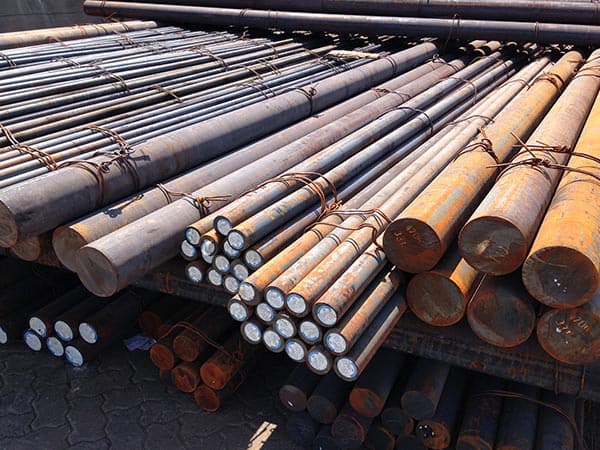
The Metallurgical Philosophy: Ductility vs. Structural Integrity
In the vast landscape of steel metallurgy, selecting the appropriate grade is not merely a matter of strength, but a strategic decision based on the intended manufacturing process and the final environment of the component. DD14 steel and ASTM A36 represent two distinct philosophies in steel production. DD14, governed by the European standard EN 10111, is a hot-rolled low-carbon steel specifically engineered for deep drawing and complex cold forming within the automotive sector. In contrast, ASTM A36 is the quintessential North American structural steel, designed for load-bearing capacity, weldability, and general construction utility.
Understanding the difference between these two requires looking beyond simple yield strengths. It involves analyzing how the microstructure reacts to deformation, how the chemical composition influences weld pool behavior, and how the surface quality affects subsequent coating processes. While both are technically carbon steels, their roles in modern engineering are almost entirely non-overlapping.
Standard Specifications and Chemical Composition
The chemical makeup of a steel grade dictates its DNA. For DD14, the primary goal is to minimize impurities and carbon content to maximize ductility. For A36, the goal is to maintain a predictable strength-to-weight ratio while ensuring the material remains economical for large-scale infrastructure projects.
| Element (%) | DD14 (EN 10111) | ASTM A36 (Shapes/Plates) |
|---|---|---|
| Carbon (C) | Max 0.08 | 0.25 - 0.29 |
| Manganese (Mn) | Max 0.35 | 0.80 - 1.20 (thickness dependent) |
| Phosphorus (P) | Max 0.025 | Max 0.040 |
| Sulfur (S) | Max 0.025 | Max 0.050 |
| Silicon (Si) | - | Max 0.40 |
As shown in the table, DD14 features an exceptionally low carbon content (max 0.08%). This low carbon level is critical for preventing work hardening during the deep drawing process, allowing the steel to flow into complex dies without tearing. ASTM A36, however, allows for significantly higher carbon levels (up to 0.29%), which provides the necessary hardness and tensile strength required for structural beams and plates but makes it far less suitable for intricate cold shaping.
Mechanical Performance: Elongation vs. Yield Strength
The mechanical properties of these steels highlight their functional divergence. DD14 is characterized by its high elongation and relatively low yield strength, which is ideal for "forming." A36 is characterized by its stable yield point, which is essential for "supporting."
- Yield Strength: DD14 typically ranges between 170 and 290 MPa. ASTM A36 has a minimum yield strength of 250 MPa (36,000 psi), which is where its name originates.
- Tensile Strength: DD14 is capped at a maximum of 430 MPa to ensure it remains soft enough for forming. A36 ranges from 400 to 550 MPa, providing a robust safety margin for buildings and bridges.
- Elongation: This is the most critical metric for DD14. It requires a minimum elongation of 31% (for thicknesses ≥ 3mm), allowing for extreme stretching. A36 usually hovers around 20-23%, which is sufficient for structural safety but insufficient for deep-drawn automotive parts.
The high elongation of DD14 is achieved through controlled cooling and specific rolling practices that produce a fine, uniform grain structure. This uniformity ensures that when a hydraulic press exerts tons of pressure on a DD14 sheet, the material thins out evenly rather than snapping at localized stress points.
Processing Capabilities: Cold Forming vs. Structural Fabrication
The manufacturing utility of these steels defines their market niche. DD14 is the workhorse of the automotive stamping plant. It is used to create components that require complex geometries, such as oil pans, seat frames, and intricate brackets. Because it is a hot-rolled steel intended for cold forming, it offers a cost-effective alternative to cold-rolled grades when the surface finish requirements are slightly less stringent or when the part will be heavily coated later.
ASTM A36 is the backbone of the fabrication shop. It is prized for its exceptional weldability using standard methods like MIG, TIG, and submerged arc welding. Because its carbon equivalent is relatively low compared to high-strength alloys, it does not require extensive pre-heating or post-weld heat treatment in most applications. However, if you were to attempt to deep-draw an A36 plate into a car door panel, the material would likely crack or exhibit significant "springback," making it impossible to hold tight tolerances.
Application Scenarios: Automotive Precision vs. Industrial Scale
Within the automotive sector, DD14 is selected for parts that are hidden from view but vital for structural assembly. This includes chassis reinforcements, suspension components, and internal housing for various mechanical systems. The ability of DD14 to undergo severe deformation without losing its structural integrity makes it indispensable for energy-absorbing components that must perform predictably during a vehicle collision.
ASTM A36 finds its home in the infrastructure and heavy machinery sectors. It is the material of choice for:
- Bolted and welded bridges.
- Skyscraper frames and industrial warehouses.
- Base plates for heavy equipment.
- Agricultural machinery frames.
The versatility of A36 lies in its availability in various forms, including I-beams, channels, angles, and heavy plates. DD14 is primarily available in coil or sheet form, reflecting its role in high-volume automated production lines.
Environmental Adaptability and Surface Considerations
Environmental factors play a significant role in material selection. Neither DD14 nor A36 is inherently corrosion-resistant; both are plain carbon steels that will oxidize if left unprotected. However, the surface finish of DD14 is often critical for automotive applications where E-coating or powder coating is applied. The hot-rolling process for DD14 is tightly controlled to minimize scale and surface defects that could interfere with the adhesion of automotive paints.
ASTM A36 is often used in environments where it is galvanized or painted with heavy-duty industrial primers. In many structural applications, a thicker mill scale is acceptable because the material is significantly thicker than the thin-gauge sheets used in automotive stamping. For A36, the primary environmental concern is often brittle fracture in extremely cold temperatures, whereas for DD14, the concern is more focused on the consistency of the material's formability across different production batches.
Final Technical Verdict: Choosing the Right Grade
The choice between DD14 and A36 is dictated by the manufacturing method. If the project involves a hydraulic press, deep drawing, or complex bending of thin-to-medium gauge steel, DD14 is the superior choice due to its high ductility and low carbon content. It ensures that the production process remains stable with low scrap rates.
If the project involves welding large sections together to support a static or dynamic load, such as a building frame or a machine base, ASTM A36 is the industry standard. Its predictable yield strength and ease of fabrication make it the most cost-effective structural solution. While both steels are essential to modern engineering, they serve different masters: DD14 serves the precision and formability of the assembly line, while A36 serves the strength and reliability of the built environment.
Leave a message