
What is minimum yield strength of HR coil Q235 pickled steel coil?
Detailed technical analysis of Q235 pickled steel coil yield strength, chemical composition, mechanical properties, and industrial application benefits.
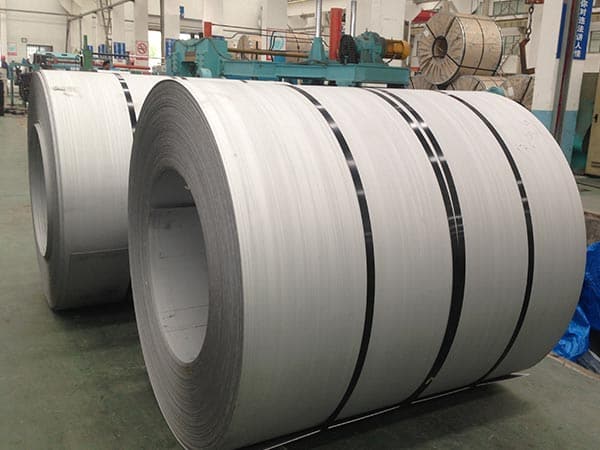
Defining the Core Attribute: Yield Strength of Q235 Steel
The term Q235 is more than just a label; it is a direct reflection of the material's mechanical capabilities. In the Chinese GB/T 700 standard, the "Q" stands for the first letter of the Chinese pinyin for yield, "Qu," while "235" specifies the minimum yield strength of 235 Megapascals (MPa). For engineers and procurement specialists dealing with HR (Hot Rolled) coil Q235 pickled steel, this value serves as the baseline for structural calculations and safety margins. However, it is essential to understand that this 235 MPa figure is specifically applicable to steel thicknesses of 16mm or less. As the thickness of the material increases, the minimum yield strength gradually decreases due to the cooling rates and grain structure formation during the hot rolling process.
When we discuss HR coil that has undergone the pickling process, we are looking at a product that maintains the robust internal properties of hot-rolled steel while gaining a surface quality that rivals cold-rolled alternatives. The pickling process involves passing the hot-rolled coil through a series of acid baths—typically hydrochloric acid—to remove the iron oxide scale (the "black skin") that forms during high-temperature rolling. This results in a clean, smooth, and silver-grey surface that is then oiled to prevent oxidation. While the pickling process itself does not significantly alter the yield strength of the base Q235 metal, it ensures that the material is ready for precision processing where surface integrity is paramount.
The Impact of Thickness on Yield Strength Performance
Structural integrity depends on a nuanced understanding of how dimensions affect material performance. For Q235 steel, the yield strength is not a static number across all product ranges. The GB/T 700 standard provides a clear breakdown of how the minimum yield strength shifts based on the thickness of the HR coil or plate. This variation is critical for heavy-duty machinery and structural engineering projects where thicker sections are common.
| Thickness Range (mm) | Minimum Yield Strength (MPa) | Tensile Strength (MPa) |
|---|---|---|
| ≤ 16 | 235 | 370 - 500 |
| > 16 to 40 | 225 | 370 - 500 |
| > 40 to 60 | 215 | 370 - 500 |
| > 60 to 100 | 205 | 370 - 500 |
This table illustrates that while the minimum yield strength is 235 MPa for the most common HR coil thicknesses, thicker sections require a downward adjustment in design stress. Despite these variations, the tensile strength remains relatively stable, providing a consistent safety net against ultimate material failure.
Chemical Composition: The Foundation of Q235 Properties
The reliable performance of Q235 pickled steel is rooted in its chemical makeup. It is classified as a low-carbon steel, which balances strength with excellent weldability and ductility. The controlled levels of carbon, manganese, and silicon ensure that the material can be easily formed without cracking, while the strict limits on phosphorus and sulfur prevent brittleness.
- Carbon (C): Typically ≤ 0.22% for Q235B. Low carbon content is the primary reason for the steel's exceptional weldability.
- Manganese (Mn): Between 0.30% and 0.70%. Manganese increases hardness and strength without significantly decreasing ductility.
- Silicon (Si): ≤ 0.35%. Acts as a deoxidizer during the steelmaking process, enhancing the overall quality of the coil.
- Phosphorus (P) and Sulfur (S): Kept to a minimum (usually ≤ 0.045% or lower depending on the grade A, B, C, or D) to improve impact toughness and prevent hot shortness.
The distinction between sub-grades (Q235A, Q235B, Q235C, Q235D) is primarily based on the impact test requirements. Q235A does not require impact testing, while Q235B requires testing at 20°C, Q235C at 0°C, and Q235D at -20°C. For pickled coils, Q235B is the most frequently requested grade, offering a balanced performance profile for general industrial use.
Why Choose Pickled and Oiled (P&O) HR Coils?
Choosing HR coil Q235 in a pickled and oiled state offers several technical and economic advantages over standard hot-rolled black coils. The removal of the hard, abrasive oxide scale provides immediate benefits during the manufacturing cycle. Firstly, the surface quality is significantly improved, making it suitable for applications that require aesthetic finishes or high-quality coatings. Without the scale, paint and powder coatings adhere much more effectively, reducing the risk of delamination and corrosion under the paint layer.
Secondly, pickled steel is much friendlier to downstream processing equipment. The oxide scale on standard hot-rolled steel is extremely hard and acts as an abrasive, which can lead to rapid wear on stamping dies, roll-forming tools, and cutting blades. By using pickled and oiled steel, manufacturers can extend the life of their tooling, reduce maintenance downtime, and achieve tighter dimensional tolerances. Furthermore, the oil film applied after pickling provides temporary corrosion protection during transport and storage, ensuring the material arrives at the factory floor in pristine condition.
Processing Performance and Weldability
One of the standout features of Q235 pickled steel is its versatility in the workshop. Because of its low carbon equivalent, it is considered one of the most weldable steels available. It can be joined using virtually any standard welding method, including MIG, TIG, and submerged arc welding, without the need for preheating or post-weld heat treatment in most standard applications. This makes it a preferred choice for complex structural assemblies and high-volume manufacturing.
In terms of formability, the pickling process removes the surface irregularities that can lead to stress concentrations during bending or stamping. Q235 exhibits good cold-bending properties, allowing it to be shaped into various profiles and components without fracturing. The clean surface also facilitates more accurate laser and plasma cutting, as the absence of scale ensures a consistent beam interaction and a cleaner edge finish.
Expanding Applications Across Industrial Sectors
The combination of a 235 MPa yield strength and a superior surface finish makes Q235 pickled coils indispensable across diverse industries. In the automotive sector, it is used for non-structural components, brackets, and chassis parts where weldability and paintability are key. The construction industry utilizes it for light-gauge steel framing, HVAC ductwork, and cable trays.
In the realm of general machinery, Q235 pickled steel is the go-to material for enclosures, baseplates, and storage racks. Its ability to be easily cleaned and coated also makes it suitable for the production of shelving units and office furniture. Furthermore, the container and packaging industry relies on this grade for manufacturing drums and shipping containers, where the material must withstand significant stress while remaining cost-effective.
Environmental Adaptability and Longevity
While Q235 is a carbon steel and will oxidize if left unprotected, the pickling and oiling process provides a superior starting point for corrosion resistance. By removing the mill scale, the steel eliminates the electrochemical cells that often form between the scale and the base metal, which can accelerate localized pitting. When combined with modern coating technologies—such as galvanizing or high-performance epoxy paints—Q235 pickled steel can provide decades of service even in moderately corrosive environments.
For applications in colder climates, selecting the appropriate sub-grade (such as Q235C or Q235D) ensures that the material retains its toughness and resists brittle fracture. This adaptability ensures that the 235 MPa yield strength remains a reliable design parameter regardless of the operational temperature, provided the correct sub-grade is specified during the procurement phase.
Comparative Analysis: Q235 vs. Global Equivalents
Global trade often requires comparing Q235 with other international standards. While not identical, several grades offer similar performance profiles. For instance, ASTM A36 is the American equivalent, though it has a slightly higher yield strength of approximately 250 MPa. The European S235JR is a very close match, with a minimum yield strength of 235 MPa and similar chemical constraints. In the Japanese market, SS400 is often compared to Q235, though SS400 focuses more on tensile strength (400-510 MPa) and has less stringent requirements on chemical composition for certain elements.
Understanding these nuances is vital for global supply chain management. While Q235 is highly cost-effective and widely available, ensuring that it meets the specific mechanical requirements of a project designed under different standards is a critical step for engineering compliance. The pickled finish further distinguishes the product, as it offers a "near-cold-rolled" quality at a price point much closer to hot-rolled steel, providing a strategic advantage for cost-sensitive projects requiring high surface integrity.
Leave a message