
What is the s700mc steel equivalent in india smelt
Discover the Indian equivalent for S700MC steel. This guide compares EN 10149-2 S700MC with IS 2062 E700, covering mechanical properties, chemical composition, and applications.
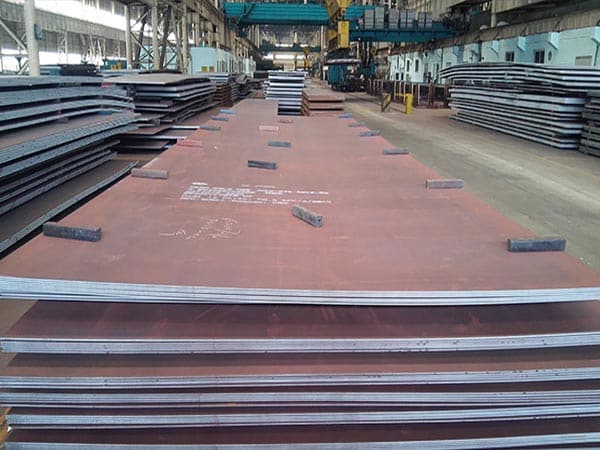
Understanding S700MC and Its Position in the Global Steel Market
S700MC is a high-strength, thermomechanically rolled steel grade that falls under the European standard EN 10149-2. The designation "S" represents structural steel, "700" denotes the minimum yield strength of 700 MPa, and "MC" indicates that the material is produced via thermomechanical rolling (M) and is suitable for cold forming (C). In the modern engineering landscape, where lightweighting and structural integrity are paramount, S700MC has become a benchmark for efficiency.
Engineers and procurement specialists in India often face the challenge of identifying the exact equivalent within the Indian Standard (IS) framework. As India's infrastructure and automotive sectors modernize, the demand for high-yield strength steel (HYSS) has surged, leading to the development of local grades that mirror the performance of international standards like S700MC.
The Primary Indian Equivalent: IS 2062 E700
The most direct equivalent to S700MC in the Indian context is IS 2062 E700. The Bureau of Indian Standards (BIS) updated IS 2062 to include high-strength micro-alloyed grades to keep pace with global technological shifts. While S700MC is governed by EN 10149-2, IS 2062 E700 provides a comparable set of mechanical and chemical properties designed for structural applications requiring high load-bearing capacity and weight reduction.
However, it is essential to note that "equivalent" does not always mean "identical." The manufacturing processes and specific tolerance levels can vary between European and Indian mills. When sourcing S700MC equivalents in India, one must look at both the IS 2062 E700 standard and the proprietary grades offered by major Indian steel producers like Tata Steel, JSW Steel, and SAIL.
Mechanical Properties Comparison: S700MC vs. IS 2062 E700
The core value of S700MC lies in its high yield strength combined with excellent ductility. Below is a comparison of the mechanical requirements that define these grades:
| Property | S700MC (EN 10149-2) | IS 2062 E700 |
|---|---|---|
| Yield Strength (MPa) | Min. 700 | Min. 700 |
| Tensile Strength (MPa) | 750 - 950 | 750 - 950 |
| Elongation (%) | Min. 12 (at 2mm thickness) | Min. 12 - 14 |
| Impact Test (Charpy V-notch) | Optional (usually -20°C or -40°C) | As per agreement (Quality BR/B0) |
Both grades utilize thermomechanical controlled processing (TMCP). This process allows the steel to achieve high strength without a heavy reliance on alloying elements, which ensures that the material remains weldable and formable. The fine-grained microstructure achieved through TMCP is the secret behind the superior toughness-to-weight ratio.
Chemical Composition and Micro-Alloying Strategy
To reach a yield strength of 700 MPa while maintaining weldability, the carbon content is kept strictly low. Instead of carbon, these steels rely on micro-alloying elements such as Niobium (Nb), Vanadium (V), and Titanium (Ti). These elements facilitate grain refinement and precipitation hardening.
- Carbon (C): Usually limited to 0.12% max in S700MC and 0.15% max in IS 2062 E700 to prevent brittle welds.
- Manganese (Mn): Acts as a solid solution strengthener, typically around 1.60% to 2.10%.
- Silicon (Si): Controlled to ensure compatibility with galvanizing processes if required.
- Micro-alloys: The sum of Nb, V, and Ti is carefully balanced to optimize the fine-grained structure.
The low carbon equivalent (CEV) of these steels makes them exceptionally easy to weld using standard methods like MIG, TIG, or submerged arc welding, without the need for extensive pre-heating in most thicknesses.
Manufacturing Excellence in the Indian Market
Indian steel giants have developed proprietary brands that often exceed the basic requirements of IS 2062 E700, making them perfect substitutes for S700MC. For instance:
- Tata Steel: Their high-strength range, often marketed under specialized brands for the automotive and lifting industry, provides tight dimensional tolerances and superior surface finish.
- JSW Steel: Offers high-strength hot-rolled coils and plates that meet both EN and IS standards, widely used in commercial vehicle chassis.
- SAIL (Steel Authority of India Limited): Produces MC-series steels (like SAILMC 700) specifically designed for cold forming and high-stress applications.
When procurement happens in the Indian market, asking for "S700MC equivalent" often leads to these mill-specific grades which are tested and certified to meet the EN 10149-2 criteria even if they are manufactured in India.
Process Performance: Bending, Cutting, and Welding
One of the primary reasons for choosing S700MC or its Indian equivalent E700 is cold formability. Despite its high strength, the steel can be bent to tight radii. This is crucial for manufacturing telescopic booms, crane arms, and complex chassis components.
Bending: For S700MC, the minimum recommended bending radius is typically 2.0 to 2.5 times the thickness (t). Indian equivalents like E700 follow similar guidelines, provided the grain direction is considered during the layout process. Bending perpendicular to the rolling direction yields the best results.
Cutting: Both laser and plasma cutting are highly effective. Due to the low alloy content and clean chemistry, the heat-affected zone (HAZ) remains narrow, preserving the mechanical properties of the edge. This is a significant advantage over traditional quenched and tempered steels.
Welding: The low carbon equivalent value (CEV) ensures that the steel is not prone to cold cracking. Standard filler metals with matching strength (such as ER110S-G or equivalent) are used to ensure the weld joint is as strong as the base metal.
Industry Applications: Why the Shift to 700 MPa Steel?
The transition from 350 MPa or 450 MPa steels to 700 MPa (S700MC/E700) is driven by the need for weight reduction. In the transportation sector, reducing the tare weight of a trailer or truck body directly increases the payload capacity and fuel efficiency.
- Automotive & Transport: Chassis frames, cross members, and side beams for heavy-duty trucks and trailers.
- Lifting & Excavation: Crane booms, aerial work platforms, and components for earth-moving machinery where high strength and low weight are critical for stability.
- Renewable Energy: Support structures for solar panels and wind turbine components that require high durability against wind loads.
- Agricultural Machinery: Lightening the weight of harvesters and plows to reduce soil compaction while maintaining structural toughness.
Environmental Impact and Sustainability
Using S700MC or IS 2062 E700 contributes significantly to environmental sustainability. By utilizing higher strength steel, manufacturers can use thinner sections to achieve the same structural performance. This results in:
1. Reduced Raw Material Consumption: Less steel is needed per unit, saving iron ore and energy.
2. Lower Transportation Emissions: Lighter vehicles consume less fuel and emit less CO2 throughout their operational lifespan.
3. Recyclability: Like all steel, these high-strength grades are 100% recyclable, fitting perfectly into a circular economy.
Sourcing and Quality Assurance in India
When looking for S700MC equivalents in India, it is vital to verify the Mill Test Certificate (MTC). A valid MTC should clearly state the yield strength, tensile strength, elongation, and chemical composition. For critical applications, ensure that the material has undergone ultrasonic testing (UT) to check for internal defects and that the impact toughness is tested at the required temperature (e.g., -20°C).
Working with reputable stockholders and direct mill channels ensures that the material meets the stringent requirements of modern engineering. Whether the project specifies S700MC or IS 2062 E700, the focus should remain on the consistency of the thermomechanical process, as this determines the reliability of the steel under dynamic loads.
Technical Summary of Equivalency
The search for S700MC in the Indian market is easily resolved by looking toward IS 2062 E700 or specialized TMCP grades from local producers. These steels provide the necessary 700 MPa yield strength while offering the ductility needed for complex fabrication. By understanding the nuances of micro-alloying and thermomechanical rolling, engineers can confidently substitute these grades to optimize their designs for the demanding conditions of the Indian industrial landscape.
Leave a message