
s700mc steel density for engineering and machine structural use
Comprehensive analysis of S700MC steel density, mechanical properties, and industrial applications. Learn how this HSLA steel optimizes structural efficiency and machine durability.
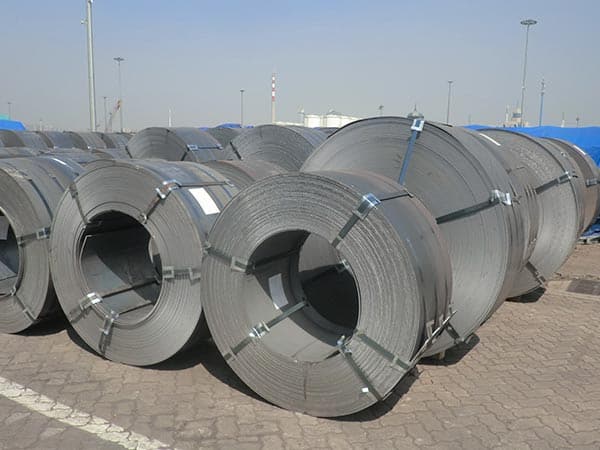
Physical Constants and the Role of S700MC Steel Density
In the precision-driven world of structural engineering, the fundamental physical properties of a material dictate the feasibility of complex designs. S700MC steel density is typically rated at 7.85 g/cm³ (or 7850 kg/m³). While this value aligns with standard carbon steels, the strategic advantage of S700MC lies not in a lower density, but in its exceptional strength-to-weight ratio. This characteristic allows engineers to utilize thinner sections without compromising the structural integrity of the machine or framework.
Understanding the density of S700MC is vital for calculating the total mass of heavy-duty components. In mobile crane construction or truck chassis manufacturing, every kilogram saved translates directly into increased payload capacity or reduced fuel consumption. By leveraging a density of 7.85 g/cm³ alongside a yield strength of 700 MPa, S700MC enables a reduction in material volume that traditional S355 steels cannot match.
Mechanical Properties and Structural Integrity
S700MC is a high-strength low-alloy (HSLA) steel produced through thermomechanical rolling. This process creates a fine-grained microstructure that provides superior mechanical performance. Unlike conventional steels, S700MC maintains high ductility even at its peak strength levels.
| Property | Value (Typical) |
|---|---|
| Yield Strength (ReH) | Min. 700 MPa |
| Tensile Strength (Rm) | 750 - 950 MPa |
| Elongation (A5) | Min. 12% (depending on thickness) |
| Density | 7.85 g/cm³ |
The high yield strength of 700 MPa allows for significant downsizing of structural members. For instance, replacing a 10mm S355 plate with a 6mm S700MC plate can achieve similar load-bearing capabilities while reducing the component weight by approximately 40%. This weight reduction is the primary driver for its adoption in the transport and lifting industries.
Chemical Composition and Micro-Alloying Precision
The performance of S700MC is rooted in its sophisticated chemical makeup. By keeping the carbon content low and adding micro-alloying elements like Niobium (Nb), Vanadium (V), and Titanium (Ti), manufacturers achieve grain refinement that enhances both strength and toughness.
- Carbon (C): Limited to approximately 0.12% to ensure excellent weldability.
- Manganese (Mn): Enhances hardenability and tensile strength.
- Silicon (Si): Acts as a deoxidizer and contributes to solid-solution strengthening.
- Micro-alloys (Nb, V, Ti): These elements form carbides and nitrides that pin grain boundaries during the rolling process, preventing grain growth and ensuring a fine structure.
This lean chemistry results in a low Carbon Equivalent Value (CEV), which is critical for preventing cold cracking during welding operations, making S700MC a favorite for automated production lines.
Processing Capabilities: Bending, Cutting, and Welding
One of the most remarkable aspects of S700MC is its formability. Despite its high strength, it can be cold-formed into complex shapes. This is particularly useful for manufacturing U-profiles, C-channels, and telescopic booms. The minimum recommended bending radius is typically small, allowing for compact designs.
When it comes to welding, S700MC exhibits outstanding behavior. It can be welded using all standard methods, including MIG/MAG, TIG, and submerged arc welding. Because of its low alloy content, preheating is often unnecessary for thinner gauges, which streamlines the manufacturing process and reduces energy costs. However, it is essential to control the heat input to avoid excessive grain growth in the Heat Affected Zone (HAZ), which could lead to a localized reduction in strength.
Laser and plasma cutting are highly effective with S700MC. The material's clean surface and consistent internal structure result in precise edges and minimal thermal distortion, which is crucial for components that require tight tolerances in machine structural use.
Environmental Adaptability and Fatigue Resistance
Engineering structures often operate in harsh environments where they are subjected to cyclic loading and temperature fluctuations. S700MC is designed to withstand these challenges. Its fine-grained structure provides excellent fatigue resistance, extending the service life of components like truck frames and excavator arms that undergo millions of stress cycles.
Furthermore, S700MC demonstrates reliable low-temperature toughness. Many grades are tested for impact energy at -20°C or -40°C, ensuring that the steel does not become brittle in arctic conditions. This makes it an ideal choice for equipment used in mining, forestry, and offshore logistics where reliability is non-negotiable.
Expanding Applications in Modern Engineering
The versatility of S700MC extends across various high-demand sectors. In the automotive industry, it is used for chassis members, cross-beams, and reinforcement parts where safety and weight are paramount. By using S700MC, manufacturers can produce lighter vehicles that meet stringent emissions standards without sacrificing crashworthiness.
In the lifting and mobile equipment sector, S700MC is the standard for crane booms and aerial work platforms. The ability to reach higher and lift heavier loads is directly linked to the weight savings provided by this high-strength steel. Similarly, in agricultural machinery, the use of S700MC in plow frames and trailer chassis allows for larger, more efficient implements that do not exceed road weight limits.
Economic and Sustainable Impact
Beyond technical specifications, S700MC offers a compelling economic case. Although the price per ton may be higher than standard carbon steel, the total cost of ownership is often lower. Reduced material usage leads to lower shipping costs, less welding filler metal required, and faster assembly times. Additionally, the reduction in vehicle weight leads to significant fuel savings over the equipment's lifespan, contributing to a lower carbon footprint and supporting global sustainability goals.
The integration of S700MC into engineering projects represents a shift toward "doing more with less." By understanding the relationship between its density, strength, and processing traits, designers can push the boundaries of what is possible in modern machine construction.
Leave a message