
What is the EN10111 DD1 steel for cold forming automobile with hot rolled
Comprehensive guide to EN10111 DD1 hot-rolled steel for cold forming. Explore its mechanical properties, chemical composition, and critical role in automotive manufacturing.
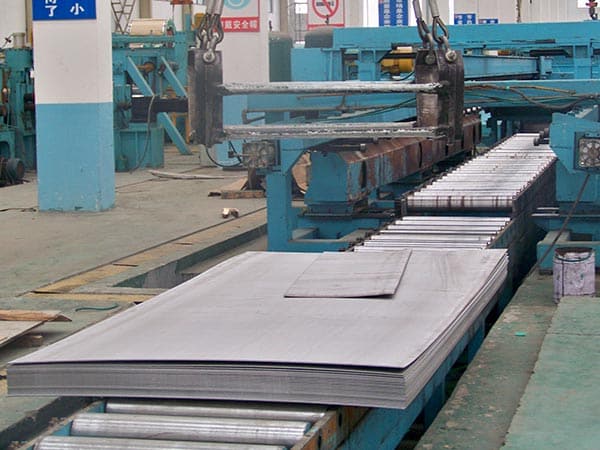
Defining EN10111 DD1: The Foundation of Cold-Formable Hot-Rolled Steel
In the complex landscape of metallurgical standards, EN10111 DD1 represents a critical grade of continuously hot-rolled low carbon steel designed specifically for cold forming. While modern revisions of the EN 10111 standard often categorize grades as DD11, DD12, DD13, and DD14, the DD1 designation remains a vital reference point in global supply chains, particularly for automotive components that require a balance of structural integrity and ease of shaping. This material is engineered to undergo significant deformation without fracturing, making it an indispensable asset for manufacturers producing intricate parts from heavy-gauge coils.
The 'DD' prefix signifies 'Deep Drawing,' a process where the steel is stretched and formed into three-dimensional shapes. The numerical suffix typically indicates the level of formability, with higher numbers representing increased ductility. DD1 serves as the baseline grade, offering reliable performance for general-purpose forming tasks where extreme deep-drawing capabilities are not the primary requirement, but consistency and weldability are paramount.
Chemical Composition and Metallurgical Balance
The performance of DD1 steel is rooted in its precise chemical makeup. As a low-carbon steel, its carbon content is strictly limited to ensure maximum ductility. Carbon is the primary hardening agent in steel; by keeping it low, the crystal structure remains relatively soft and mobile, allowing the grains to slide past one another during cold forming processes like bending or stamping.
Manganese is added to improve the strength and deoxidation of the steel, while phosphorus and sulfur are kept to absolute minimums to prevent brittleness. The following table outlines the typical chemical requirements according to the EN 10111 framework:
| Element | Max Content (%) |
|---|---|
| Carbon (C) | 0.12 |
| Manganese (Mn) | 0.60 |
| Phosphorus (P) | 0.045 |
| Sulfur (S) | 0.045 |
This lean alloying strategy ensures that the material remains cost-effective while maintaining the high level of purity required for consistent industrial processing. The absence of heavy alloying elements also means that DD1 exhibits excellent thermal conductivity and electrical properties compared to high-strength low-alloy (HSLA) alternatives.
Mechanical Properties and Formability Metrics
For automotive engineers, the mechanical properties of EN10111 DD1 are the most critical factors in design. Unlike cold-rolled steels, which are processed at room temperature to achieve thin gauges and high surface finishes, hot-rolled DD1 is finished at temperatures above the recrystallization point. This results in a material that is naturally stress-relieved and ready for aggressive forming operations.
The primary metrics used to evaluate DD1 include Yield Strength (Re), Tensile Strength (Rm), and Elongation (A). Because hot-rolled products are often thicker than cold-rolled ones, these properties are measured across different thickness ranges:
| Thickness (mm) | Yield Strength Re (MPa) | Tensile Strength Rm (MPa) | Min Elongation A80 (%) |
|---|---|---|---|
| ≤ 2.0 | 170 - 340 | 440 Max | 22 |
| 2.0 < t ≤ 3.0 | 170 - 330 | 440 Max | 23 |
| 3.0 < t ≤ 8.0 | 170 - 310 | 440 Max | 28 (A50) |
The high elongation values (typically above 22%) indicate that the material can be stretched significantly before necking or failure occurs. This is particularly important in the automotive sector, where parts like seat frames, brackets, and suspension components often feature complex geometries with tight radii.
Automotive Industry Applications
The automotive sector is the largest consumer of DD1 grade steel. Its popularity stems from its versatility and the ability to produce thick, structural components that do not require the ultra-high strength of boron steels but do require significant shaping. Typical applications include:
- Chassis Components: Brackets, reinforcements, and cross-members that provide the skeletal structure of the vehicle.
- Seat Systems: The internal frames and mechanisms of car seats, which must be lightweight yet capable of absorbing energy during an impact.
- Wheel Rims: Many steel wheels utilize DD1 or similar grades for the center disc due to the material's excellent flow characteristics during spinning and stamping.
- Engine Mounts: Parts that require thick-gauge steel to dampen vibration and support the weight of the powertrain.
- General Brackets: Thousands of small connectors throughout a vehicle that secure everything from fuel lines to electrical harnesses.
By using hot-rolled DD1 instead of cold-rolled alternatives for these parts, manufacturers can significantly reduce material costs while still achieving the necessary dimensional tolerances and structural performance.
Processing Performance: Welding and Surface Treatment
One of the standout features of EN10111 DD1 is its exceptional weldability. Because the carbon equivalent is low, the steel is not prone to cold cracking in the heat-affected zone (HAZ). It can be joined using virtually any standard industrial method, including Metal Inert Gas (MIG), Tungsten Inert Gas (TIG), resistance spot welding, and laser welding. This makes it ideal for automated assembly lines where speed and weld integrity are non-negotiable.
Regarding surface quality, hot-rolled steel naturally develops a dark oxide layer known as 'mill scale.' For many automotive applications, this scale must be removed to ensure proper paint adhesion or to protect tooling during stamping. Therefore, DD1 is frequently supplied in the Pickled and Oiled (P&O) condition. Pickling involves passing the steel through an acid bath to strip the scale, followed by the application of a thin oil film to prevent flash rusting. The resulting surface is smooth, clean, and ready for further processing or coating.
Environmental Adaptability and Sustainability
In the modern era of green manufacturing, the recyclability of DD1 steel is a major advantage. Steel is 100% recyclable without loss of quality. Furthermore, the hot-rolling process is generally more energy-efficient than the multi-stage cold-rolling and annealing cycles required for thinner gauge steels. The durability of DD1 components, when combined with modern anti-corrosion coatings like E-coating or galvanizing, ensures a long service life for vehicles, reducing the overall environmental footprint of the automotive lifecycle.
The material also performs well across a range of temperatures. While it does not have the specialized cryogenic properties of nickel-alloyed steels, it maintains its structural integrity in standard operating environments, from the heat of the engine bay to the cold of winter climates.
Comparative Analysis: DD1 vs. Higher Grades
When selecting a material from the EN 10111 series, it is important to understand where DD1 sits relative to its siblings. While DD1 (often equated to DD11) is the standard grade, grades like DD13 and DD14 offer even higher levels of ductility. For example, DD14 is often specified for extremely deep-drawn parts like oil pans or complex fuel tanks where the steel must flow into very deep cavities. However, for 70-80% of standard automotive structural stampings, DD1 provides the optimal balance of cost and performance. Choosing a higher grade than necessary leads to increased material costs without providing functional benefits to the final part.
Engineers must also consider the thickness tolerances. Hot-rolled DD1 typically has slightly wider tolerances than cold-rolled steel, but modern rolling mills have narrowed this gap significantly. Using precision-rolled DD1 allows for weight reduction by enabling thinner nominal gauges to be specified with confidence.
Strategic Procurement and Quality Control
Sourcing EN10111 DD1 requires attention to mill certifications and testing protocols. High-quality suppliers provide material that is not only compliant with the chemical and mechanical limits of the standard but also exhibits uniform grain structure and consistent thickness across the width of the coil. For automotive production, consistency is key; variations in yield strength can lead to 'springback' issues, where the part does not hold its intended shape after being released from the press.
Implementing rigorous incoming quality control (IQC) and working with reputable mills ensures that the DD1 steel used in production will perform predictably, minimizing scrap rates and maximizing the efficiency of the cold-forming process. As vehicle designs continue to evolve toward more complex shapes and integrated structures, the reliable performance of hot-rolled grades like DD1 remains a cornerstone of automotive engineering excellence.
Leave a message