
What are the advantages of BS700MC weldable structural steel
Explore the technical advantages of BS700MC high-strength structural steel, including its mechanical properties, weldability, cold forming capabilities, and economic benefits for heavy machinery and automotive industries.
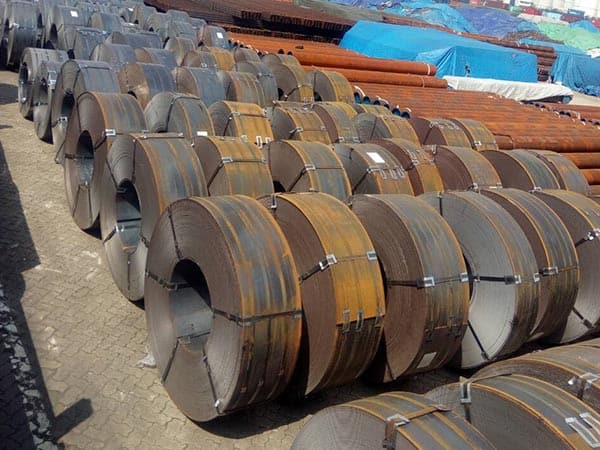
The Evolution of High-Strength Structural Steel: Defining BS700MC
In the modern landscape of heavy engineering and transportation, the demand for materials that combine extreme strength with reduced weight has never been higher. BS700MC stands as a pinnacle of high-strength, hot-rolled, cold-forming steel, specifically designed to meet these rigorous requirements. This grade belongs to the family of thermo-mechanically rolled (TMCP) steels, which achieve their properties through a sophisticated combination of precise chemical composition and controlled cooling during the rolling process. Unlike traditional structural steels that rely on heavy alloying or complex heat treatments, BS700MC leverages grain refinement and micro-alloying to deliver a minimum yield strength of 700 MPa. This shift in metallurgical strategy allows for a material that is not only exceptionally strong but also remarkably ductile and easy to process, making it a preferred choice for manufacturers seeking to optimize performance without sacrificing fabricability.
Exceptional Mechanical Properties and Structural Integrity
The primary advantage of BS700MC is its extraordinary strength-to-weight ratio. With a minimum yield strength of 700 MPa and a tensile strength typically ranging between 750 and 950 MPa, this steel allows engineers to significantly reduce the thickness of structural components compared to conventional S355 or Q345 grades. This reduction in thickness does not come at the cost of safety; rather, it often enhances the overall integrity of the structure by reducing the dead weight that the structure itself must support. The elongation properties of BS700MC are equally impressive, typically exceeding 12% to 15%, ensuring that the material can absorb energy and undergo plastic deformation without sudden catastrophic failure. This ductility is critical in dynamic environments where impact loads and vibrations are frequent, such as in mobile crane booms or heavy-duty truck chassis.
| Mechanical Property | Value (Typical) | Standard (Reference) |
|---|---|---|
| Yield Strength (ReH) | ≥ 700 MPa | EN 10149-2 / BS Standards |
| Tensile Strength (Rm) | 750 - 950 MPa | EN 10149-2 / BS Standards |
| Elongation (A5) | ≥ 12% (t < 3mm) / ≥ 14% (t ≥ 3mm) | EN 10149-2 |
| Impact Energy (Charpy-V) | 27J - 40J at -20°C / -40°C | Optional / Customer Spec |
Chemical Composition and the Role of Micro-alloying
The performance of BS700MC is rooted in its low-carbon, micro-alloyed chemistry. By keeping the carbon content extremely low (typically below 0.12%), the steel maintains excellent weldability and toughness. The strength is derived from the addition of small amounts of Niobium (Nb), Vanadium (V), and Titanium (Ti). These elements form fine precipitates during the rolling process, which pin grain boundaries and prevent grain growth. The result is a fine-grained microstructure that is much tougher and stronger than coarse-grained alternatives. Furthermore, the low Carbon Equivalent (Ceq) value significantly reduces the risk of cold cracking during welding, a common challenge when dealing with high-strength materials. This chemical balance ensures that the steel remains stable under various thermal cycles, preserving its mechanical properties even after intensive fabrication processes.
| Element | Max % (Typical) | Role in BS700MC |
|---|---|---|
| Carbon (C) | 0.12 | Ensures weldability and toughness |
| Manganese (Mn) | 2.10 | Increases strength and hardenability |
| Silicon (Si) | 0.60 | Deoxidation and solid solution strengthening |
| Phosphorus (P) | 0.025 | Controlled for purity |
| Sulfur (S) | 0.015 | Controlled to prevent inclusions |
| Nb + V + Ti | 0.22 | Grain refinement and precipitation hardening |
Superior Weldability: Engineering for Efficiency
One of the most significant advantages of BS700MC is its exceptional weldability. In traditional high-strength steels, welding often leads to a softening of the heat-affected zone (HAZ) or the development of brittle structures that require extensive preheating and post-weld heat treatment (PWHT). BS700MC bypasses many of these issues due to its low carbon equivalent. It can be welded using all standard methods, including MIG/MAG, TIG, and submerged arc welding (SAW). Because the steel is produced via TMCP, it is less sensitive to heat input than quenched and tempered steels. However, to maintain the high yield strength in the weld area, it is recommended to use high-quality filler metals (such as those matching ER110S-G specifications) and to control the cooling rate (t8/5 time). The ability to weld without preheating in most thickness ranges drastically reduces production time and energy costs, making it a highly economical choice for large-scale fabrication.
Cold Forming and Fabrication Versatility
Despite its high strength, BS700MC is specifically designed for cold forming. The fine-grained structure allows for tight bending radii without the risk of surface cracking or springback issues that plague other high-strength grades. Manufacturers can achieve complex shapes and profiles, which is essential for components like U-beams, C-channels, and telescopic crane sections. When bending BS700MC, it is important to consider the direction of rolling; while the steel is designed to be isotropic, following the recommended minimum bending radii (typically 1.5 to 2.0 times the thickness for a 90-degree bend) ensures the longevity of the tool and the integrity of the part. Additionally, BS700MC exhibits excellent laser and plasma cutting characteristics. The clean, low-impurity chemistry results in a smooth cut edge with minimal dross, facilitating immediate transition to the welding or assembly stage without extensive grinding.
Economic and Environmental Impact of Lightweighting
The shift toward BS700MC is often driven by the "lightweighting" trend. By utilizing the 700 MPa yield strength, designers can reduce the weight of a vehicle chassis or a trailer frame by 20% to 40% compared to using standard S355 steel. This weight reduction translates directly into higher payload capacities for transport vehicles, leading to increased operational efficiency and higher revenue for end-users. From an environmental perspective, lighter vehicles consume less fuel and emit fewer greenhouse gases. Furthermore, the reduction in material volume means less steel needs to be produced, transported, and processed, lowering the overall carbon footprint of the manufacturing cycle. BS700MC is also fully recyclable, aligning with the circular economy goals of the modern industrial sector. The total cost of ownership (TCO) is often lower when using BS700MC, as the initial material cost is offset by savings in welding consumables, labor, transport, and long-term fuel efficiency.
Expanding Industry Applications
The versatility of BS700MC has led to its widespread adoption across multiple high-stakes industries. In the automotive and transportation sector, it is the standard for truck frames, chassis members, and cross-beams where durability and weight are critical. The construction machinery industry utilizes BS700MC for the fabrication of crane booms, concrete pump arms, and excavator components that must withstand extreme stress while remaining mobile. In the energy sector, it is used for supporting structures in wind turbines and specialized transport frames for heavy equipment. The material's ability to perform in low-temperature environments also makes it suitable for equipment used in arctic or high-altitude conditions, where standard steels might suffer from brittle fracture. As engineering designs become more ambitious, the role of BS700MC as a reliable, high-performance substrate continues to expand, proving that strength and processability can indeed coexist in a single metallurgical solution.
Optimizing Performance: Practical Considerations for Engineers
To fully realize the advantages of BS700MC, engineers must pay attention to the nuances of its application. Surface treatment, for instance, is highly effective on this grade; its uniform surface quality provides an excellent base for painting, powder coating, or galvanizing. When designing joints, it is advisable to avoid sharp notches and to ensure smooth transitions in thickness to mitigate stress concentrations. Fatigue life is another area where BS700MC excels, provided that the weld toes are properly treated or ground to reduce local stress. By integrating these best practices into the design and manufacturing workflow, companies can leverage the full potential of BS700MC, creating products that are lighter, stronger, and more competitive in the global market. The transition to BS700MC is not merely a material change but a strategic upgrade in engineering capability.
Leave a message