
What is the en 10149-2 cold forming autobobile steel grade s420mc equivalent
Comprehensive guide to S420MC steel under EN 10149-2, exploring its international equivalents (ASTM, JIS, GB), mechanical properties, and advanced automotive applications.
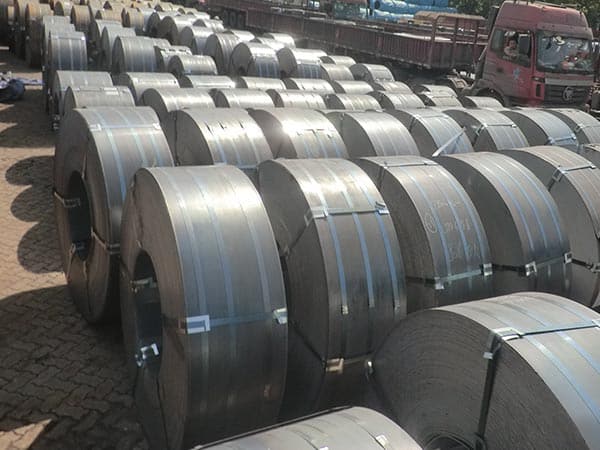
Understanding the Core of EN 10149-2 S420MC Steel
S420MC is a high-yield-strength steel designed specifically for cold forming operations, governed by the European standard EN 10149-2. The nomenclature itself reveals its identity: 'S' stands for structural steel, '420' indicates a minimum yield strength of 420 MPa, 'M' denotes that it is thermomechanically rolled, and 'C' signifies its suitability for cold forming. This material is a cornerstone in the modern automotive and heavy machinery industries, where the demand for weight reduction without compromising structural integrity is paramount.
Thermomechanical rolling is a sophisticated process where the final deformation is carried out in a specific temperature range, leading to a fine-grained microstructure. This grain refinement is the secret behind S420MC's exceptional balance of high strength, toughness, and ductility. Unlike traditional normalized steels, S420MC achieves its properties through precise cooling and rolling strategies, often supplemented by micro-alloying elements like Niobium (Nb), Vanadium (V), and Titanium (Ti).
Global Equivalents: S420MC Across International Standards
When sourcing materials for global projects, identifying the correct equivalent is crucial for maintaining engineering specifications. While different standards may have slight variations in chemical composition or testing protocols, the following grades are generally considered functional equivalents to EN 10149-2 S420MC:
| Standard | Equivalent Grade | Comparison Notes |
|---|---|---|
| ASTM (USA) | ASTM A1011 HSLAS Class 1 Grade 60 / A1018 | Similar yield strength (~415-420 MPa), but ASTM often has different elongation requirements. |
| JIS (Japan) | JIS G3134 SPFH 590 | Widely used in Japanese automotive manufacturing with comparable cold-forming capabilities. |
| GB/T (China) | GB/T 1591 Q420L / GB/T 3273 510L | Q420L is the structural equivalent, while 510L is specifically for automobile frames. |
| ISO | ISO 6930-2 PW420 | International standard for high yield strength steels for cold forming. |
It is vital to note that 'equivalent' does not always mean 'identical.' For instance, the ASTM A1011 standard might allow for slightly higher carbon content than the European EN 10149-2, which can influence weldability and edge ductility during high-speed stamping. Engineers must verify the specific Charpy V-notch impact requirements if the application involves low-temperature environments.
Chemical Composition and Micro-Alloying Strategy
The performance of S420MC is rooted in its low carbon equivalent (CEV). By keeping carbon levels low (typically below 0.12%), the steel maintains excellent weldability. The strength is instead derived from the addition of micro-alloying elements that facilitate precipitation hardening and grain size control.
- Niobium (Nb) and Vanadium (V): These elements form fine carbides and nitrides that pin grain boundaries during the rolling process, preventing grain growth and ensuring a fine-grained ferrite-pearlite or bainitic structure.
- Titanium (Ti): Often used to stabilize nitrogen and further refine the heat-affected zone (HAZ) during welding.
- Manganese (Mn): Acts as a solid solution strengthener and improves hardenability.
This lean chemistry ensures that S420MC is not only strong but also remarkably 'clean,' with low sulfur and phosphorus levels to prevent hot shortness and improve lamellar tearing resistance.
Mechanical Performance and Cold Formability
The primary reason for selecting S420MC is its mechanical profile. It offers a significant weight-saving potential compared to standard structural steels like S235 or S355. By using a thinner gauge of S420MC, manufacturers can achieve the same load-bearing capacity while reducing the overall mass of the component.
| Property | Value (for thickness ≤ 3mm) |
|---|---|
| Min. Yield Strength (ReH) | 420 MPa |
| Tensile Strength (Rm) | 480 - 620 MPa |
| Min. Elongation (A80mm) | 16% - 19% (varies by thickness) |
| Bending Radius (180°) | 0.5t (for t ≤ 3mm) to 1.0t (for t > 3mm) |
The cold formability of S420MC is exceptional. It can withstand tight bending radii without cracking, which is essential for complex automotive geometries like chassis members, cross-beams, and suspension brackets. The fine grain structure ensures that the 'orange peel' effect is minimized during deep drawing or stretching operations.
Advanced Processing: Welding and Cutting
S420MC is designed for ease of fabrication. Its low carbon content makes it highly compatible with all standard welding processes, including MAG (Metal Active Gas), MIG (Metal Inert Gas), and Laser Welding. Because the steel is thermomechanically rolled, excessive heat input should be avoided to prevent softening of the heat-affected zone (HAZ). Using low-heat input welding parameters ensures that the fine-grained structure—and thus the strength—remains intact.
Regarding cutting, S420MC responds excellently to laser, plasma, and waterjet cutting. The consistency of the material's internal stress levels, a result of the controlled rolling process, means that parts remain flat after cutting, reducing the need for secondary leveling operations. This dimensional stability is a critical factor in automated assembly lines where robotic precision is required.
Environmental Adaptability and Fatigue Resistance
Automotive components are frequently exposed to harsh environments, from road salts to extreme temperature fluctuations. S420MC provides reliable performance across a broad thermal spectrum. While it is not a 'weathering steel' like Corten, its dense microstructure offers a baseline level of atmospheric corrosion resistance that is superior to coarser-grained hot-rolled steels. For long-term durability, it is typically galvanized or E-coated.
Furthermore, S420MC exhibits high fatigue strength. In cyclic loading scenarios—such as a truck frame vibrating over thousands of miles—the fine-grained structure resists crack initiation and propagation. This makes it the preferred choice for safety-critical components that must endure millions of load cycles over the vehicle's lifespan.
Industrial Applications: Beyond the Passenger Car
While the automotive sector is the largest consumer of S420MC, its utility extends into various high-stress engineering sectors:
- Heavy Truck and Trailer Manufacturing: Used for longitudinal beams, chassis frames, and cold-pressed profiles where weight reduction directly translates to higher payload capacity.
- Lifting and Handling Equipment: Crane arms, telescopic booms, and forklift frames benefit from the high strength-to-weight ratio.
- Agricultural Machinery: Plow frames, harvester components, and trailers require the toughness and impact resistance that S420MC provides, especially in rocky or uneven terrain.
- Solar Racking Systems: For large-scale solar farms, S420MC allows for thinner, lighter support structures that can still withstand significant wind loads.
Strategic Sourcing and Quality Assurance
When purchasing S420MC or its equivalents, it is imperative to request EN 10204 3.1 certification. This document ensures that the specific heat of steel has been tested for chemical composition and mechanical properties according to the standard. For automotive applications, adherence to IATF 16949 quality management systems by the manufacturer is often a prerequisite.
The choice between S420MC and its equivalents often comes down to regional availability and specific processing requirements. For instance, if a design requires extremely tight tolerances on thickness, a cold-rolled equivalent might be sought, although S420MC (which is hot-rolled then cold-formable) usually offers the best cost-to-performance ratio for structural parts. Understanding these nuances allows engineers to optimize both the performance and the cost-efficiency of their final products.
Leave a message