
What is the most important characteristic of S700MC steel sheet
Discover the critical characteristics of S700MC steel, focusing on its yield strength, cold forming capabilities, and its impact on modern engineering and lightweighting.
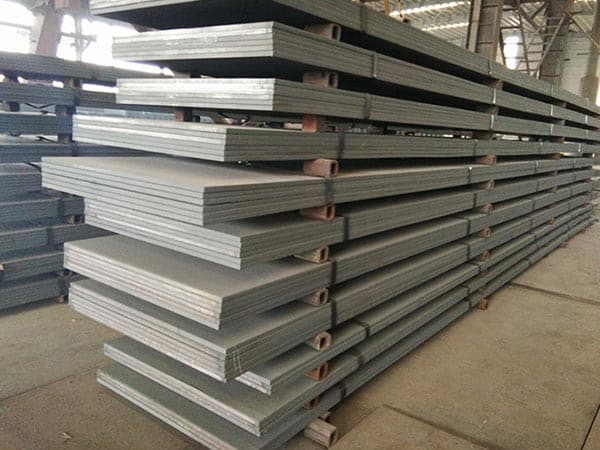
The Core Identity of S700MC: Strength Meets Versatility
When engineers and procurement specialists discuss high-strength low-alloy (HSLA) steels, S700MC frequently emerges as the benchmark for high-performance structural materials. Classified under the EN 10149-2 standard, S700MC is a hot-rolled steel produced through a sophisticated thermomechanical rolling process (TMCP). The most important characteristic of S700MC steel sheet is its exceptional strength-to-weight ratio combined with superior cold formability. This unique duality allows for the design of structures that are significantly lighter than those made with traditional structural steels like S355, without compromising on load-bearing capacity or safety.
The 'S' in its name denotes structural steel, '700' represents its minimum yield strength of 700 MPa, 'M' indicates its thermomechanically rolled delivery condition, and 'C' signifies its suitability for cold forming. This combination of properties is not a result of simple alloying but a masterpiece of metallurgical engineering, involving precise temperature control and micro-alloying strategies.
Metallurgical Foundation: The Power of Thermomechanical Rolling
The superior performance of S700MC is rooted in its fine-grained microstructure. Traditional high-strength steels often rely on heavy alloying or quenching and tempering (Q&T) to achieve high hardness. However, S700MC utilizes Thermomechanical Control Process (TMCP). During rolling, the steel is subjected to specific temperature ranges where the recrystallization of austenite is suppressed. This results in an extremely fine ferrite-bainite grain structure.
This grain refinement is the only strengthening mechanism that simultaneously improves both strength and toughness. By refining the grain size, the mean free path of dislocations is reduced, increasing yield strength, while the increased grain boundary area provides more obstacles to crack propagation, enhancing low-temperature impact toughness. This metallurgical approach ensures that S700MC remains ductile even at high stress levels.
Chemical Composition and Micro-alloying Strategy
S700MC maintains a very low carbon content, typically below 0.12%. This is a critical factor for its weldability. To reach 700 MPa yield strength with such low carbon, micro-alloying elements like Niobium (Nb), Vanadium (V), and Titanium (Ti) are added in minute quantities. These elements form carbonitrides that pin grain boundaries during the rolling process, preventing grain growth and ensuring the desired fine-grained structure.
| Element | Max % Content |
|---|---|
| Carbon (C) | 0.12 |
| Manganese (Mn) | 2.10 |
| Silicon (Si) | 0.60 |
| Phosphorus (P) | 0.025 | Sulfur (S) | 0.015 |
| Al (Total) | 0.015 |
| Nb + V + Ti | 0.22 |
The low sulfur content is also vital, as it minimizes the formation of non-metallic inclusions, which is essential for the steel's excellent edge-stretching and cold-bending properties. The chemical purity of S700MC is a primary reason why it outperforms cheaper high-strength alternatives in complex fabrication processes.
Mechanical Performance: Beyond the 700 MPa Yield
While the 700 MPa yield strength is the headline figure, the interaction between yield strength, tensile strength, and elongation defines the material's real-world utility. S700MC offers a tensile strength range of 750 to 950 MPa. Crucially, it maintains a minimum elongation of 10% to 12% (depending on thickness), which is remarkable for a steel of this strength class.
- Yield Strength (Reh): Min 700 MPa
- Tensile Strength (Rm): 750 - 950 MPa
- Elongation (A5): Min 12% (for thickness < 3mm)
- Impact Energy: Typically tested at -20°C or -40°C to ensure brittle fracture resistance.
The high yield-to-tensile ratio (often above 0.9) means that the material can be loaded very close to its limit before permanent deformation occurs. This allows for precise engineering calculations and the use of thinner sections, which directly translates to weight savings in mobile equipment and transport vehicles.
Fabrication Excellence: Cold Forming and Bending
A common misconception is that higher strength leads to poor formability. S700MC defies this logic. Thanks to its fine-grained structure and low inclusion levels, it exhibits excellent cold bending properties. This is a game-changer for manufacturers of complex chassis components and crane booms.
When bending S700MC, the minimum recommended bending radius is typically 1.5 to 2 times the plate thickness for a 90-degree bend. This allows for tight geometries that would cause cracking in standard structural steels of similar strength. However, designers must account for springback, which is more pronounced in high-strength steels. Proper tool selection and compensation in the bending program are necessary to achieve high precision.
Welding Characteristics: Low Carbon Equivalent Advantage
For structural applications, weldability is non-negotiable. S700MC is designed with a low Carbon Equivalent Value (CEV), often around 0.38 to 0.42. This low CEV means that the steel can be welded using standard methods—such as MAG, MIG, and Laser welding—without the need for expensive preheating in most thickness ranges.
The Heat Affected Zone (HAZ) in S700MC remains relatively stable. While there is a slight softening effect in the HAZ due to the localized disruption of the TMCP structure, this is generally compensated for by the high base metal strength and proper filler metal selection. Using high-strength consumables that match the 700 MPa grade ensures that the welded joint maintains the integrity of the overall structure.
Weight Reduction and Economic Impact
The primary driver for choosing S700MC is the reduction of 'dead weight'. In the transport industry, every kilogram saved in the chassis or trailer frame is an extra kilogram of payload. By switching from S355 (355 MPa yield) to S700MC, engineers can theoretically reduce the thickness of structural members by nearly 40-50% while maintaining the same safety factor against yielding.
This reduction has a cascading effect on costs. Thinner plates mean less material to purchase, lower welding consumable consumption, and reduced fuel consumption over the vehicle's lifecycle. Furthermore, the environmental footprint is reduced due to lower CO2 emissions during both the manufacturing and operational phases of the equipment.
Diverse Applications Across Modern Industries
The versatility of S700MC has led to its adoption in various demanding sectors. In the automotive and heavy transport industry, it is used for truck frames, longitudinal beams, and cross members. The ability to withstand high dynamic loads makes it ideal for these applications.
In the lifting and construction sector, S700MC is the material of choice for telescopic crane booms, aerial work platforms, and concrete pump arms. These structures require high stiffness and strength at extreme heights, where reducing the weight of the upper sections is critical for stability. Additionally, the agricultural sector utilizes S700MC for high-stress components in harvesters and trailers, ensuring durability in harsh working environments.
Environmental Adaptability and Longevity
S700MC is not inherently a weather-resisting steel (like Corten), but its fine-grained structure provides a consistent surface for protective coatings. Whether galvanized or painted, the material holds finishes well, ensuring long-term corrosion resistance. Its performance in low-temperature environments is also a significant advantage, as it maintains its toughness and resistance to brittle fracture, making it suitable for equipment operating in arctic or high-altitude conditions.
The sustainability aspect of S700MC cannot be overlooked. By enabling lightweight designs, it contributes to the global effort of resource efficiency. Less steel used per structure means less iron ore and energy consumed, aligning with modern green building and manufacturing standards.
Strategic Considerations for Engineering Design
Utilizing S700MC requires a shift in design philosophy. Engineers must move away from 'thickness-based' safety to 'strength-based' safety. This involves sophisticated Finite Element Analysis (FEA) to identify high-stress areas where S700MC can be most effective. It is also important to consider the fatigue life of the material. While S700MC has higher static strength, fatigue strength is often governed by weld geometry and surface conditions. Therefore, optimizing weld transitions and minimizing stress concentrators is essential to fully leverage the material's potential.
The choice of S700MC is often a strategic decision to stay competitive in an era where efficiency and performance are paramount. Its unique combination of high yield strength, excellent formability, and superb weldability makes it an indispensable tool for modern structural engineering.
Leave a message