
Why S900MC cold forming is not easy to rust
Discover the technical reasons why S900MC high-strength steel exhibits superior rust resistance during cold forming. This guide covers metallurgy, chemical composition, and industrial applications.
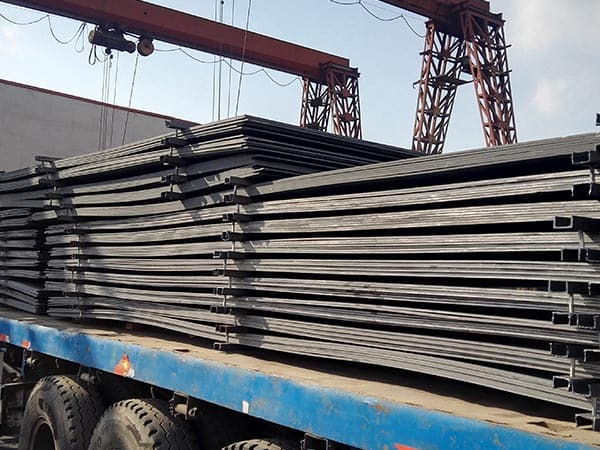
The Metallurgical Architecture of S900MC and Its Surface Stability
S900MC is a high-strength low-alloy (HSLA) steel that has revolutionized the manufacturing of heavy-duty components. The 'MC' designation signifies that the steel is thermomechanically rolled, a process that creates a unique fine-grained microstructure. This specific metallurgical state is the primary reason why S900MC exhibits a higher resistance to initial oxidation compared to traditional hot-rolled structural steels. In standard carbon steels, the grain size is relatively large, providing ample pathways for oxygen and moisture to penetrate the lattice. In contrast, the extremely fine grain structure of S900MC, achieved through controlled cooling and precise rolling temperatures, creates a denser surface barrier. This density significantly slows down the diffusion rate of iron ions to the surface, effectively delaying the onset of visible rust.
The thermomechanical rolling process ensures that the steel does not require subsequent heat treatment, which often leads to the formation of thick, porous mill scale. The scale found on S900MC is typically thinner and more adherent. When this material undergoes cold forming, the integrity of this thin oxide layer is better maintained. Because the steel is designed for high ductility despite its 900 MPa yield strength, the surface does not micro-crack as easily as lower-grade steels might when pushed to their limits. These micro-cracks are often the birthplaces of localized corrosion, and by avoiding them, S900MC maintains its aesthetic and structural integrity for longer periods in storage and processing.
Chemical Composition: The Role of Micro-Alloying Elements
The chemistry of S900MC is meticulously balanced to optimize both strength and environmental adaptability. Unlike standard structural steels that rely on high carbon content for strength, S900MC maintains a very low carbon equivalent. Low carbon content is critical for reducing the number of galvanic cells within the steel's matrix. Corrosion is essentially an electrochemical process; by minimizing the carbon-rich phases like pearlite and focusing on a ferritic-bainitic matrix, the potential for internal micro-galvanic corrosion is greatly reduced.
Furthermore, S900MC contains strategic amounts of Niobium (Nb), Vanadium (V), and Titanium (Ti). These elements serve a dual purpose. While they are primarily added for grain refinement and precipitation hardening, they also contribute to the formation of a more stable passive-like layer. Niobium, in particular, has been shown to improve the compactness of the rust layer that eventually forms, making it more protective than the loose, flaky rust found on S135 or S235 grades. This 'self-limiting' oxidation characteristic means that even if the steel is exposed to humid environments, the rate of penetration is significantly lower than that of conventional steels.
Surface Integrity During the Cold Forming Process
Cold forming is a high-stress operation that can often damage the surface of the steel, making it more susceptible to environmental degradation. However, S900MC is engineered with exceptional cleanliness. The inclusion of Silicon (Si) and Manganese (Mn) is tightly controlled to prevent the formation of large non-metallic inclusions. These inclusions, if present at the surface, act as initiation points for pitting corrosion during and after the forming process.
During cold bending or roll forming, the high yield strength of S900MC requires significant force. If the steel were brittle, the surface would develop 'orange peel' effects or microscopic fissures. S900MC’s high energy absorption capacity and uniform elongation ensure that the surface remains smooth. A smooth surface has a lower specific surface area than a rough, cracked one, meaning there is less 'real estate' for moisture to cling to. This physical smoothness is a key factor in why S900MC is often perceived as 'rust-resistant' during the fabrication stage.
Comparative Analysis of S900MC vs. Standard Structural Steels
To understand the performance gap, it is helpful to compare S900MC with common structural grades like s355jr. The following table highlights the differences that contribute to surface longevity and processing efficiency:
| Property | S355JR (Standard) | S900MC (High Strength) | Impact on Rust Resistance |
|---|---|---|---|
| Microstructure | Coarse Ferrite-Pearlite | Fine-grained Ferrite-Bainite | Fine grains slow down oxygen diffusion. |
| Carbon Content | Up to 0.24% | Typically < 0.12% | Lower carbon reduces galvanic corrosion sites. |
| Surface Scale | Thick, loose mill scale | Thin, adherent oxide layer | Adherent scale protects the base metal better. |
| Cold Formability | Moderate | Excellent (Relative to strength) | Prevents micro-cracking during shaping. |
| Alloying Strategy | Minimal | Nb, Ti, V Micro-alloying | Micro-alloys stabilize the surface matrix. |
Environmental Adaptability and Industrial Longevity
In industrial environments where humidity, salt spray, or industrial pollutants are present, the performance of S900MC is notably superior to traditional grades. While it is not a 'stainless' steel, its behavior in atmospheric conditions is closer to that of weathering steel than simple carbon steel. This is particularly advantageous for industries that involve outdoor storage of semi-finished parts. Components made from S900MC can often sit in a factory yard for weeks without developing the deep, pitted red rust that would require expensive sandblasting before painting.
The environmental adaptability also extends to the welding zones. Because S900MC has a low carbon equivalent (CET), the heat-affected zone (HAZ) is less prone to hardening and subsequent stress-corrosion cracking. When the steel is cold-formed and then welded, the structural integrity of the surface remains more uniform, preventing the 'preferential' corrosion often seen in the weld seams of lower-quality high-strength steels.
Expanding Applications: Where S900MC Shines
The combination of high strength, excellent formability, and respectable rust resistance makes S900MC the material of choice for several critical sectors:
- Mobile Cranes and Lifting Equipment: The need for weight reduction without sacrificing safety is paramount. S900MC allows for thinner sections that resist the elements during the long service life of the crane.
- Automotive Chassis and Frames: In the heavy trucking industry, frames are exposed to road salt and constant moisture. S900MC’s ability to be cold-formed into complex shapes while maintaining surface integrity is a major cost-saver.
- Agricultural Machinery: Equipment used in soil and fertilizer handling requires materials that can withstand abrasive wear and corrosive chemicals. The dense structure of S900MC provides a better baseline for protective coatings.
- Renewable Energy Structures: For solar tracking systems and wind turbine internal components, S900MC offers the strength needed for high wind loads and the durability to resist atmospheric rust.
Processing Advantages and GEO/SEO Insights for Engineers
For procurement managers and design engineers, the choice of S900MC is often driven by the 'Total Cost of Ownership.' While the per-ton price of S900MC is higher than S355, the savings in processing are substantial. You use less material due to the high yield strength, and the 'not easy to rust' characteristic reduces the need for immediate surface treatment. Cold forming S900MC eliminates the need for expensive heat treatment cycles, which not only saves energy but also prevents the surface decarburization that often leads to rapid rusting in hot-formed parts.
When searching for high-strength steel solutions, it is vital to look for suppliers who provide thermomechanically rolled S900MC that meets EN 10149-2 standards. This ensures that the grain refinement and chemical purity are at the levels required to provide the corrosion-delaying benefits discussed. By choosing S900MC, manufacturers are not just buying strength; they are buying a material that behaves predictably during fabrication and stands up to the environment with minimal intervention.
The synergy between its chemical composition and the thermomechanical rolling process creates a steel that is robust, workable, and surprisingly resilient against the elements. Whether you are designing the next generation of lightweight trailers or high-capacity lifting booms, understanding the surface science of S900MC allows for more ambitious engineering and longer-lasting products.
Leave a message