
Why is S960MC high strength alloy steel so popular
Explore the technical advantages of S960MC high-strength steel. Learn about its mechanical properties, processing performance, and why it is essential for modern lightweight construction.
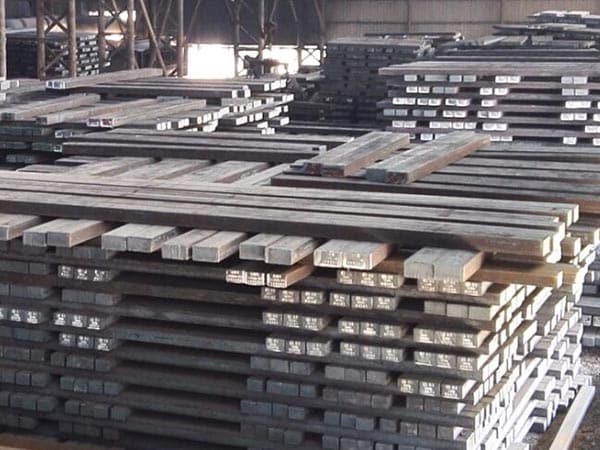
The Evolution of Structural Engineering: Why S960MC Leads the Way
In the modern industrial landscape, the demand for materials that combine extreme strength with reduced weight has never been higher. S960MC, a high-strength thermomechanically rolled steel, has emerged as a frontrunner in this technological shift. Defined by the European standard EN 10149-2, this steel grade offers a minimum yield strength of 960 MPa, making it a cornerstone for engineers looking to push the boundaries of design and efficiency.
The popularity of S960MC is not merely a result of its raw strength. It is the synergy of its chemical composition, refined microstructure, and exceptional processing characteristics that allows it to outperform traditional structural steels. As industries like heavy lifting, transportation, and mining strive for higher payloads and lower fuel consumption, S960MC provides the structural integrity needed to achieve these goals without the bulk of conventional materials.
The Chemistry of Performance: Micro-Alloying and Thermomechanical Rolling
The secret behind the exceptional properties of S960MC lies in its production process. Unlike traditional steels that rely on high carbon content for strength—which often compromises weldability—S960MC utilizes thermomechanical rolling (MC). This process involves precise temperature control during the rolling stages, followed by rapid cooling, which creates a fine-grained microstructure.
Micro-alloying elements such as Niobium (Nb), Vanadium (V), and Titanium (Ti) are added in minute quantities. These elements facilitate grain refinement and precipitation hardening. The result is a steel that is incredibly strong yet maintains high ductility and toughness. The low carbon equivalent (CEV) is a critical factor, as it ensures that the steel remains highly weldable, a feature often lost in high-strength materials.
| Chemical Element | Max Content (%) |
|---|---|
| Carbon (C) | 0.20 |
| Manganese (Mn) | 2.20 |
| Silicon (Si) | 0.60 |
| Phosphorus (P) | 0.025 |
| Sulfur (S) | 0.010 |
| Aluminium (Al) | 0.015 |
Mechanical Properties: Beyond the Yield Point
The "960" in S960MC represents its minimum yield strength of 960 MPa. To put this in perspective, it is nearly three times stronger than standard S355 structural steel. This massive leap in strength allows for a significant reduction in plate thickness while maintaining the same load-bearing capacity. However, strength is only one part of the equation.
- Tensile Strength: Ranging between 980 and 1250 MPa, ensuring the material can withstand extreme tension before failure.
- Elongation: Despite its hardness, S960MC retains sufficient elongation (typically min 7% for specific thicknesses), allowing for safe deformation under stress.
- Impact Toughness: S960MC is often tested at -20°C or -40°C to ensure it remains ductile in cold environments, preventing brittle fractures in arctic or high-altitude conditions.
The Lightweight Revolution: Economic and Environmental Impact
Why do manufacturers choose S960MC despite its higher cost per ton compared to S355? The answer lies in weight optimization. By using S960MC, engineers can reduce the weight of a structure by up to 30-50%. In the transport sector, a lighter trailer means a higher legal payload, directly increasing the operator's revenue per trip.
From an environmental perspective, lighter vehicles consume less fuel and emit fewer greenhouse gases. In the crane industry, using S960MC in telescopic booms allows for longer reach and higher lifting capacities without increasing the overall weight of the crane carrier. This efficiency is why S960MC is considered a "green" choice in the context of lifecycle sustainability.
Processing Advantages: Welding and Cold Forming
A common misconception is that higher strength leads to harder processing. S960MC defies this logic. Because of its low carbon content and fine grain structure, it exhibits excellent cold forming properties. It can be bent to tight radii, provided the correct tooling and pressure are applied. This flexibility allows for complex designs that reduce the number of welded joints, further enhancing structural integrity.
Welding S960MC requires precision but is highly effective. Since the strength is derived from the thermomechanical process rather than high alloy content, the Heat Affected Zone (HAZ) is less prone to hardening and cracking compared to quenched and tempered steels. Using low-hydrogen consumables and controlling the cooling rate (t8/5 time) ensures that the welded joint maintains the properties of the base metal.
| Property | Value (Typical) |
|---|---|
| Yield Strength (ReH) | ≥ 960 MPa |
| Tensile Strength (Rm) | 980 - 1250 MPa |
| Min. Elongation (A5) | ≥ 7% |
| Bending Radius (90°) | 3.0 - 4.0 x t (thickness) |
Expanding Applications Across High-Performance Sectors
The versatility of S960MC has led to its adoption in various demanding sectors. In the lifting and handling industry, it is the standard for mobile crane booms, aerial work platforms, and heavy-duty forklifts. These machines require high stiffness-to-weight ratios to operate safely at great heights.
In heavy transportation, S960MC is used for chassis frames, side guards, and cross members of trailers and trucks. The ability to withstand dynamic loads and vibrations while keeping the tare weight low is a decisive competitive advantage. Similarly, in the mining and earthmoving sector, S960MC is utilized for dump truck bodies and support structures where abrasion resistance and impact strength are paramount.
Surface Quality and Environmental Adaptability
S960MC is typically supplied with a high-quality surface finish, often descaled or pickled and oiled. This clean surface is ideal for modern laser cutting and automated welding processes. The consistency of the material ensures that laser cutting heads can move at high speeds without encountering impurities that could cause defects.
Furthermore, its performance in low-temperature environments makes it suitable for offshore structures and equipment used in northern climates. The fine-grained structure prevents the propagation of cracks, ensuring a long service life even under the most grueling conditions. This reliability is a primary reason why S960MC has become a global benchmark for high-strength structural applications.
Strategic Sourcing and Quality Assurance
Selecting the right supplier for S960MC is crucial. Because the properties are so dependent on the thermomechanical rolling process, consistency across batches is vital for automated manufacturing. High-quality mills provide detailed 3.1 or 3.2 material test certificates (MTC), documenting the chemical analysis and mechanical testing results.
Engineers must also consider the springback effect during bending. Due to its high yield strength, S960MC will spring back more than softer steels when released from a press brake. Modern CNC bending machines with angle sensors are often employed to compensate for this, ensuring that the final components meet strict dimensional tolerances. This attention to detail during the fabrication stage ensures that the benefits of S960MC are fully realized in the finished product.
Final Considerations for Design Engineers
The popularity of S960MC is a testament to the progress in metallurgical science. It offers a unique combination of extreme strength, excellent weldability, and superior formability. For projects where weight reduction is synonymous with performance and profitability, S960MC stands as the premier choice. By understanding its processing requirements and leveraging its mechanical advantages, manufacturers can create next-generation equipment that is lighter, stronger, and more efficient than ever before.
Leave a message