
What is the BBNSteel company BS700MC tensile test stock list
Comprehensive guide to BS700MC high-strength steel, focusing on tensile test parameters, mechanical properties, and BBNSteel's current stock availability for industrial applications.
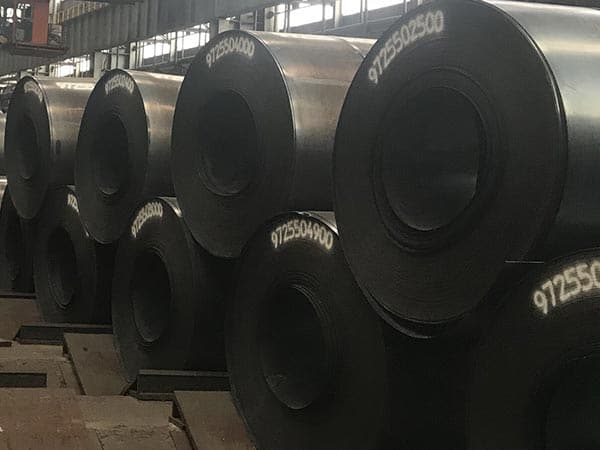
Understanding BS700MC High-Strength Steel and Tensile Performance
BS700MC is a high-yield strength, cold-forming steel produced through a thermomechanically rolled process. This material belongs to the category of micro-alloyed steels, specifically designed to offer a unique combination of extreme strength and excellent formability. When engineering teams search for the BBNSteel company BS700MC tensile test stock list, they are looking for more than just a list of dimensions; they are seeking verified data that confirms the material's ability to withstand rigorous structural loads while reducing overall vehicle or equipment weight.
The "700" in its designation refers to its minimum yield strength of 700 MPa. Achieving this level of performance requires precise control over the cooling process and the addition of micro-alloying elements like Niobium (Nb), Vanadium (V), and Titanium (Ti). These elements refine the grain structure, allowing the steel to maintain high toughness even at low temperatures, which is critical for equipment operating in harsh environments.
The Significance of Tensile Testing in BS700MC Quality Control
Tensile testing serves as the primary benchmark for evaluating the structural integrity of BS700MC. In the BBNSteel quality assurance laboratory, every batch of stock undergoes rigorous testing to ensure compliance with EN 10149-2 standards. The tensile test provides three critical metrics: Yield Strength (ReH), Tensile Strength (Rm), and Elongation (A80 or A5).
For BS700MC, the yield strength must be at least 700 MPa, but the tensile strength typically ranges between 750 and 950 MPa. This gap between yield and tensile strength ensures that the material has a safety margin before ultimate failure. Elongation is equally important; for a material this strong, maintaining an elongation of 10% to 12% (depending on thickness) is what allows it to be bent and shaped without cracking.
| Mechanical Property | Requirement (EN 10149-2) | Typical BBNSteel Test Results |
|---|---|---|
| Yield Strength (ReH MPa) | Min 700 | 710 - 780 |
| Tensile Strength (Rm MPa) | 750 - 950 | 780 - 890 |
| Elongation (A5 %) | Min 12 (t < 3mm) | 13 - 16 |
| Bending Radius (180°) | 2.0t (t ≤ 6mm) | Pass |
Chemical Synergy: The Secret Behind the Strength
The exceptional performance recorded in the BS700MC tensile test is a direct result of its chemical composition. Unlike traditional carbon steels that rely on high carbon content for strength—which often compromises weldability—BS700MC keeps carbon levels extremely low (typically below 0.12%).
- Carbon (C): Kept low to ensure superior weldability and prevent brittle zones in the heat-affected area.
- Manganese (Mn): Enhances hardenability and contributes to the overall tensile strength.
- Micro-alloys (Nb, Ti, V): These elements form fine precipitates that pin grain boundaries during the rolling process, resulting in a fine-grained ferritic-pearlitic microstructure.
- Sulfur (S) and Phosphorus (P): Maintained at ultra-low levels to improve the internal purity of the steel, reducing the risk of lamellar tearing during heavy welding.
Cold Forming and Processing Capabilities
One of the primary reasons engineers specify BS700MC from the BBNSteel stock list is its remarkable cold-forming capacity. Despite its high strength, the material can be bent to tight radii. This is essential for manufacturing U-beams, C-channels, and complex chassis components in the automotive and heavy machinery industries.
When processing BS700MC, it is vital to consider the grain direction. Bending transverse to the rolling direction usually allows for tighter radii than bending parallel to it. BBNSteel provides detailed processing guidelines with every stock delivery to ensure that the material's tensile properties are not compromised during fabrication. Furthermore, the steel is highly suitable for laser and plasma cutting, producing clean edges with minimal thermal distortion.
Environmental Adaptability and Impact Toughness
High-strength steel is often used in mobile equipment that must operate in sub-zero temperatures. BS700MC is designed to maintain its ductility and resist brittle fracture even at -20°C or -40°C. This environmental adaptability is verified through Charpy V-notch impact tests, which are often included in the BBNSteel extended test reports.
This resistance to cold-cracking makes it the preferred choice for truck frames in northern climates, where road vibrations and low temperatures can cause standard steels to fail prematurely. The fine-grained structure acts as a barrier to crack propagation, ensuring long-term structural durability.
BBNSteel BS700MC Stock List Dimensions and Availability
The BBNSteel company BS700MC tensile test stock list includes a wide range of thicknesses and widths to accommodate diverse manufacturing needs. Typically, the stock ranges from 3.0mm to 12.0mm in thickness, with widths up to 1500mm or 2000mm. The material is usually supplied in the thermomechanically rolled condition, often with a pickled and oiled surface to protect against corrosion during transit and storage.
Inventory management at BBNSteel ensures that every coil or plate is traceable back to its original heat number. This traceability is crucial for industries like aerospace or heavy lifting, where material certification (MTC) according to EN 10204 3.1 is a mandatory requirement. The stock list is updated frequently to reflect current availability for immediate shipment to global destinations.
| Thickness Range (mm) | Width Range (mm) | Surface Condition | Edge Condition |
|---|---|---|---|
| 3.0 - 5.0 | 1000 - 1500 | Pickled & Oiled / Black | Mill Edge / Slit Edge |
| 6.0 - 8.0 | 1250 - 1800 | Black / Shot Blasted | Mill Edge |
| 10.0 - 12.0 | 1500 - 2000 | Black | Mill Edge |
Industrial Applications: Where BS700MC Excels
The primary driver for using BS700MC is weight reduction. By replacing thicker, lower-grade steels (like S355) with thinner BS700MC, manufacturers can reduce the weight of a structure by up to 30-40% without sacrificing load-bearing capacity. This "lightweighting" is critical in the transport sector, where reduced curb weight translates directly into higher payloads and better fuel efficiency.
Specific applications include:
- Truck Chassis: Main longitudinal beams and cross-members that require high fatigue resistance.
- Crane Booms: Telescopic and lattice booms where high strength-to-weight ratios are paramount for lifting capacity.
- Agricultural Machinery: Plow frames and harvester components that endure high stress and abrasive environments.
- Container Frames: Corner castings and structural rails for shipping containers.
Why Choose BBNSteel for BS700MC Procurement?
Selecting a supplier for high-strength steel involves evaluating more than just price. BBNSteel distinguishes itself through technical expertise and comprehensive testing protocols. When you access the BS700MC tensile test stock list, you are engaging with a partner that understands the nuances of micro-alloyed steel. BBNSteel offers value-added services such as custom decoiling, precision shearing, and ultrasonic testing to ensure that the material delivered meets the exact specifications of the project.
Furthermore, the logistical capability of BBNSteel ensures that high-strength materials are packaged correctly to prevent edge damage or surface oxidation, maintaining the integrity of the tensile properties from the warehouse to the production line. For engineers and procurement officers, this reliability is the foundation of a successful manufacturing cycle.
Leave a message