
What is the s355mc material group hardness?
A comprehensive guide to S355MC material group hardness, mechanical properties, and industrial applications. Learn how thermomechanical rolling affects its performance.
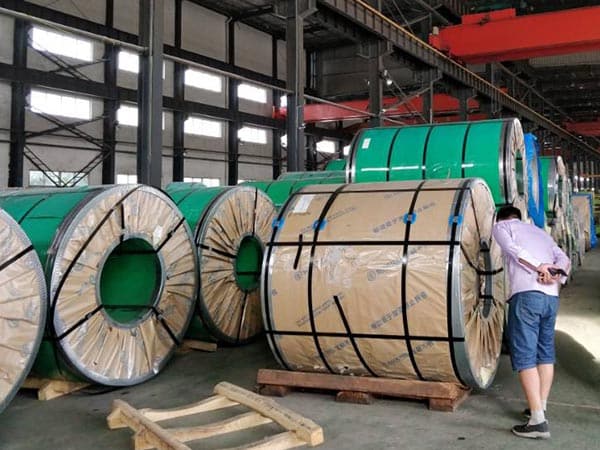
Decoding S355MC Material Group and Hardness Characteristics
S355MC is a high-strength, low-alloy (HSLA) steel specifically designed for cold forming. Governed by the EN 10149-2 standard, this material is characterized by its thermomechanically rolled (MC) process, which ensures a fine-grained microstructure. When discussing the S355MC material group hardness, it is essential to recognize that unlike tool steels or hardened alloys, S355MC is primarily defined by its yield strength rather than a specific hardness range in its standard specification. However, for engineering and fabrication purposes, hardness remains a critical metric for predicting wear resistance and machinability.
Typically, the hardness of S355MC falls within the range of 120 to 180 HBW (Brinell Hardness). This moderate hardness, combined with high yield strength, makes it an ideal candidate for structural components that require both durability and the ability to be shaped without cracking. The "S" denotes structural steel, "355" represents the minimum yield strength of 355 MPa for thicknesses under 16mm, and "MC" indicates its suitability for cold forming through thermomechanical rolling.
Understanding ISO 15608 Material Grouping for S355MC
In the context of international welding and fabrication standards, S355MC is classified under ISO 15608 Group 1.2. This group encompasses steels with a specified minimum yield strength exceeding 275 N/mm² but not exceeding 360 N/mm². Identifying the correct material group is vital for developing Welding Procedure Specifications (WPS) and ensuring compatibility with filler metals.
The classification in Group 1.2 highlights its low carbon equivalent, which translates to exceptional weldability. Unlike higher-carbon steels that might require extensive pre-heating to prevent hydrogen cracking, S355MC can often be welded under standard conditions, provided the cooling rates are managed to preserve the fine-grained structure inherited from the thermomechanical rolling process.
Quantitative Hardness Values: HBW, HV, and HRB
While the EN 10149-2 standard focuses on tensile and yield properties, industrial testing frequently provides hardness data. Below is an estimation of the hardness values across different scales for S355MC:
| Hardness Scale | Typical Range | Application Context |
|---|---|---|
| Brinell Hardness (HBW) | 125 - 175 | General structural assessment and material identification. |
| Vickers Hardness (HV) | 130 - 185 | Microstructural analysis and heat-affected zone (HAZ) testing. |
| Rockwell B (HRB) | 70 - 90 | Quick quality control checks in sheet metal fabrication. |
It is important to note that these values can fluctuate based on the specific thickness of the plate and the exact parameters used during the thermomechanical rolling at the mill. Thinner gauges often exhibit slightly higher hardness due to faster cooling rates during production.
The Role of Thermomechanical Rolling (MC) in Microstructure
The "MC" designation is the secret behind the unique hardness-to-toughness ratio of S355MC. Thermomechanical Control Process (TMCP) involves strict temperature control during the rolling stages. Unlike traditional normalized steels, TMCP steel is rolled at temperatures where recrystallization is inhibited, leading to an extremely fine ferrite-pearlite grain size.
- Grain Refinement: Fine grains increase both the yield strength and the hardness simultaneously without making the steel brittle.
- Low Alloy Content: High strength is achieved through grain refinement rather than adding large amounts of carbon or alloying elements like chromium, which keeps the material soft enough for complex bending.
- Internal Stress: The process minimizes internal stresses, ensuring dimensional stability after laser cutting or punching.
Chemical Composition and Its Impact on Hardness
The hardness and mechanical integrity of S355MC are dictated by its lean but precise chemical makeup. By keeping carbon levels low, the material avoids the formation of hard, brittle martensite during welding or cutting.
| Element | Maximum Percentage (%) | Influence on Properties |
|---|---|---|
| Carbon (C) | 0.12 | Ensures weldability and prevents excessive hardness. |
| Manganese (Mn) | 1.50 | Increases strength and hardness via solid solution strengthening. | 0.50 | Deoxidizer that contributes slightly to hardness. |
| Niobium (Nb) / Vanadium (V) | 0.09 / 0.20 | Micro-alloying elements that facilitate grain refinement. |
The inclusion of micro-alloying elements like Niobium and Titanium is crucial. These elements form fine precipitates that pin grain boundaries, maintaining the material's strength even when the hardness remains relatively low for a structural steel of this grade.
Fabricating S355MC: Bending, Welding, and Machining
The moderate hardness of S355MC makes it a favorite among fabricators. Its cold-forming capabilities are superior to standard S355J2. When bending S355MC, the springback is predictable, and the risk of edge cracking is significantly reduced due to its high elongation properties (typically 19-23% depending on thickness).
Welding Considerations: Because S355MC is a TMCP steel, excessive heat input can lead to grain growth in the heat-affected zone (HAZ), which may locally reduce the hardness and strength. It is recommended to use low-heat input welding techniques. However, the low carbon equivalent (CEV) ensures that the steel is not prone to cold cracking, making it much more forgiving than traditional high-strength steels.
Machining and Cutting: In laser and plasma cutting, S355MC performs exceptionally well. The low impurity content and fine grain structure result in a clean cut edge with minimal dross. The hardness is low enough that standard HSS (High-Speed Steel) or carbide tools can be used for drilling and milling without excessive tool wear.
Environmental Resilience and Fatigue Life
Beyond hardness and strength, S355MC offers impressive environmental adaptability. While it is not a dedicated "weathering steel" like Corten, its fine-grained structure provides better resistance to atmospheric corrosion than coarser-grained mild steels. Furthermore, the toughness of S355MC at low temperatures is a significant advantage. Many variants are tested for impact energy at -20°C or -40°C, ensuring the material does not undergo a brittle transition in cold climates.
In dynamic loading scenarios, the fatigue life of S355MC is enhanced by its uniform microstructure. Components subjected to vibration or cyclic stress, such as truck chassis or crane arms, benefit from the absence of large inclusions and the consistent hardness profile across the plate surface.
Strategic Industry Applications and Weight Optimization
The primary driver for choosing S355MC is weight reduction. By utilizing a material with a 355 MPa yield strength and manageable hardness, engineers can use thinner sections compared to standard S235 steel without sacrificing structural integrity. This is particularly critical in the transportation sector.
- Automotive and Trucking: Used for chassis frames, cross members, and longitudinal beams where high strength and low weight are paramount for fuel efficiency.
- Heavy Machinery: Ideal for agricultural equipment, earthmoving buckets, and telescopic booms that require a balance of hardness for wear resistance and ductility for impact.
- Storage Systems: High-rack shelving and cold-formed profiles benefit from the material's consistency and ease of profiling.
The versatility of S355MC lies in its ability to bridge the gap between soft, easily formable mild steels and hard, difficult-to-process wear plates. Its specific hardness range ensures that while the surface can withstand general handling and operational friction, the core remains tough enough to absorb energy during unforeseen impacts.
Technical Comparison: S355MC vs. S355J2
A common question arises regarding the difference between S355MC and S355J2. While both share the same minimum yield strength, their production methods and hardness profiles differ. S355J2 is often normalized or as-rolled, resulting in a coarser grain structure. S355MC, being thermomechanically rolled, offers better cold formability and a more uniform hardness distribution. For applications involving tight-radius bending or complex laser-cut geometries, S355MC is almost always the superior choice.
Selecting S355MC based on its material group hardness allows for a more nuanced approach to engineering design. By understanding that its strength comes from microstructural engineering rather than high carbon content, manufacturers can optimize their production lines for faster welding and more efficient forming, ultimately leading to higher-quality end products with a longer service life.
Leave a message