
What is the application scope of en 10149-2 s355mc pdf
A comprehensive guide to the application scope, mechanical properties, and technical advantages of EN 10149-2 S355MC steel, focusing on its role in modern engineering and manufacturing.
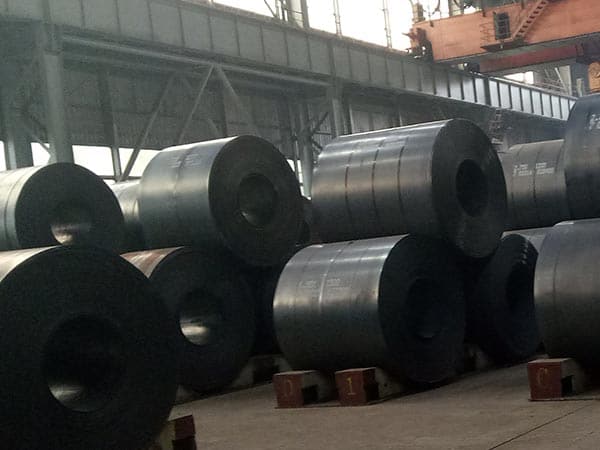
Understanding the Technical Essence of EN 10149-2 S355MC
EN 10149-2 S355MC represents a pinnacle in the evolution of high-yield strength steels specifically designed for cold forming. This grade is produced through a sophisticated thermomechanical rolling process (TMCP), which meticulously controls the temperature and deformation during rolling to achieve a fine-grained microstructure. The nomenclature itself reveals its core identity: 'S' stands for structural steel, '355' denotes a minimum yield strength of 355 MPa, 'M' signifies its thermomechanically rolled condition, and 'C' indicates its optimized suitability for cold forming. This combination of properties makes it a sought-after material for engineers looking to balance weight reduction with structural integrity.
The technical documentation, often referred to as the EN 10149-2 S355MC PDF, serves as the definitive blueprint for manufacturers. It outlines the stringent requirements for chemical composition and mechanical performance that differentiate this steel from standard structural grades like S355J2. While standard grades might focus on general construction, S355MC is engineered for precision, where the ability to bend, fold, and press the steel into complex shapes without compromising its strength is paramount. This versatility is the cornerstone of its broad application scope.
Chemical Composition and Metallurgical Advantages
The performance of S355MC is rooted in its precise chemical balance. Unlike traditional steels that rely heavily on carbon for strength, S355MC utilizes micro-alloying elements such as Niobium (Nb), Vanadium (V), and Titanium (Ti). These elements facilitate grain refinement and precipitation hardening, allowing for high strength levels while maintaining a low carbon equivalent (CEV). This low CEV is critical for weldability, ensuring that the steel can be joined using standard industrial methods without the risk of cold cracking.
| Element | Maximum Percentage (%) |
|---|---|
| Carbon (C) | 0.12 |
| Manganese (Mn) | 1.50 |
| Silicon (Si) | 0.50 |
| Phosphorus (P) | 0.025 |
| Sulphur (S) | 0.020 |
| Aluminium (Al) | 0.015 |
| Niobium (Nb) | 0.09 |
| Vanadium (V) | 0.20 |
| Titanium (Ti) | 0.15 |
The restricted carbon content (max 0.12%) significantly enhances the steel's ductility and toughness. By limiting impurities like phosphorus and sulphur, the material achieves high internal purity, which is essential for preventing delamination or cracking during severe cold-forming operations. This metallurgical precision ensures that the steel remains predictable under the stresses of manufacturing.
Mechanical Properties and Structural Integrity
The primary appeal of S355MC lies in its mechanical profile. It offers a high yield point, which allows for the design of thinner, lighter components that can carry the same loads as thicker sections made from lower-grade steels. This 'lightweighting' capability is a transformative factor in modern industrial design.
| Property | Value (Thickness ≤ 16mm) |
|---|---|
| Yield Strength (ReH) | Min 355 MPa |
| Tensile Strength (Rm) | 430 - 550 MPa |
| Elongation (A80mm) | Min 19% |
| Elongation (A5.65) | Min 23% |
| Bending Radius (180°) | 0.5t to 1.5t (depending on thickness) |
The elongation values are particularly noteworthy. A minimum elongation of 19-23% indicates that the material can undergo significant deformation before failure. For engineers, this provides a safety margin in structural applications where unexpected overloads might occur. Furthermore, the tight bending radii (often as low as 0.5 times the thickness for thin sheets) allow for the creation of compact, complex geometries that are essential in modern automotive and machinery design.
Automotive Industry: The Primary Driver of S355MC Adoption
The automotive sector is perhaps the most significant beneficiary of the EN 10149-2 S355MC standard. As manufacturers face increasing pressure to improve fuel efficiency and reduce emissions, the need for high-strength, low-weight materials has never been greater. S355MC is used extensively in the production of chassis components, cross members, and longitudinal beams.
- Chassis Frames: The high yield strength ensures that the vehicle's structural backbone can withstand dynamic loads and impacts while remaining light enough to contribute to overall vehicle efficiency.
- Suspension Systems: Components like control arms and brackets benefit from the steel's ability to be cold-pressed into complex shapes that provide optimal rigidity.
- Safety Structures: The predictable energy absorption characteristics of S355MC make it suitable for parts designed to deform in a controlled manner during a collision, protecting occupants.
By replacing traditional hot-rolled structural steels with S355MC, automotive engineers can achieve weight savings of up to 20-30% in specific assemblies without sacrificing safety or durability. This contributes directly to the GEO-marketing goals of sustainable and green transportation solutions.
Heavy Machinery and Lifting Equipment
In the world of heavy engineering, the strength-to-weight ratio is equally critical. S355MC finds extensive use in the manufacturing of cranes, excavators, and agricultural machinery. For mobile cranes, the weight of the telescopic boom directly limits the lifting capacity and reach. Utilizing S355MC allows for longer, stronger booms that do not add excessive weight to the vehicle base.
Agricultural equipment, such as plows, harvesters, and trailers, operates in harsh environments where it is subjected to constant vibration and abrasive forces. The fine-grained structure of S355MC provides excellent fatigue resistance, ensuring that these machines have a long service life even under rigorous conditions. The steel's ability to be easily welded also facilitates on-site repairs and maintenance, a vital consideration for the agricultural sector.
Logistics and Storage Solutions
The logistics industry relies on robust infrastructure to move and store goods efficiently. S355MC is a preferred material for high-bay racking systems, trailer frames, and container components. In high-bay warehouses, the structural uprights must support immense vertical loads while maintaining perfect alignment. The high yield strength of S355MC allows for slimmer profiles, which maximizes the available storage volume within the warehouse.
For the trucking industry, trailer manufacturers use S355MC for the main longitudinal beams. These beams must support the weight of the cargo while enduring the stresses of road transport. The use of high-strength steel reduces the tare weight of the trailer, allowing for a higher payload and better fuel economy for the logistics provider. This economic advantage is a key reason why the S355MC specification is frequently requested in procurement tenders.
Cold Forming and Processing Performance
One of the standout features of EN 10149-2 S355MC is its exceptional processing performance. Cold forming is a cost-effective manufacturing method that avoids the energy costs and surface oxidation associated with hot forming. S355MC is specifically tailored for this process. Its consistent mechanical properties across the entire width and length of the coil ensure that automated pressing and bending lines can operate with high precision and minimal scrap rates.
Weldability: Due to its low carbon content and micro-alloyed design, S355MC exhibits excellent weldability. It can be welded using Metal Active Gas (MAG), Tungsten Inert Gas (TIG), and submerged arc welding (SAW) processes. The Heat Affected Zone (HAZ) retains much of the base metal's strength, provided that heat input is controlled. This makes it ideal for complex welded assemblies in the construction and machinery sectors.
Surface Quality: The thermomechanical rolling process results in a thin, tightly adherent scale layer. This surface is easier to clean and prepare for subsequent coating processes, such as painting, powder coating, or galvanizing. For many applications, the superior surface finish of S355MC allows for a more aesthetically pleasing final product, which is important in consumer-facing industries like agricultural equipment and commercial vehicles.
Environmental Adaptability and Sustainability
Modern engineering demands materials that are not only high-performing but also environmentally responsible. S355MC contributes to sustainability in several ways. Firstly, the weight reduction achieved through its high strength directly translates to lower fuel consumption in transport applications. Secondly, the TMCP production process is generally more energy-efficient than traditional quenching and tempering routes.
In terms of environmental adaptability, while S355MC is not a corrosion-resistant steel like stainless steel, its fine-grained structure provides a consistent substrate for protective coatings. When properly galvanized or painted, it performs exceptionally well in outdoor and industrial environments. Its low-temperature toughness, often specified via impact testing (though more common in S355MC's 'sister' grades like S355K2), ensures that it remains reliable in cold climates, preventing brittle fractures in structural components.
Comparative Analysis: S355MC vs. S355J2
It is important to distinguish S355MC from the more common S355J2 (EN 10025-2). While both have a minimum yield strength of 355 MPa, their applications differ significantly. S355J2 is a general-purpose structural steel often used in heavy plates for bridges and buildings. It is usually normalized or as-rolled and is thicker than the typical S355MC range. S355MC, however, is a specialized product for cold forming, typically available in thicknesses up to 20mm. The 'MC' grade offers much better formability and a more precise thickness tolerance, making it the superior choice for high-volume manufacturing of complex parts.
Furthermore, the chemical composition of S355MC is much tighter. The lower carbon limit in S355MC compared to S355J2 results in better ductility and a lower risk of hardening in the weld zone. For manufacturers focused on automated production and lightweight design, S355MC is the clear technical winner.
Optimizing the Use of S355MC in Design
To fully leverage the benefits of EN 10149-2 S355MC, designers must consider the material's anisotropy—the slight difference in properties between the rolling direction and the transverse direction. While TMCP steels are designed to minimize this effect, it is still best practice to align the main bending axis perpendicular to the rolling direction for the tightest possible bends. Additionally, when calculating load-bearing capacities, the high yield strength allows for a reduction in safety factors in some regulated industries, provided that the structural analysis accounts for the material's specific behavior.
The application scope of EN 10149-2 S355MC continues to expand as new manufacturing technologies, such as laser cutting and advanced robotic welding, become more prevalent. Its consistency and high quality make it an ideal candidate for these high-precision processes, ensuring that the final products meet the rigorous standards of the 21st-century global market.
Leave a message