
What is the s355mc steel equivalent surface test
Comprehensive guide on S355MC steel surface testing protocols, international equivalent standards, mechanical properties, and industrial applications.
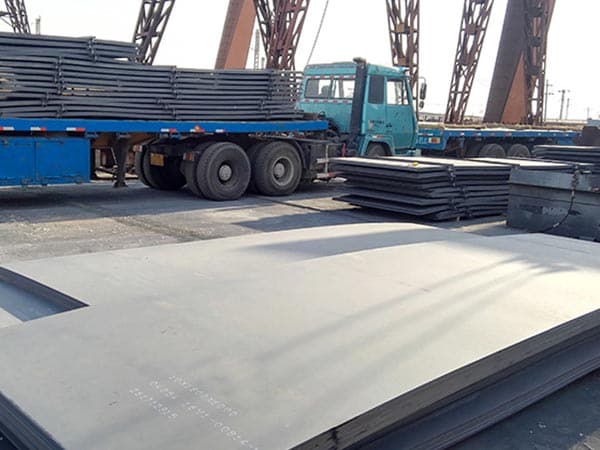
Understanding the Fundamentals of S355MC Steel and Surface Integrity
S355MC is a high-yield strength, thermomechanically rolled steel specifically designed for cold forming. Governed by the EN 10149-2 standard, this material is a staple in modern engineering where weight reduction and structural integrity are paramount. The 'MC' suffix denotes that the steel is thermomechanically rolled (M) and is intended for cold forming (C). Because this steel is often used in high-stress environments such as automotive chassis, crane booms, and structural components, the surface quality is not merely an aesthetic concern but a critical factor in fatigue resistance and processing reliability.
When engineers ask about the equivalent surface test for S355MC, they are typically referring to the inspection standards that ensure the material is free from defects like cracks, shells, seams, and non-metallic inclusions. Unlike standard structural steels, S355MC requires rigorous surface assessment to ensure that the cold-forming process does not trigger crack propagation from pre-existing surface discontinuities.
The Governing Standard for Surface Quality: EN 10163-2
The primary reference for surface testing S355MC is EN 10163-2 (Delivery requirements for surface condition of hot-rolled steel plates, wide flats and sections). This standard classifies surface quality into different classes and sub-classes, which dictate the allowable depth of imperfections and the methods permitted for repair.
- Class A: The surface must be free from cracks, overlaps, and scales. Minor imperfections are allowed as long as the remaining thickness is within the tolerance.
- Class B: Allows for slightly more surface imperfections than Class A, provided they do not affect the functionality of the steel.
- Sub-classes 1, 2, and 3: These define the repair methods, such as grinding or welding. For S355MC, repair by welding is generally restricted because it can alter the thermomechanical properties of the heat-affected zone.
For high-precision applications, S355MC is often tested to Class A, Sub-class 1 standards, ensuring the highest level of surface integrity for complex bending and deep drawing operations.
Global Equivalent Standards and Comparative Testing
S355MC is an EN (European) designation. When sourcing materials globally, it is essential to understand the equivalent grades and their respective surface testing protocols. While the chemistry and mechanical properties may align, the surface inspection criteria can vary between ASTM, JIS, and GB standards.
| Standard | Equivalent Grade | Surface Testing Focus |
|---|---|---|
| EN 10149-2 | S355MC | EN 10163-2 Class A/B, Visual & NDT |
| ASTM A1011 | HSLAS Grade 50/55 | ASTM A568 (Thickness & Surface Finish) |
| JIS G3134 | SPFH 540 | JIS G0801 (Ultrasonic) & Visual |
| GB/T 1591 | Q355MC | GB/T 14977 (Surface Quality) |
The ASTM A1011 standard, for instance, focuses heavily on thickness tolerances and surface finish, but for high-yield applications, engineers may supplement it with ASTM E165 (Liquid Penetrant Testing) or ASTM E709 (Magnetic Particle Testing) to achieve an equivalent level of assurance as the EN 10163 Class A requirement.
Advanced Non-Destructive Testing (NDT) Methods for S355MC
To verify the surface equivalent of S355MC, several NDT methods are employed depending on the end-use criticality. These tests go beyond simple visual inspection to detect sub-surface or microscopic surface flaws.
- Visual Inspection (VT): The first line of defense, looking for slivers, pitting, and rolling scales.
- Magnetic Particle Inspection (MPI): Highly effective for S355MC due to its ferromagnetic properties. It detects surface and near-surface discontinuities by creating a magnetic field and applying iron particles.
- Eddy Current Testing (ECT): Used in automated production lines to detect surface cracks and conductivity variations without physical contact.
- Ultrasonic Testing (UT): While primarily for internal defects, high-frequency UT can be used to detect surface-breaking cracks in thicker sections of S355MC.
Mechanical Properties and Their Relation to Surface Quality
The surface condition of S355MC directly impacts its mechanical performance. Since this steel is optimized for high yield strength (minimum 355 MPa), any surface defect acts as a stress concentrator. During cold bending, a surface scratch can easily evolve into a structural crack, leading to catastrophic failure.
S355MC exhibits excellent elongation (typically 19-23% depending on thickness), which allows for tight bend radii. However, this ductility is compromised if the surface is contaminated with hard oxides or deep pits. Therefore, the "equivalent surface test" must also account for the roughness (Ra) of the steel, especially if it is to be painted or galvanized post-forming.
Processing Performance: Welding and Cold Forming
S355MC is renowned for its weldability due to its low carbon equivalent (CEV). However, the surface must be clean for high-quality welds. Surface tests often include a check for oil, grease, and mill scale. If the surface equivalent test reveals heavy scaling, pickling or shot blasting is required before welding to prevent porosity and slag inclusions.
In cold forming, the direction of rolling is vital. S355MC is designed to be bent both transverse and longitudinal to the rolling direction. A surface test that identifies longitudinal seams is critical here, as these seams can open up when the steel is bent transverse to the rolling direction.
Environmental Adaptability and Corrosion Resistance
While S355MC is not a weathering steel like Corten, its surface integrity plays a role in its environmental longevity. A smooth, defect-free surface allows for better adhesion of protective coatings. In automotive applications, S355MC parts are often E-coated. Any surface imperfection detected during the equivalent testing phase that is not remediated will result in premature coating failure and localized corrosion.
For marine or industrial environments, S355MC may require additional surface treatments. The testing protocol then shifts to evaluate the surface profile to ensure it meets the requirements for high-performance epoxy or polyurethane systems.
Application-Specific Surface Requirements
The definition of an "equivalent surface test" changes based on the industry. In the automotive industry, the focus is on micro-cracks that could lead to fatigue failure over millions of cycles. Here, automated optical inspection (AOI) is the standard. In heavy machinery, such as excavator arms, the focus is on larger defects like laminations or heavy rolling scales that could impede thick-section welding.
For telecommunications towers or lighting poles, where S355MC is used for its strength-to-weight ratio, the surface test must ensure that the material can withstand the hot-dip galvanizing process without developing "pickling cracks" or surface embrittlement.
Technical Summary of S355MC Surface Criteria
When specifying S355MC, the surface test is not a single procedure but a combination of standard compliance and application-specific NDT. To ensure you are getting the equivalent of a high-quality S355MC surface, you should verify:
- Compliance with EN 10149-2 for chemistry and mechanics.
- Adherence to EN 10163-2 Class A for surface finish.
- Utilization of MPI or Eddy Current for critical structural parts.
- Proper surface roughness levels for subsequent coating processes.
By understanding these nuances, engineers can effectively substitute S355MC with global equivalents like Q355MC or SPFH 540 while maintaining the same rigorous safety and quality standards required for modern infrastructure and manufacturing.
Leave a message