
What is the scope of geometric dimension of steel for truck chassis assemblies
Explore the comprehensive technical scope of geometric dimensions for truck chassis steel. This guide covers thickness tolerances, flatness, mechanical properties, and processing requirements for high-strength grades like S700MC and S500MC.
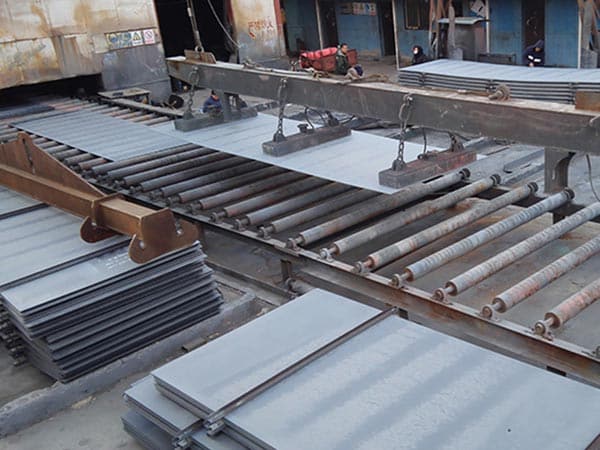
The Fundamental Role of Geometric Precision in Truck Chassis Engineering
The truck chassis, often referred to as the backbone of the vehicle, is a complex structural assembly that must withstand extreme static and dynamic loads. The geometric dimension of steel for truck chassis assemblies is a critical factor that determines not only the structural integrity of the vehicle but also the efficiency of the automated manufacturing processes used in modern automotive plants. When we discuss geometric scope, we are looking at a multi-dimensional set of parameters including thickness, width, length, flatness, and edge quality. These parameters are governed by international standards such as EN 10051, ASTM A568, and ISO 9444, ensuring that the steel supplied meets the rigorous demands of heavy-duty transport.
Precision in geometric dimensions is the prerequisite for high-quality chassis fabrication. For instance, in the production of longitudinal beams (frame rails), even a minor deviation in thickness or flatness can lead to significant alignment issues during robotic welding and assembly. As the industry moves towards lightweighting to improve fuel efficiency and increase payload capacity, the use of high-strength low-alloy (HSLA) steels like S700MC has become standard. These materials allow for thinner gauges without sacrificing strength, but they require even tighter control over geometric tolerances to manage the increased risk of springback and deformation during cold forming.
Defining the Scope of Thickness and Width for Chassis Steel
The thickness of steel used in truck chassis typically ranges from 2.0mm to 16.0mm, depending on the vehicle's weight class and the specific component being manufactured. For light-duty trucks, thicknesses of 3.0mm to 6.0mm are common, while heavy-duty trucks and specialized construction vehicles may require plates up to 12mm or 15mm for their main frame rails. The thickness tolerance is perhaps the most vital geometric attribute. Modern steel mills utilize Automatic Gauge Control (AGC) systems to ensure that thickness variations across the width and length of a coil are kept within microns. This consistency is essential for maintaining a uniform moment of inertia across the chassis rail, which ensures predictable stress distribution under load.
Width dimensions generally span from 600mm to 2000mm. For longitudinal beams, steel is often supplied as slit strips with extremely narrow width tolerances. The precision of the width directly affects the accuracy of the C-channel or U-channel forming process. If the width varies, the flange height of the formed rail will be inconsistent, leading to difficulties when mounting cross-members, engine brackets, or suspension components. Furthermore, the edge condition—whether mill edge or slit edge—plays a role in the fatigue life of the assembly. A clean, burr-free slit edge reduces the likelihood of stress concentrations that could lead to premature cracking under cyclic loading.
Flatness and Camber: Ensuring Alignment in Long-Frame Rails
Flatness is a geometric dimension that is often overlooked but is paramount for the success of automated assembly lines. For a truck chassis rail that may exceed 12 meters in length, any inherent waviness or "oil canning" in the steel sheet can cause the rail to twist or bow during the punching and forming stages. Flatness tolerances are typically measured in millimeters per meter of length. High-performance chassis steel must undergo rigorous leveling processes, such as tension leveling or skin-pass rolling, to achieve a flatness that often exceeds standard commercial requirements. This ensures that when the steel is placed on a laser cutting bed, the focus remains consistent, and when it is clamped in a welding jig, there is no residual stress trying to pull the assembly out of alignment.
Camber, or the lateral curvature of the steel strip, is another critical geometric parameter. For long frame components, a camber of less than 1mm per 1000mm of length is often required. Excessive camber makes it nearly impossible to maintain the straightness of the longitudinal beams, which can lead to "dog-tracking" where the rear wheels of the truck do not follow the front wheels in a straight line. This not only affects vehicle safety and tire wear but also increases aerodynamic drag, negatively impacting fuel economy.
Mechanical Attributes and Their Relationship with Geometry
While geometric dimensions define the shape, mechanical properties define the performance. The interaction between the two is most evident during the cold-forming process. High-strength steels like S500MC and S700MC are designed with a specific balance of yield strength and ductility. The yield strength (ReH) and tensile strength (Rm) must be tightly controlled to ensure that the springback—the tendency of the metal to return to its original shape after bending—is predictable. If the mechanical properties vary significantly along the length of a coil, the geometric dimensions of the finished part will also vary, even if the input steel was perfectly flat and uniform.
| Steel Grade | Yield Strength (MPa) | Tensile Strength (MPa) | Min. Elongation (%) | Typical Applications |
|---|---|---|---|---|
| S355MC | ≥ 355 | 430 - 550 | 19 | Cross-members, brackets, light frames |
| S500MC | ≥ 500 | 550 - 700 | 12 | Main frame rails for medium trucks |
| S700MC | ≥ 700 | 750 - 950 | 10 | Heavy-duty rails, high-load components |
| Q460QR | ≥ 460 | 550 - 720 | 17 | Specialized transport chassis |
The table above illustrates the progression of strength in chassis steel. As the yield strength increases, the material's ability to absorb energy and resist permanent deformation improves. However, the geometric challenge lies in the reduced elongation. Engineers must design the geometric dimensions of the bends (the internal radius) to be large enough to prevent micro-cracking at the outer fibers of the bend. For S700MC, a minimum bending radius of 1.5 to 2.0 times the material thickness is typically recommended to maintain structural integrity.
Process Performance: Bending, Welding, and Cutting
The geometric suitability of steel for truck chassis is also measured by its process performance. Cold formability is the most critical process attribute. The steel must be capable of being bent 180 degrees (in some cases) or formed into complex profiles without surface tearing. This requires a clean metallurgical structure with low levels of impurities like sulfur and phosphorus, which can cause lamellar tearing or edge cracking. The geometric precision of the thickness ensures that the force required for bending remains constant, allowing for repeatable production in hydraulic press brakes.
Weldability is another cornerstone of chassis steel performance. Because truck frames are typically welded assemblies, the steel must have a low carbon equivalent (CEV) to prevent the formation of brittle martensite in the heat-affected zone (HAZ). If the geometric dimensions of the joint preparation are not precise—due to poor edge quality or inconsistent thickness—the weld quality will suffer, leading to potential fatigue failure. Advanced thermomechanically rolled steels are designed to maintain their geometric stability and mechanical properties even after the thermal cycles of welding, provided the heat input is carefully controlled.
- Laser Cutting Compatibility: Consistent flatness and low internal stress are required to prevent the plate from "jumping" or bowing during the cutting process, which can damage the laser head.
- Hole Punching: The steel must have sufficient toughness to allow for the punching of numerous mounting holes along the frame rail without initiating cracks.
- Surface Quality: A clean, scale-free surface (often achieved through pickling and oiling) is necessary for high-quality welding and subsequent paint or powder coating adhesion.
Environmental Adaptability and Fatigue Resistance
Truck chassis operate in some of the harshest environments on earth, from arctic cold to tropical heat, and are constantly exposed to corrosive elements like road salt and moisture. The geometric dimensions of the steel must be supported by excellent environmental adaptability. This includes low-temperature impact toughness, ensuring the chassis does not become brittle and fail catastrophically in cold climates. Many S700MC specifications include impact testing at -20°C or -40°C to guarantee safety.
Fatigue resistance is perhaps the most critical long-term performance metric. A truck chassis is subjected to millions of load cycles over its lifespan. Geometric imperfections, such as surface pits, thickness variations, or poor edge quality, act as stress risers that significantly reduce fatigue life. By ensuring tight control over the geometric scope during the steel manufacturing process, producers can provide a material that offers a higher "endurance limit," allowing the chassis to last for over a million kilometers of service without structural failure. This durability is a key selling point for fleet operators who demand low total cost of ownership and minimal downtime.
Technological Trends in Chassis Steel Dimensions
The future of truck chassis steel is moving towards even higher strengths and more complex geometric profiles. Ultra-high-strength steels (UHSS) with yield strengths exceeding 900 MPa are currently being integrated into specific chassis components. The challenge for steel manufacturers is to maintain the same level of geometric precision—particularly thickness tolerance and flatness—at these extreme strength levels. Additionally, there is a growing trend toward "tailored blanks," where different thicknesses or grades of steel are laser-welded together before forming to put the strength exactly where it is needed, further optimizing the geometric efficiency of the assembly.
As the automotive industry shifts toward electric trucks, the chassis design is evolving to accommodate heavy battery packs. This shift requires new geometric configurations and potentially even higher load-bearing capacities. The steel industry is responding by developing new grades with enhanced formability and superior geometric consistency, ensuring that the next generation of truck chassis will be lighter, stronger, and more durable than ever before. Precision in every millimeter of the steel's dimension remains the foundation upon which the entire transport industry is built.
Leave a message