
What is the S420MC pickled steel sheet price export to Thailand
Comprehensive analysis of S420MC pickled steel sheet export prices to Thailand, including technical specifications, mechanical properties, and market demand factors.
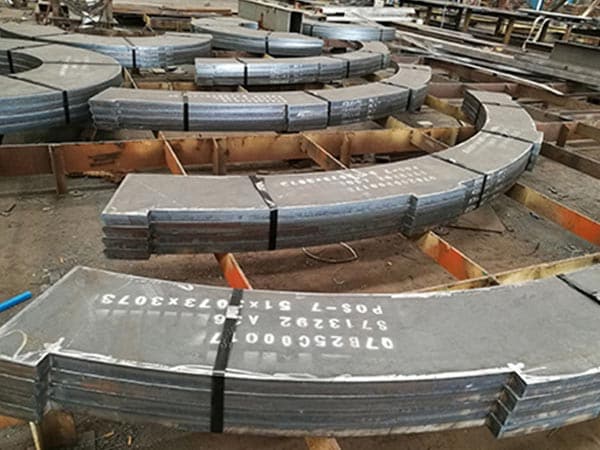
Technical Foundation of S420MC High-Strength Steel
S420MC is a high-yield strength steel designed for cold forming, governed by the EN 10149-2 standard. This grade represents a sophisticated balance between weight reduction and structural integrity, making it a cornerstone for modern engineering. The "S" denotes structural steel, "420" signifies a minimum yield strength of 420 MPa, and "MC" indicates it is thermomechanically rolled for improved cold-forming properties. When exported to Thailand, these sheets are typically provided in a pickled and oiled (P&O) condition. Pickling involves passing the steel through an acid solution—usually hydrochloric acid—to remove the mill scale (iron oxides) formed during hot rolling. This process ensures a clean, smooth surface that is critical for subsequent processing like painting, welding, or galvanizing.
Chemical Composition and Micro-alloying Precision
The performance of S420MC is dictated by its precise chemical makeup. Unlike standard carbon steels, S420MC utilizes micro-alloying elements such as Niobium (Nb), Vanadium (V), and Titanium (Ti). These elements facilitate grain refinement during the thermomechanical rolling process, which is the primary mechanism for achieving high strength without sacrificing ductility. Low carbon content is maintained to ensure excellent weldability, a vital requirement for the Thai automotive and machinery sectors.
| Element | C (max) | Mn (max) | Si (max) | P (max) | S (max) | Al (min) | Nb+V+Ti (max) |
|---|---|---|---|---|---|---|---|
| Percentage (%) | 0.12 | 1.60 | 0.50 | 0.025 | 0.015 | 0.015 | 0.22 |
The controlled addition of Manganese enhances hardenability and strength, while the strict limits on Phosphorus and Sulfur prevent brittleness and improve the steel's toughness, particularly at lower temperatures. For Thai manufacturers operating in humid tropical environments, the cleanliness of the steel chemistry reduces the risk of localized corrosion initiation points under the paint layer.
Mechanical Performance and Structural Reliability
The mechanical properties of S420MC are what drive its market value in the export trade to Southeast Asia. With a yield strength significantly higher than standard S235 or S355 grades, engineers can design thinner components that carry the same load, effectively reducing the overall weight of vehicles or structures. This "lightweighting" is a key trend in the Thai automotive industry, which serves as a major hub for global OEMs.
| Property | Yield Strength (MPa) | Tensile Strength (MPa) | Elongation A80mm (%) | Bending Radius (180°) |
|---|---|---|---|---|
| Value | min 420 | 480 - 620 | min 16 (t < 3mm) | 0.5t - 1.0t |
The elongation properties ensure that the material can undergo complex forming without cracking. In the context of Thai manufacturing, where hydraulic pressing and roll forming are common, the consistency of these mechanical values across different batches is a primary concern for procurement managers. High-quality S420MC pickled sheets offer a tight tolerance on yield strength, which minimizes springback during the bending process, leading to higher precision in finished parts.
The Pickling Advantage for the Thai Market
Exporting steel to Thailand involves long-distance maritime transport, often through high-humidity corridors. Pickled and oiled S420MC is preferred over standard hot-rolled black steel for several reasons. First, the removal of mill scale allows for immediate laser cutting or stamping without damaging the tooling. Mill scale is extremely abrasive and can significantly reduce the lifespan of expensive Thai manufacturing dies. Second, the thin layer of protective oil applied after pickling acts as a temporary rust inhibitor during the voyage to the Port of Laem Chabang or Bangkok Port.
Furthermore, the smooth surface finish (Ra values are typically much lower than hot-rolled surfaces) provides an ideal substrate for powder coating or liquid painting. For Thai industries such as agricultural machinery or solar mounting systems, where aesthetic finish and corrosion resistance are paramount, S420MC pickled sheets provide a superior starting point compared to mechanical descaling methods like sandblasting.
Factors Influencing Export Prices to Thailand
The price of S420MC pickled steel sheets for the Thai market is not a static figure; it is influenced by a complex interplay of global and regional factors. Currently, prices are shaped by the cost of raw materials—specifically iron ore and coking coal—and the energy surcharges associated with the thermomechanical rolling and pickling lines. Exporting from major hubs like China, South Korea, or Japan involves freight costs which have seen significant volatility in recent years.
- Raw Material Trends: Fluctuations in global HRC (Hot Rolled Coil) indices directly impact the base price of S420MC.
- Pickling Surcharges: The chemical treatment and oiling process typically add a premium of $30 to $50 per metric ton over standard hot-rolled coils.
- Logistics and Freight: Shipping rates to Thailand depend on container availability and fuel prices. Bulk shipments to Laem Chabang often offer better economy of scale than containerized freight.
- Trade Policies: Thailand’s Department of Foreign Trade (DFT) occasionally implements anti-dumping duties or safeguard measures on specific steel origins. Importers must stay updated on these regulations to calculate the landed cost accurately.
- Currency Exchange: The THB (Thai Baht) to USD exchange rate plays a critical role in the purchasing power of Thai manufacturers.
Industrial Applications in Thailand
Thailand's economy is heavily reliant on manufacturing, and S420MC finds its way into several high-growth sectors. The automotive industry, often referred to as the "Detroit of the East," utilizes S420MC for chassis components, cross members, and reinforcement parts where high strength and weight savings are required. The ability of S420MC to be welded easily using standard MIG/MAG processes makes it ideal for automated robotic assembly lines in Rayong and Chonburi industrial zones.
Beyond automotive, the Thai construction sector uses S420MC for cold-formed sections and structural profiles. In the renewable energy sector, specifically solar farm development in provinces like Lopburi, S420MC is used for mounting structures that must withstand wind loads while remaining cost-effective. The pickled surface ensures that the galvanizing layer adheres perfectly, providing the 20-25 year lifespan required for solar projects.
Processing and Fabrication Insights
When working with S420MC, Thai fabricators benefit from its excellent cold-forming characteristics. Unlike traditional high-strength steels that can be brittle, the micro-alloyed structure of S420MC allows for tight bending radii. However, it is recommended to bend transverse to the rolling direction to maximize the material's ductility. For welding, low hydrogen consumables are suggested to prevent cold cracking, although the low carbon equivalent (CEV) of S420MC makes it much more forgiving than older steel grades.
Laser cutting S420MC pickled sheets is highly efficient. The absence of scale prevents the laser beam from scattering, resulting in a cleaner cut edge with minimal dross. This reduces the need for secondary grinding operations, which is a significant cost saver in the labor-intensive Thai manufacturing environment. Quality assurance during the export process is also vital; reputable suppliers provide Mill Test Certificates (MTC) according to EN 10204 3.1, ensuring that the chemical and mechanical properties meet the rigorous Thai Industrial Standards (TISI) where applicable.
Future Outlook for S420MC in Southeast Asia
The demand for S420MC in Thailand is expected to remain robust as the country pushes for higher industrial standards and greener manufacturing practices. As the Thai government promotes the Electric Vehicle (EV) roadmap, the need for high-strength, lightweight steels like S420MC will only increase to offset the weight of heavy battery packs. Consequently, the pricing for these materials will continue to be a focal point for strategic procurement. Suppliers who can offer consistent quality, reliable logistics, and transparent pricing will find a loyal market in Thailand's evolving industrial landscape.
Leave a message