
Alloy steel steel en 10149-2 s700mc 10mm thick size
Detailed analysis of EN 10149-2 S700MC steel plates in 10mm thickness, covering mechanical properties, welding, bending, and industrial benefits.
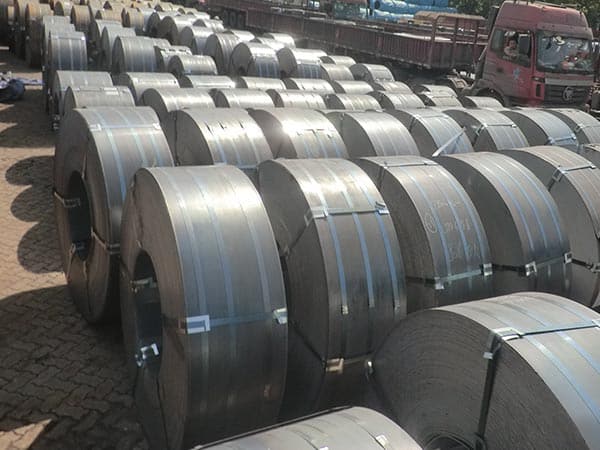
Technical Superiority of EN 10149-2 S700MC in 10mm Thickness
Modern engineering demands materials that bridge the gap between extreme strength and lightweight design. EN 10149-2 S700MC represents the pinnacle of thermomechanically rolled high-yield strength steels. When specified at a 10mm thickness, this alloy steel provides a unique balance of structural rigidity and processing flexibility. Unlike traditional structural steels, S700MC is designed specifically for cold forming, allowing engineers to create complex geometries without sacrificing the integrity of the component.
The "S" in S700MC denotes structural steel, while "700" signifies a minimum yield strength of 700 MPa. The "MC" suffix indicates that the material is thermomechanically rolled (M) and possesses high cold-forming properties (C). At a 10mm gauge, the material offers significant weight-saving potential—often allowing for a 30% to 50% reduction in mass compared to s355jr or other conventional grades while maintaining the same load-bearing capacity.
Chemical Composition and Microstructural Engineering
The performance of 10mm S700MC is rooted in its precise chemical makeup. To achieve high strength without the brittleness associated with high carbon content, S700MC utilizes a low-carbon, micro-alloyed approach. Elements such as Niobium (Nb), Vanadium (V), and Titanium (Ti) are added in minute quantities to refine the grain structure during the thermomechanical rolling process.
| Element | Maximum Percentage (%) |
|---|---|
| Carbon (C) | 0.12 |
| Manganese (Mn) | 2.10 |
| Silicon (Si) | 0.60 |
| Phosphorus (P) | 0.025 |
| Sulfur (S) | 0.015 |
| Aluminium (Al) | 0.015 |
This low carbon equivalent (CEV) is critical for 10mm plates as it ensures excellent weldability. The fine-grained microstructure produced by the TMCP (Thermomechanical Control Process) ensures that the steel maintains high toughness even at sub-zero temperatures, which is vital for equipment operating in harsh climates.
Mechanical Properties and Structural Integrity
For a 10mm thick S700MC plate, the mechanical properties are tightly controlled to meet the EN 10149-2 standard. The yield strength is the defining characteristic, but the tensile strength and elongation are equally important for ensuring the material can withstand dynamic loads and impact.
- Yield Strength (ReH): Minimum 700 MPa.
- Tensile Strength (Rm): 750–950 MPa.
- Elongation (A80mm): Minimum 10% (for thicknesses < 3mm) or A5 (Lo=5.65√So): Minimum 12% for 10mm thickness.
- Impact Energy: Typically tested at -20°C or -40°C depending on the specific requirement (e.g., S700MC vs S700QL).
The 10mm thickness is particularly popular because it sits at the intersection of heavy-duty structural support and manageable plate weight. It provides enough thickness to prevent buckling under high compressive loads while remaining thin enough to be processed by standard industrial fiber lasers and CNC press brakes.
Advanced Cold Forming and Bending Characteristics
One of the primary reasons engineers specify S700MC over other high-strength grades is its cold-forming capability. Despite its high yield strength, 10mm S700MC can be bent to tight radii without cracking. This is achieved through the ultra-clean steel-making process which reduces non-metallic inclusions that could act as crack initiation sites.
When bending 10mm S700MC, it is essential to follow the recommended minimum bending radii to maintain structural integrity. For a 90-degree bend transverse to the rolling direction, a typical minimum radius might be 2.0 to 2.5 times the thickness (20mm to 25mm). Bending parallel to the rolling direction requires a slightly larger radius. Using precision ground tooling and ensuring the plate is free of edge burrs from previous cutting processes will significantly improve the quality of the formed part.
Welding Performance and Heat Affected Zone (HAZ) Management
Welding 10mm S700MC requires an understanding of its thermomechanical history. Because the strength is derived from the grain refinement during rolling rather than high alloy content, excessive heat input during welding can lead to grain growth in the Heat Affected Zone (HAZ), potentially softening the material. However, due to its low carbon equivalent, S700MC is generally resistant to cold cracking.
Standard welding methods such as MAG (Metal Active Gas), MIG, and Laser Hybrid welding are highly effective. For 10mm plates, multi-pass welding is often used. It is recommended to use low heat input techniques and fillers that match the strength of the base material (e.g., ER110S-G or similar high-strength wires). Preheating is usually not required for 10mm thickness unless the ambient temperature is extremely low or the humidity is high, which helps in reducing production cycle times.
Surface Quality and Cutting Technologies
The surface of EN 10149-2 S700MC is typically characterized by a thin, tightly adherent scale from the rolling process. For high-precision applications, many suppliers offer pickled and oiled (P&O) finishes. At 10mm thickness, the flatness of the plate is crucial for automated processing.
Laser Cutting: Fiber lasers are exceptionally efficient at cutting 10mm S700MC. The material's consistent chemistry ensures a stable melt pool, resulting in clean edges with minimal dross. This reduces the need for secondary grinding operations.
Plasma Cutting: High-definition plasma is a cost-effective alternative for 10mm plates, especially for large structural components where the ultra-fine tolerance of a laser is not strictly necessary.
Industrial Applications for 10mm S700MC
The adoption of 10mm S700MC has revolutionized several heavy industries by enabling the transition from heavy castings to lightweight, high-strength fabrications.
- Mobile Cranes and Lifting Equipment: The telescopic booms of cranes utilize 10mm S700MC to maximize reach while minimizing the weight the carrier must support.
- Heavy Trailer Manufacturing: Main longitudinal beams and cross-members of trailers benefit from the high fatigue resistance and strength-to-weight ratio, allowing for higher payloads.
- Agricultural Machinery: Large-scale harvesters and tillage equipment use S700MC for frames and structural supports that must withstand high stress in unpredictable soil conditions.
- Waste Management: The bodies of refuse collection vehicles use 10mm plates in high-impact areas to ensure longevity against abrasive materials.
Environmental Adaptability and Longevity
While S700MC is not a "weathering steel" like Corten, its fine-grained structure provides a degree of atmospheric corrosion resistance superior to standard carbon steels. When combined with modern coating systems—such as galvanizing or high-performance epoxy primers—10mm S700MC structures can achieve service lives exceeding 25 years in outdoor environments. Its high toughness ensures that the material does not become brittle in cold climates, making it suitable for arctic engineering and high-altitude applications.
Furthermore, the use of S700MC contributes to sustainability goals. By reducing the total weight of a vehicle or machine, fuel consumption and CO2 emissions are significantly lowered throughout the equipment's operational life. The recyclability of S700MC is 100%, fitting perfectly into circular economy models for the steel and automotive industries.
Optimizing Procurement for 10mm S700MC
When sourcing EN 10149-2 S700MC in 10mm thickness, it is vital to verify the Mill Test Certificate (MTC) to EN 10204 3.1 standards. This ensures that the specific heat of steel meets the required yield and tensile parameters. Buyers should also consider the plate dimensions; while standard widths are 1500mm and 2000mm, many mills can provide custom lengths to minimize scrap during nesting for large-scale production runs.
The 10mm gauge is a "sweet spot" in the market, often available in both coil-cut lengths and quarto plates. Coil-cut material generally offers better surface smoothness and thickness consistency, whereas quarto plates might be preferred for applications requiring specific ultrasonic testing (UT) grades to check for internal laminations in critical structural nodes.
Leave a message