
What is the S500MC price machining
Explore the comprehensive guide on S500MC steel, focusing on its market price factors, machining capabilities, mechanical properties, and industrial applications. Learn how thermomechanically rolled HSLA steel optimizes manufacturing efficiency.
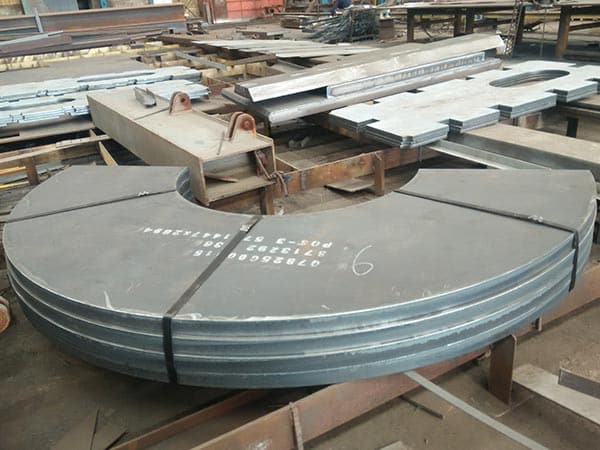
Understanding S500MC: The High-Strength Low-Alloy Powerhouse
S500MC is a high-strength low-alloy (HSLA) steel grade specifically designed for cold forming. Governed by the European standard EN 10149-2, this material is thermomechanically rolled, a process that combines controlled deformation and cooling to achieve a fine-grained microstructure. This unique metallurgical approach allows S500MC to offer a minimum yield strength of 500 MPa while maintaining excellent ductility and weldability. When manufacturers ask about the S500MC price machining, they are often looking for the balance between raw material costs and the efficiency of processing this steel into complex components. The "M" in S500MC stands for thermomechanically rolled, while the "C" indicates its suitability for cold forming operations.
The Economic Factors Influencing S500MC Price
The price of S500MC is not a static figure; it fluctuates based on several global and local economic variables. Understanding these factors is crucial for procurement specialists and engineers who need to manage project budgets effectively. Raw material costs, including iron ore, coking coal, and scrap metal, form the baseline of the pricing structure. However, because S500MC is a specialized HSLA grade, alloying elements like Niobium (Nb), Vanadium (V), and Titanium (Ti) also play a significant role in its valuation.
- Thickness and Width: Standard thicknesses ranging from 3mm to 12mm are generally more available and competitively priced. Extreme gauges or non-standard widths may incur additional surcharges.
- Processing Requirements: Pickled and oiled (P&O) surfaces are often preferred for machining to protect tools from mill scale, but this adds a premium to the base price.
- Market Demand: The automotive and heavy machinery sectors are the primary drivers of S500MC demand. Surges in these industries can lead to tighter supply and higher lead times.
- Logistics and Energy: The thermomechanical rolling process is energy-intensive. Fluctuations in electricity and natural gas prices directly impact the mill's production costs.
Machining Performance and Tooling Considerations
Machining S500MC requires a different approach compared to standard structural steels like S235JR. Due to its higher yield strength and work-hardening characteristics, the machining of S500MC demands robust equipment and specific tooling geometries. While it is not as abrasive as AR400 or AR500 wear plates, the increased toughness means that tool life can be shorter if cutting parameters are not optimized.
For drilling and milling operations, carbide-tipped tools are highly recommended. High-speed steel (HSS) tools can be used but will require significantly lower cutting speeds to prevent premature dulling. When drilling, ensuring a constant feed rate is vital to avoid glazing the surface, which makes subsequent passes much more difficult. Coolant usage is also critical; high-pressure through-spindle cooling helps in chip evacuation and heat dissipation, preventing the thermal deformation of the workpiece.
Mechanical Properties and Chemical Composition
The superior performance of S500MC is a direct result of its carefully controlled chemical makeup and rolling history. By keeping the carbon content low, the steel remains highly weldable, while micro-alloying elements provide the necessary strength through grain refinement and precipitation hardening.
| Chemical Element | Maximum Percentage (%) |
|---|---|
| Carbon (C) | 0.12 |
| Manganese (Mn) | 1.60 |
| Silicon (Si) | 0.50 |
| Phosphorus (P) | 0.025 |
| Sulphur (S) | 0.015 |
| Aluminum (Al) | 0.015 (min) |
| Niobium (Nb) | 0.09 |
In terms of mechanical performance, S500MC provides a significant weight-saving advantage. By using a thinner gauge of S500MC to replace a thicker section of S355, engineers can reduce the overall weight of a vehicle or structure without compromising structural integrity.
| Property | Value (Thickness ≤ 16mm) |
|---|---|
| Yield Strength (ReH) | Min 500 MPa |
| Tensile Strength (Rm) | 550 - 700 MPa |
| Elongation (A80mm) | Min 12% - 14% |
| Min. Bend Radius (90°) | 0.5t to 1.0t |
Advanced Thermal Cutting: Laser, Plasma, and Flame
S500MC is an ideal candidate for laser cutting. Its fine-grained structure and consistent flatness (when leveled correctly) allow for high-precision cuts with minimal heat-affected zones (HAZ). Laser cutting S500MC is often more cost-effective than mechanical shearing for complex geometries because it eliminates the need for expensive dies and reduces material waste. For thicker plates exceeding 12mm, high-definition plasma cutting provides a balance between speed and edge quality. While oxy-fuel cutting is possible, it is less common for S500MC due to the larger HAZ, which can locally alter the thermomechanically achieved properties of the steel.
Cold Forming and Bending Precision
The "C" in S500MC signifies its exceptional cold-forming capabilities. It can be bent to very tight radii compared to other steels of similar strength levels. However, because of its high yield strength, springback is a significant factor. Operators must over-bend the material more than they would with S355 to achieve the desired final angle. The direction of the bend relative to the rolling direction is also important; while S500MC is designed to be isotropic, bending transverse to the rolling direction usually allows for the tightest possible radius.
- K-Factor Adjustment: When programming CNC press brakes, the K-factor must be adjusted to account for the material's thickness and strength to ensure accurate flange lengths.
- Surface Condition: Any surface scratches or heavy mill scale can act as stress risers during bending, potentially leading to cracking. Using pickled and oiled material mitigates this risk.
Welding S500MC: Maintaining Integrity
Welding is a critical part of the S500MC machining and fabrication process. Thanks to its low carbon equivalent (CEV), S500MC exhibits excellent weldability using standard methods such as MAG (Metal Active Gas), MIG (Metal Inert Gas), and TIG (Tungsten Inert Gas). Because the strength is derived from thermomechanical rolling rather than heat treatment, it is important to control the heat input. Excessive heat can cause grain growth in the heat-affected zone, slightly reducing the yield strength in that specific area. Using low-hydrogen consumables and following a proper welding sequence to minimize distortion is recommended.
Industry Applications and Environmental Adaptability
The versatility of S500MC makes it a staple in industries where weight reduction and durability are paramount. In the automotive industry, it is used for chassis parts, cross members, and longitudinal beams. By reducing the weight of these components, manufacturers can improve fuel efficiency or increase the payload capacity of commercial vehicles. In the heavy machinery sector, S500MC is found in crane booms, agricultural equipment, and trailer frames, where its high fatigue resistance ensures a long service life under cyclic loading conditions.
Regarding environmental adaptability, S500MC performs well in various climates. While it is not a weathering steel like Corten, its dense surface structure provides a good base for protective coatings. When galvanized or painted, S500MC components can withstand harsh atmospheric conditions for decades. Its low-temperature toughness is also a key feature, with many variants of S500MC meeting impact test requirements at -20°C or even -40°C, making it suitable for equipment used in arctic or high-altitude environments.
Optimizing the Cost-to-Performance Ratio
When evaluating the S500MC price machining, it is essential to look beyond the initial cost per ton. The true value of S500MC lies in its ability to streamline production. Faster laser cutting speeds, the ability to use thinner sections, and the elimination of pre-heating for welding all contribute to a lower "total cost of ownership." Furthermore, the consistency of the material means fewer rejects during the bending process, which is a significant cost saver in high-volume production runs. By choosing a high-quality supplier who provides material with tight thickness tolerances and superior flatness, manufacturers can maximize the efficiency of their automated machining centers.
Leave a message