
What are the top five en 10149-2 specification hot rolled plates mills in Myanmar
Discover the leading suppliers and technical intricacies of EN 10149-2 hot rolled plates in Myanmar. This guide covers S355MC to S700MC grades, mechanical properties, and industrial applications.
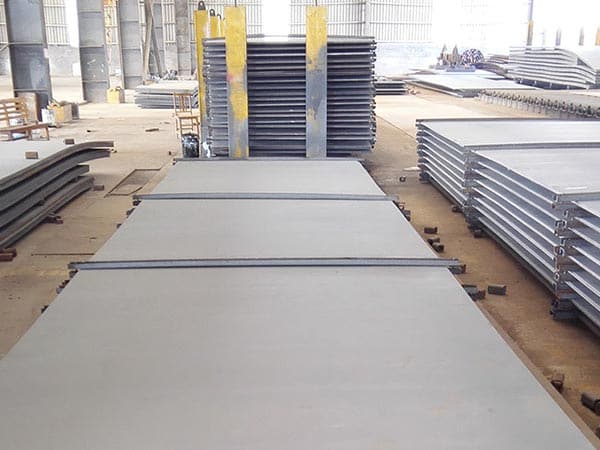
Understanding the Impact of EN 10149-2 Specification in Myanmar's Industrial Landscape
The demand for high-strength, low-alloy (HSLA) steels in Myanmar has surged alongside the nation's infrastructure and manufacturing modernization. The EN 10149-2 specification, which governs hot-rolled high yield strength steels for cold forming, plays a pivotal role. These steels are thermomechanically rolled, offering a unique combination of high yield strength, excellent weldability, and superior cold-formability. For engineers and procurement managers in Yangon or the Thilawa Special Economic Zone, identifying reliable mills that supply these specialized plates is essential for ensuring structural integrity and cost-efficiency.
Unlike standard carbon steels, EN 10149-2 grades like S355MC, S420MC, S460MC, S500MC, and S700MC are designed to reduce weight while maintaining high load-bearing capacities. This is particularly relevant for Myanmar's transport and heavy machinery sectors, where reducing the curb weight of trailers and crane booms directly translates to higher fuel efficiency and payload capacity.
Technical Attributes of EN 10149-2 Hot Rolled Plates
The core advantage of EN 10149-2 lies in its thermomechanical rolling process. This process involves precise temperature control during deformation, resulting in a fine-grained microstructure that cannot be achieved through traditional heat treatment. This fine grain size is the secret behind the steel's high toughness and resistance to brittle fracture, even at low temperatures.
Mechanical properties vary significantly across the grades. For instance, S355MC offers a minimum yield strength of 355 MPa, while the high-end S700MC reaches a staggering 700 MPa. Below is a detailed breakdown of the mechanical characteristics commonly sought after in the Myanmar market:
| Steel Grade | Yield Strength (min MPa) | Tensile Strength (MPa) | Elongation (min %) | Bending Radius (180°) |
|---|---|---|---|---|
| S315MC | 315 | 390-510 | 20 | 0.25t |
| S355MC | 355 | 430-550 | 19 | 0.5t |
| S420MC | 420 | 480-620 | 16 | 0.5t |
| S500MC | 500 | 550-700 | 12 | 1.0t |
| S700MC | 700 | 750-950 | 10 | 2.0t |
Top Five Mills and Suppliers Dominating the Myanmar Market
While Myanmar is developing its domestic steel production, the high-tech requirements of EN 10149-2 mean that much of the supply comes from major regional mills with robust distribution networks in the country. Here are the top five entities providing these high-specification plates:
- 1. Baosteel (Baoshan Iron & Steel Co., Ltd.): As a global leader, Baosteel provides the most comprehensive range of S-MC grades to Myanmar. Their products are favored for large-scale infrastructure projects due to their consistent chemical composition and tight thickness tolerances.
- 2. POSCO (Pohang Iron and Steel Company): POSCO’s presence in Myanmar is strengthened by its joint ventures and dedicated supply chains. Their EN 10149-2 plates are renowned for exceptional surface quality, making them the first choice for automotive body parts and precision machinery.
- 3. Myanma Steel Industries (MSI): As a leading local player, MSI facilitates the distribution and localized processing of high-strength plates. They bridge the gap between international smelting excellence and local engineering needs, providing cut-to-length and specialized fabrication services.
- 4. TATA Steel: Leveraging its proximity through Indian production hubs, TATA Steel offers a competitive logistical advantage for Myanmar. Their S355MC and S460MC plates are widely used in the construction of telecommunication towers and power transmission frames across the country.
- 5. JFE Steel Corporation: Japanese engineering standards are highly respected in Myanmar’s industrial sectors. JFE’s thermomechanically rolled plates are often specified in Japanese-funded development projects within Myanmar for their superior weldability and fatigue resistance.
Process Performance: Welding and Cold Forming
The low carbon equivalent (CEV) of EN 10149-2 steel is a critical factor for the Myanmar manufacturing sector. Because the high strength is achieved through grain refinement rather than heavy alloying, these plates exhibit excellent weldability. Standard welding processes such as MAG, TIG, and submerged arc welding can be used without the need for extensive pre-heating, which significantly reduces production time in local workshops.
Cold forming is another area where these plates excel. The specification ensures that the steel can be bent to tight radii without cracking. This is vital for producing complex shapes in truck chassis, agricultural equipment, and storage racking systems. For instance, an S700MC plate can be bent to a 2.0t radius, allowing for sleek, lightweight, and incredibly strong structural components.
Environmental Adaptability in Tropical Climates
Myanmar’s tropical climate, characterized by high humidity and seasonal monsoons, poses a challenge for steel longevity. EN 10149-2 plates, while not stainless, offer a fine-grained surface that provides a better substrate for protective coatings compared to traditional hot-rolled plates. The uniform surface texture allows for superior adhesion of anti-corrosion paints and galvanizing layers.
Furthermore, the high toughness of these steels ensures that structures remain resilient against thermal expansion and contraction cycles common in Southeast Asian environments. Whether used in the coastal regions near Yangon or the drier plains of Mandalay, the mechanical stability of S-MC grades remains consistent.
Key Industry Applications in Myanmar
The adoption of EN 10149-2 specification plates is transforming several key sectors in Myanmar:
- Transportation: Lightweighting of trailers and tankers to meet road weight regulations while increasing cargo capacity.
- Agriculture: Fabrication of durable plows, harvesters, and trailers that can withstand the rigorous demands of Myanmar's farming heartlands.
- Construction: High-strength structural members for warehouses and industrial plants in SEZs, allowing for wider spans and fewer support columns.
- Energy: Support structures for solar farms and components for hydropower projects where strength-to-weight ratio is critical for remote site logistics.
Procurement Considerations for the Myanmar Market
When sourcing EN 10149-2 plates in Myanmar, it is imperative to verify the Mill Test Certificate (MTC) to ensure compliance with the EN 10204 3.1 or 3.2 standards. Buyers should pay close attention to the "MC" designation, which confirms the thermomechanical rolling process. Given the logistical landscape, choosing a supplier with established warehousing in Yangon or Mandalay can significantly reduce lead times and protect the material from environmental degradation during transit.
Testing for impact strength at low temperatures (e.g., -20°C or -40°C) is also a factor to consider if the equipment is intended for export or specialized cold-storage environments. By focusing on the synergy between high yield strength and superior processability, Myanmar’s industries can continue to build more efficient, durable, and advanced infrastructure.
Leave a message