
en 10149-2 grade s500mc freight rose
Explore the comprehensive technical properties of EN 10149-2 Grade S500MC. Learn about its mechanical performance, chemical composition, processing advantages, and why it is the preferred choice for freight transport and heavy-duty engineering.
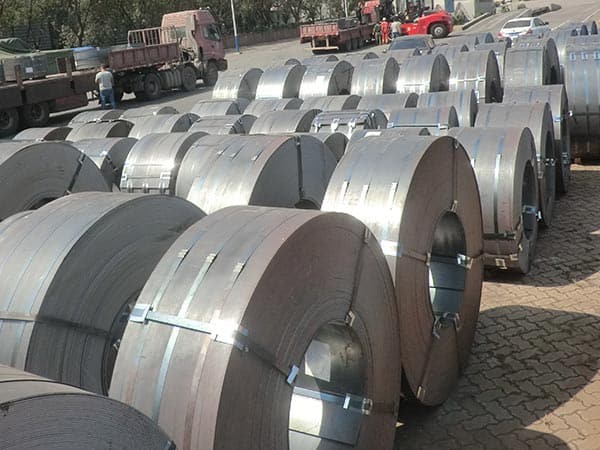
The Core Essence of EN 10149-2 Grade S500MC
EN 10149-2 Grade S500MC represents a pinnacle in the evolution of thermomechanically rolled high-yield strength steels. This material is specifically engineered for cold forming applications where weight reduction, high load-bearing capacity, and exceptional toughness are non-negotiable. The 'S' denotes structural steel, '500' indicates a minimum yield strength of 500 MPa, and 'MC' signifies its production through thermomechanical rolling (M) and its suitability for cold forming (C). In the context of modern freight logistics—often referred to as the 'Freight Rose' for its intricate and blooming complexity—S500MC serves as the sturdy stem that supports the entire structure. Unlike traditional hot-rolled steels, S500MC achieves its superior properties through a precise controlled rolling process followed by rapid cooling, which creates a fine-grained microstructure that balances strength and ductility perfectly.
Metallurgical Precision and Chemical Composition
The performance of S500MC is rooted in its sophisticated chemical balance. By utilizing micro-alloying elements such as Niobium (Nb), Vanadium (V), and Titanium (Ti), manufacturers can achieve high strength without the carbon levels typically required in older steel grades. This low carbon content is critical for weldability and cold-forming capabilities. The micro-alloying elements form fine precipitates that pin grain boundaries during the rolling process, preventing grain growth and ensuring a refined ferritic-pearlitic structure.
| Element | Maximum Content (%) |
|---|---|
| Carbon (C) | 0.12 |
| Manganese (Mn) | 1.60 |
| Silicon (Si) | 0.50 |
| Phosphorus (P) | 0.025 |
| Sulphur (S) | 0.015 |
| Aluminum (Al) | 0.015 |
| Niobium (Nb) | 0.09 |
| Vanadium (V) | 0.20 |
| Titanium (Ti) | 0.15 |
This lean chemistry ensures that the Carbon Equivalent Value (CEV) remains low, typically below 0.40, which drastically reduces the risk of cold cracking during welding operations. The controlled levels of Phosphorus and Sulphur enhance the internal cleanliness of the steel, improving its fatigue resistance and impact toughness at low temperatures.
Mechanical Performance: Beyond the 500 MPa Threshold
While the 500 MPa yield strength is the headline figure, the true value of EN 10149-2 Grade S500MC lies in its comprehensive mechanical profile. It offers a tensile strength ranging from 550 to 700 MPa, providing a significant safety margin for dynamic loads. The elongation properties are equally impressive, allowing for complex geometries to be formed without surface cracking or structural failure. This combination of high strength and high ductility is what allows freight vehicle manufacturers to reduce the thickness of chassis components by up to 30% compared to standard S355 grades, leading to lighter trailers and increased fuel efficiency.
| Property | Value (Thickness < 3mm) | Value (Thickness ≥ 3mm) |
|---|---|---|
| Yield Strength (MPa) | min 500 | min 500 |
| Tensile Strength (MPa) | 550 - 700 | 550 - 700 |
| Elongation A80mm (%) | min 12 | - |
| Elongation A5 (%) | - | min 14 |
The fatigue life of S500MC is another critical factor. In the freight industry, components are subjected to millions of stress cycles. The fine-grained structure of S500MC provides superior resistance to crack initiation and propagation, ensuring that structural integrity is maintained over the long lifespan of a freight wagon or truck chassis.
Cold Forming and Processing Excellence
Processing S500MC requires an understanding of its unique behavioral characteristics. Due to its high yield strength, the material exhibits greater springback compared to lower-grade steels. However, its excellent ductility means it can be bent to tight radii. For a thickness (t) of less than 3mm, the recommended minimum internal bending radius is 0.5t for a 90-degree bend, while for thicknesses between 3mm and 6mm, it is 1.0t. These tight tolerances allow for the design of compact, high-strength brackets and structural sections.
- Laser Cutting: The low impurity levels and consistent thickness of S500MC make it ideal for high-speed laser cutting, resulting in clean edges and minimal heat-affected zones.
- Bending: Precise control over the rolling direction is essential, as the material exhibits slightly different properties longitudinal and transverse to the rolling direction.
- Welding: S500MC is compatible with all standard welding processes, including MAG, TIG, and Laser welding. No preheating is generally required for thicknesses up to 10mm.
When welding S500MC, it is vital to select filler materials that match the strength of the base metal. The use of low-hydrogen consumables is recommended to further mitigate any risk of hydrogen-induced cracking. Because the strength is derived from thermomechanical processing rather than heat treatment, excessive heat input during welding should be avoided to prevent localized softening in the heat-affected zone (HAZ).
Environmental Adaptability and Low-Temperature Toughness
Freight operations often span diverse geographical regions, from the scorching heat of deserts to the sub-zero temperatures of arctic corridors. EN 10149-2 Grade S500MC is designed to perform reliably across this spectrum. While the standard does not always mandate specific impact testing unless requested, the fine-grained nature of the steel naturally provides good low-temperature toughness. Many suppliers offer S500MC with guaranteed impact energy values at -20°C or even -40°C, making it suitable for refrigerated transport and high-altitude infrastructure.
Corrosion resistance is another consideration. While S500MC is not a 'weathering steel' like Corten, its smooth surface finish from the rolling process provides an excellent substrate for modern coating systems. Whether it is hot-dip galvanizing, KTL (cathodic dip painting), or powder coating, S500MC bonds well with protective layers, ensuring long-term durability against road salts and atmospheric moisture.
Expanding Industry Applications: The Freight Rose and Beyond
The versatility of S500MC extends far beyond the traditional truck chassis. In the 'Freight Rose' of modern logistics, this steel is found in:
- Intermodal Containers: Providing the strength to stack containers while keeping the tare weight low.
- Crane Systems: Used in telescopic booms and support outriggers where high lifting capacity must be balanced with mobility.
- Agricultural Machinery: Enhancing the durability of plows, trailers, and harvesters that face rigorous soil conditions.
- Renewable Energy: Supporting structures for solar arrays and wind turbine internal components.
The economic impact of choosing S500MC is profound. By utilizing the 'down-gauging' potential—replacing thicker, weaker steel with thinner S500MC—companies can achieve significant cost savings in raw material weight, transportation costs, and even welding consumables. This efficiency is the driving force behind the global shift toward high-strength low-alloy (HSLA) steels in the heavy-duty sector.
Technical Synthesis of S500MC Advantages
Selecting EN 10149-2 Grade S500MC is a strategic decision for engineers aiming to push the boundaries of design. It offers a rare combination of high yield strength, excellent formability, and superior weldability. As the freight industry continues to demand higher payloads and lower carbon footprints, the role of S500MC will only expand. Its ability to be processed with standard workshop equipment, combined with its advanced metallurgical properties, makes it a cornerstone of modern industrial manufacturing. By understanding the nuances of its chemical composition and mechanical behavior, designers can create structures that are not only lighter and stronger but also more sustainable and cost-effective for the long haul.
Leave a message