
What is the S460MC coil factory hardness?
Comprehensive technical analysis of S460MC coil factory hardness, including mechanical properties, chemical composition, and industrial application insights.
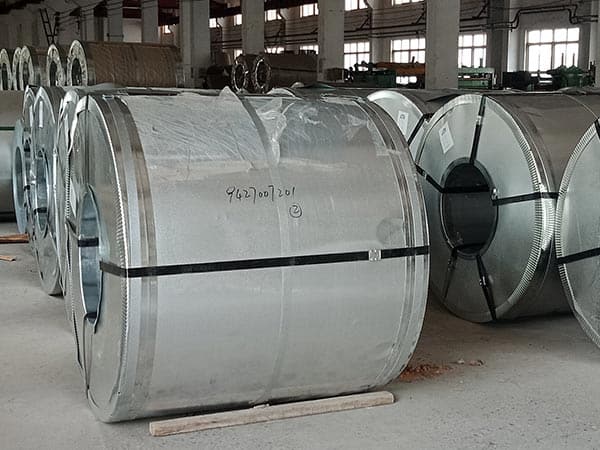
Understanding the Hardness Profile of S460MC Steel Coils
S460MC is a high-strength, thermomechanically rolled steel grade specifically engineered for cold forming applications. While the primary standard governing this material, EN 10149-2, focuses on yield strength and tensile strength, factory hardness is a critical derived property that influences tool wear, machining speeds, and the final structural integrity of components. Unlike quenched and tempered steels, S460MC achieves its hardness and strength through a combination of precise chemical alloying and controlled rolling temperatures, rather than heat treatment cycles. This results in a material that is both hard enough to resist deformation and ductile enough for complex bending.
Typical Factory Hardness Values for S460MC
In the steel industry, hardness is not usually a mandatory requirement for the inspection certificate (MTC) of S460MC, but it is frequently measured by end-users for quality control. Based on the tensile strength range of 520 to 670 MPa, the Brinell hardness (HBW) of S460MC typically falls between 160 and 210 HBW. When converted to other scales for specific manufacturing needs, the values are approximately 85 to 95 HRB (Rockwell B) or 170 to 220 HV (Vickers). These values can fluctuate slightly depending on the coil thickness, with thinner gauges often exhibiting slightly higher hardness due to more intensive grain refinement during the final rolling passes.
Chemical Composition and Its Influence on Hardness
The hardness of S460MC is a direct result of its micro-alloyed chemistry. By using elements like Niobium (Nb), Vanadium (V), and Titanium (Ti), manufacturers can achieve high strength without the brittleness associated with high carbon content. The following table outlines the chemical requirements according to EN 10149-2:
| Element | Maximum Content (%) | Role in Hardness/Strength |
|---|---|---|
| Carbon (C) | 0.12 | Increases hardness but kept low for weldability. |
| Manganese (Mn) | 1.60 | Enhances hardenability and solid solution strengthening. |
| Silicon (Si) | 0.50 | Provides solid solution hardening. |
| Phosphorus (P) | 0.025 | Controlled to maintain toughness. |
| Sulphur (S) | 0.015 | Minimized to improve ductility. |
| Aluminium (Al) | 0.015 (min) | Acts as a deoxidizer and grain refiner. |
| Nb + V + Ti | 0.22 | Micro-alloying for precipitation hardening and grain refinement. |
The low carbon content ensures that the material remains weldable, while the addition of micro-alloys creates fine precipitates within the ferrite matrix. These precipitates hinder dislocation movement, which is the fundamental mechanism behind the material's hardness and yield strength.
Mechanical Properties and Performance Benchmarks
Hardness is intrinsically linked to tensile strength. For S460MC, the balance between strength and elongation is what makes it a preferred choice for heavy-duty structural parts. The mechanical benchmarks ensure that the material can withstand high stress without failure.
| Property | Value Range |
|---|---|
| Yield Strength (ReH) | Min 460 MPa |
| Tensile Strength (Rm) | 520 - 670 MPa |
| Elongation (A80mm for t < 3mm) | Min 14% |
| Elongation (A5 for t ≥ 3mm) | Min 17% |
| Bending Radius (90°) | 0.8t to 1.5t (depending on thickness) |
These properties demonstrate that S460MC is significantly stronger than standard S355 structural steel, allowing for weight reductions of up to 20-30% in many applications without sacrificing load-bearing capacity.
Thermomechanical Rolling (TMCP) and Microstructure
The "M" in S460MC stands for thermomechanically rolled. This process involves rolling the steel at specific temperatures where recrystallization is suppressed. This creates a very fine-grained ferrite-pearlite microstructure. The Hall-Petch relationship dictates that smaller grain sizes lead to both higher hardness and higher toughness. This is a unique advantage of S460MC; unlike traditional hot-rolled steels, it does not need to be thick to be strong. The factory hardness is uniform across the length and width of the coil due to the automated cooling systems (Laminar Cooling) used in modern hot strip mills.
Cold Forming and Processing Performance
One of the primary reasons for monitoring S460MC hardness is its impact on cold forming. High hardness can lead to increased springback after bending. Manufacturers must account for this by using slightly tighter bending radii or adjusting their die settings.
- Bending: S460MC allows for very tight bends. For thicknesses under 3mm, a bending radius of 0.8 times the thickness is often achievable.
- Laser Cutting: The consistent hardness and low internal stress of S460MC coils make them ideal for high-speed laser cutting. The edges remain clean, and the heat-affected zone (HAZ) is minimal.
- Punching: Because the hardness is moderate (around 180 HBW), tool wear is manageable compared to ultra-high-strength steels like S700MC or hard-wearing AR plates.
Welding Characteristics of High-Strength Coils
Despite its hardness, S460MC exhibits excellent weldability. The low carbon equivalent (CEV) ensures that the steel is not prone to cold cracking in the heat-affected zone. When welding S460MC, it is important to use matching consumables that can provide similar yield strength. Because the strength is derived from the TMCP process, excessive heat input should be avoided to prevent grain growth in the HAZ, which could locally reduce the hardness and strength of the joint.
Strategic Industry Applications
The unique hardness-to-weight ratio of S460MC makes it indispensable across several heavy-duty sectors:
- Automotive Engineering: Used for chassis frames, cross members, and longitudinal beams in trucks and trailers. It provides the necessary stiffness while reducing vehicle weight for better fuel efficiency.
- Lifting and Excavation: In the production of crane booms and excavator arms, S460MC offers the durability required for cyclic loading.
- Agricultural Machinery: Plow frames and harvester components benefit from the wear resistance provided by its 180-200 HBW hardness.
- Cold-Pressed Parts: Ideal for complex structural brackets that require high load-bearing capacity and precision geometry.
Environmental Adaptability and Longevity
S460MC performs reliably in various environmental conditions. Its fine-grained structure provides better resistance to atmospheric corrosion compared to coarse-grained steels. Furthermore, the material maintains its toughness at low temperatures, which is vital for equipment operating in arctic or high-altitude environments. When supplied in the pickled and oiled condition (S460MC+P), the surface is protected from oxidation during storage and transport, ensuring that the factory hardness and surface integrity are preserved until the point of fabrication.
Comparative Advantage Over Standard Grades
Choosing S460MC over S355MC is a strategic decision for many engineers. While S355 is the industry workhorse, S460MC provides a higher safety margin and the ability to use thinner sections. This "down-gauging" not only saves material costs but also reduces transport emissions and welding time. When compared to S460Q (Quenched and Tempered), S460MC is generally more cost-effective for coil-based production and offers better cold-forming properties, making it the superior choice for high-volume manufacturing of structural components.
Technical Verdict on Material Selection
The factory hardness of S460MC coil is a vital indicator of its performance potential. Ranging typically from 160 to 210 HBW, this hardness level strikes a perfect balance between structural strength and fabrication flexibility. By understanding the metallurgical foundations of S460MC—from its micro-alloyed chemistry to the thermomechanical rolling process—manufacturers can optimize their production lines, reduce tool wear, and deliver high-performance products that meet the rigorous demands of modern engineering.
Leave a message