
What is the en 10149-2 grade s500mc pipe schedule
Comprehensive guide to EN 10149-2 Grade S500MC, exploring mechanical properties, chemical composition, and dimensional considerations for high-strength steel pipes.
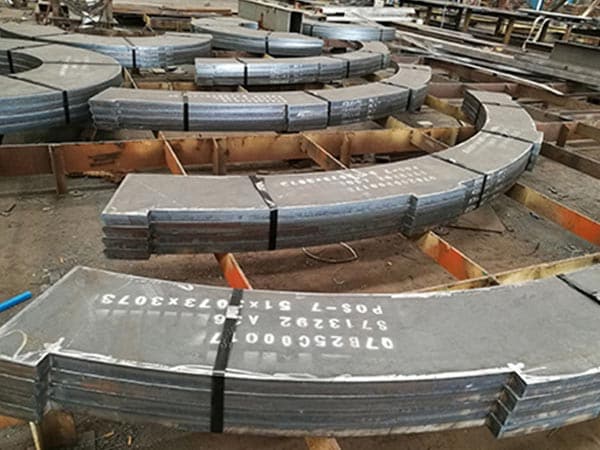
Understanding the Nature of EN 10149-2 Grade S500MC
When discussing the EN 10149-2 grade S500MC pipe schedule, it is essential to first clarify the technical origin of this material. EN 10149-2 is a European standard that specifies the requirements for hot-rolled flat products made of high yield strength steels for cold forming. The designation S500MC provides specific insights: 'S' stands for structural steel, '500' represents the minimum yield strength of 500 MPa, 'M' indicates it is thermomechanically rolled, and 'C' signifies it is suitable for cold forming. While the standard itself governs the flat steel (strip or sheet), these materials are frequently rolled and welded into pipes and tubes for high-stress applications.
The term 'pipe schedule' is traditionally associated with American standards like ASME B36.10, which defines wall thicknesses for carbon steel pipes. However, because S500MC is a European grade, it does not have a native 'schedule' in the American sense. Instead, S500MC pipes are manufactured to specific wall thicknesses (WT) and outside diameters (OD) according to standards like EN 10219 (cold formed welded structural hollow sections). Engineers often map these metric dimensions to the closest ANSI schedule equivalents when integrating them into global projects.
Chemical Composition and the Role of Thermomechanical Rolling
The superior performance of S500MC is rooted in its precise chemical makeup and the thermomechanical control process (TMCP). Unlike traditional normalized steels, S500MC achieves its strength through a combination of micro-alloying and controlled rolling temperatures. This process results in an extremely fine grain structure, which is the primary reason for its high yield strength and excellent toughness.
| Element | Maximum Percentage (%) |
|---|---|
| Carbon (C) | 0.12 |
| Manganese (Mn) | 1.60 |
| Silicon (Si) | 0.50 |
| Phosphorus (P) | 0.025 |
| Sulfur (S) | 0.015 |
| Aluminum (Al) | 0.015 (min) |
| Niobium (Nb) | 0.09 |
| Vanadium (V) | 0.20 |
| Titanium (Ti) | 0.15 |
The low carbon content (max 0.12%) is critical. It ensures that the steel remains highly weldable and ductile despite its high strength. The addition of micro-alloying elements like Niobium, Vanadium, and Titanium allows for precipitation hardening and grain refinement, which prevents the material from becoming brittle at low temperatures.
Mechanical Properties and Structural Integrity
The mechanical profile of S500MC is what makes it a preferred choice for weight-saving designs. By using a material with a 500 MPa yield strength instead of standard S235 or S355, designers can significantly reduce the wall thickness of a pipe while maintaining the same load-bearing capacity. This leads to a lighter overall structure, reduced transportation costs, and lower welding consumables usage.
- Yield Strength (Reh): Minimum 500 MPa (for thicknesses ≤ 16mm).
- Tensile Strength (Rm): 550 to 700 MPa.
- Elongation (A80mm): Minimum 12% to 14% depending on thickness.
- Impact Strength: Often tested at -20°C or -40°C to ensure performance in cold climates.
These properties ensure that pipes made from S500MC can withstand high internal pressures and external structural loads. The high yield-to-tensile ratio is a hallmark of TMCP steels, providing a predictable deformation path under extreme stress.
Process Performance: Cold Forming and Welding
One of the standout features of EN 10149-2 S500MC is its exceptional cold forming capability. The 'C' suffix indicates that the steel is designed to be bent, flanged, or folded without cracking. For pipe manufacturers, this means the flat strip can be efficiently formed into a circular or rectangular profile at room temperature.
Welding S500MC pipes requires specific attention to heat input. Because the strength is derived from the TMCP grain refinement, excessive heat during welding can cause 'grain coarsening' in the Heat Affected Zone (HAZ), potentially leading to a localized drop in strength. It is recommended to use low-hydrogen welding processes and maintain controlled interpass temperatures. When welded correctly, the joint efficiency of S500MC pipes is nearly 100%, making them reliable for pressurized systems or crane booms.
Dimensional Range and "Schedule" Equivalents
As mentioned, S500MC pipes don't follow a fixed schedule like 'Schedule 40' or 'Schedule 80' by default. Instead, they are produced in a wide range of metric dimensions. Typical dimensions for S500MC structural pipes include:
- Outside Diameter (OD): From 21.3 mm to over 1219 mm for large diameter welded pipes.
- Wall Thickness (WT): Commonly ranging from 2.0 mm to 16.0 mm. S500MC is rarely produced in very thick plates (above 20mm) because the TMCP effect is most efficient in thinner sections.
- Length: Standard 6m or 12m lengths, with custom lengths available for large infrastructure projects.
If a project specification asks for an 'S500MC pipe schedule', the provider usually refers to the ISO 4200 series, which defines the dimensions and masses per unit length for welded and seamless steel tubes. Users should cross-reference the required pressure rating against the wall thickness to determine the appropriate metric size.
Environmental Adaptability and Longevity
S500MC steel exhibits good resistance to atmospheric corrosion compared to standard carbon steels, partly due to its refined microstructure and clean chemistry. However, for harsh environments—such as offshore platforms or chemical processing plants—S500MC pipes are typically hot-dip galvanized or coated with epoxy resins. The low silicon content (often controlled below 0.03% or between 0.15-0.25% depending on the galvanizing class) ensures a high-quality, uniform zinc coating during the galvanizing process, preventing the 'Sandelin effect' which causes brittle, thick coatings.
Applications Across High-Demand Industries
The versatility of S500MC pipes allows them to penetrate various sectors where the strength-to-weight ratio is a critical KPI (Key Performance Indicator). In the automotive and transportation industry, these pipes are used for truck chassis, trailers, and bus frames. The weight reduction directly translates to higher fuel efficiency and increased payload capacity.
In heavy machinery and lifting equipment, S500MC is used for crane jibs, booms, and agricultural equipment frames. These components must withstand dynamic loads and fatigue; the fine-grained structure of S500MC provides excellent fatigue resistance compared to coarser-grained steels. Furthermore, in the energy sector, S500MC pipes serve as structural supports for solar racking systems and wind turbine internal components, where ease of installation and structural reliability are paramount.
Technical Comparison: S500MC vs. Traditional Grades
To appreciate the value of S500MC, it is helpful to compare it with the ubiquitous S355 grade. While S355 is the workhorse of the construction industry, S500MC offers a nearly 40% increase in yield strength. This allows for a reduction in material thickness by approximately 25-30% for many structural applications. Unlike S500QL (a quenched and tempered grade), S500MC offers better cold formability and is generally more cost-effective for thicknesses under 12mm. The absence of a complex quenching heat treatment makes the production of S500MC more energy-efficient, aligning with modern 'green steel' initiatives that focus on reducing the carbon footprint of manufacturing.
Guidelines for Specification and Procurement
When sourcing EN 10149-2 Grade S500MC pipes, it is vital to request a 3.1 or 3.2 material test certificate (MTC) according to EN 10204. This certificate should verify the yield strength, tensile strength, and particularly the chemical composition to ensure the micro-alloying elements are within the specified limits. Buyers should also specify the tolerance requirements, usually according to EN 10219-2, which covers the diameter, thickness, and straightness tolerances for cold-formed welded sections. Understanding that the 'schedule' is a metric-based thickness rather than a fixed ANSI number will prevent errors during the procurement and design phase.
Leave a message